Trump says Buttigieg ‘ruined’ the FAA system. Buttigieg says Trump’s team triggered the breakdown
The political blame game over Friday’s FAA meltdown is now fully underway, with a possible 2028 contender calling it the worst communications breakdown of the century and defending his transportation record.
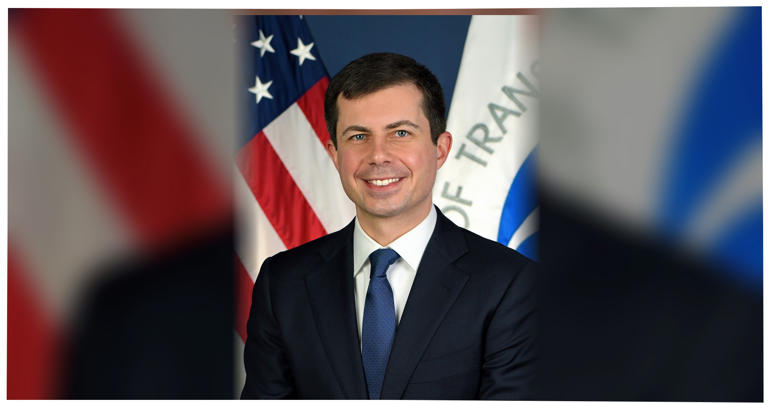
Former Transportation Secretary Pete Buttigieg on Monday rejected President Donald Trump’s assertion that he bears responsibility for Friday’s nationwide FAA ground stop, the airspace shutdown that disrupted thousands of flights and stranded millions of passengers.
“As secretary, I made sure to leave air travel in better condition than when we arrived,” Buttigieg posted on social media, citing his efforts to boost air traffic control staffing and improve safety. The exchange has turned a technical failure into a political fight with possible consequences for a potential 2028 presidential run.
What Trump said, and how Buttigieg answered
Trump was responding to questions Monday about the ground stop when he said “Buttigieg ruined the system.” He also accused Democrats in Congress of withholding funding needed for air traffic control upgrades, even though Republicans currently control Congress.
Buttigieg pushed back directly. “I launched a project to transition the FAA’s communications system from copper wire to a modern network,” he wrote. “I am glad the Trump administration has continued that work, but they have so far failed to explain why their execution of it triggered the worst FAA communications breakdown this century.”
The rebuttal is notable for what it concedes: Buttigieg does not dispute that the modernization project continued under his successor. His argument is about ownership of the failure, not the project itself.
What actually caused the ground stop
According to the FAA, the trouble began Friday, November 13, at roughly 3:30 p.m. ET, when legacy equipment became unstable as data flooded the agency’s FTI network at a rate of about 1,000 connection attempts every 4 to 5 seconds. That disrupted aircraft communications and radar feeds.
The FAA’s initial investigation points to two possible sources of the data flood: a radar site in Amarillo, Texas, and a radio communications site in El Dorado, Arkansas. L3 Harris, the FAA’s network service provider, had been deploying a new router at the El Dorado site. The agency says L3 Harris blocked the two locations, the network stabilized, and air traffic resumed by 8:15 p.m. the same day.
The FAA has framed the ground stop as a precaution. “Safety is, and will always remain, the FAA’s highest priority,” the agency said in its question-and-answer document, while warning that recovery to normal operations would be slow and steady.
The scale of the disruption
A nationwide ground stop is an extraordinary step. NPR reported that no planes were taking off at any airport when the order took effect, grounding thousands of aircraft and stranding millions of passengers across the country.
Transportation Secretary Sean Duffy, who now holds the job Buttigieg once held, cited intermittent communications and radar problems and blamed outdated equipment. “We have old switches, old routers,” Duffy said. “It’s an old system that went down. It got overloaded.”
Even after the stop was lifted, officials warned that working through the backlog of canceled and delayed flights would take time, and investigators acknowledged it would take longer still to fully understand what happened.
Why this fight matters beyond the blame game
Buttigieg was in Denver when the ground stop took effect, appearing at a post-midterms conference alongside several other potential 2028 contenders. He opened his remarks with a joke that landed differently after the meltdown: “I will be available in the hotel bar following the concert for anybody that needs to rebook their flights.”
If he runs for president, his tenure leading the Department of Transportation will be a central part of his pitch, and rivals can be expected to attack it. Friday’s failure gives those attacks a concrete example, which is why Buttigieg moved so quickly to frame the record on his own terms.
The dispute also raises a fair question about accountability across administrations. Buttigieg launched the copper-to-modern-network transition, and he argues that the Trump administration’s execution of the work triggered the breakdown; the FAA says L3 Harris, its network service provider, had been deploying a new router at the site now under scrutiny. Neither party has shown much interest in dwelling on the aging, outdated equipment that left the system vulnerable in the first place.
What remains unclear
The FAA’s investigation is still in its early stages, and the agency has only identified two “potential locations” for the data flood, not a confirmed cause. Federal officials believe a routine upgrade that went wrong may have metastasized into the broader communications failure, but that assessment could change.
It is also unclear whether Congress will treat the meltdown as a catalyst for serious investment in air traffic control modernization, or whether the issue will remain a partisan talking point. The FAA has said it is preparing to brief lawmakers on the failure.
For now, the political lines are drawn. Trump says his predecessor ruined the system. Buttigieg says the current administration’s execution triggered what he calls the worst FAA communications breakdown this century. The flying public, meanwhile, is left waiting to learn whether the fix will come before the next failure.