A black teen spent months on house arrest before the carjacking case against him unraveled
For seven months, Deryl Bright Jr. lived under house arrest for a carjacking he said he did not commit. Instead of focusing on his senior year, his job and his future, the Baltimore teenager was wearing an ankle monitor as the case against him slowly began to unravel.
It all began after a January carjacking in Baltimore. Investigators identified Bright as a suspect and arrested him at school about a month later, according to The Baltimore Sun. Bright maintained that he was in agriculture class at Green Street Academy when the crime occurred.
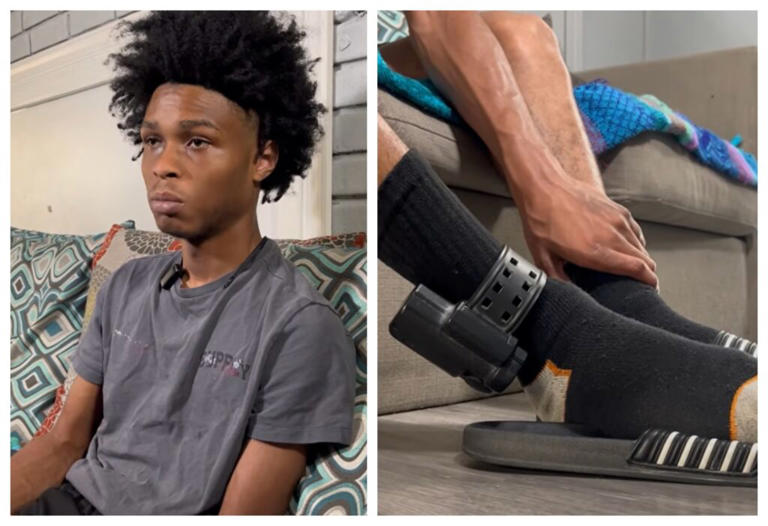
According to The Sun, school records and statements from school officials placed Bright in class that morning. Questions also emerged about whether Bright matched the description of the person captured in surveillance footage. Despite those discrepancies, the teen was charged and placed on house arrest with an ankle monitor. Those restrictions had consequences beyond the courtroom. Bright told The Sun that he was unable to continue working as a pharmacy technician and missed important moments during his senior year.
RELATED: 5 Times Baltimore Mayor Brandon Scott Clapped Back at Reporters, Trump and His Critics
“It has made me unable to attend school events like prom,” he said. “And I’ve not been able to celebrate my birthday or family trips.” His movements were largely limited to school, work and official appointments.
For months, the case remained unresolved. Then questions from The Baltimore Sun about the evidence and the continued prosecution of Bright brought renewed attention to the case. Prosecutors ultimately dismissed the charges, and Bright’s ankle monitor was removed.
The teen told The Sun the experience made him feel “excluded and isolated.” He continued, saying he “felt like a victim of prejudice.”
Unfortunately, Bright’s experience is not unique. In fact, it follows a well-documented historical trend of racial disparities in wrongful convictions. According to the National Registry of Exonerations, Black Americans accounted for 53% of recorded exonerations in its 2022 analysis, despite making up roughly 13% of the U.S. population. The researchers say that innocent Black Americans were about seven times more likely than innocent white Americans to be wrongfully convicted of serious crimes.
The disparity also appears among people who were young when they were accused. In its analysis of DNA-based exonerations, The Innocence Project reported that 30 of 34 people who were arrested as minors were Black, while 32 were people of color. Among exonerees who were arrested before age 21, 62 of 83 were Black.
Though Bright was never convicted and his charges were ultimately dismissed, the numbers provide context for how mistaken identifications and incomplete investigations often contribute to wrongful prosecutions, particularly when we’re talking about young Black defendants.
For Bright and his family, the dismissal ended the criminal case but could not undo the months he spent under restrictions. His experience raises a broader question about what safeguards are in place when a young person is accused–and how quickly evidence that may point in another direction is investigated.
“They assumed that I’m somebody I’m not,” Bright added. “It was just pure laziness on the account of the detectives.”