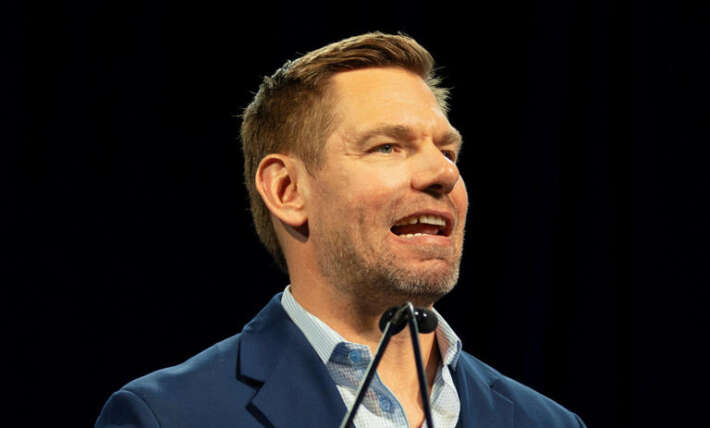
Seattle sports columnist quits after Sophie Cunningham story blocked from publication
A Seattle sports columnist quit after their publication declined to run a column they had written about Sophie Cunningham.
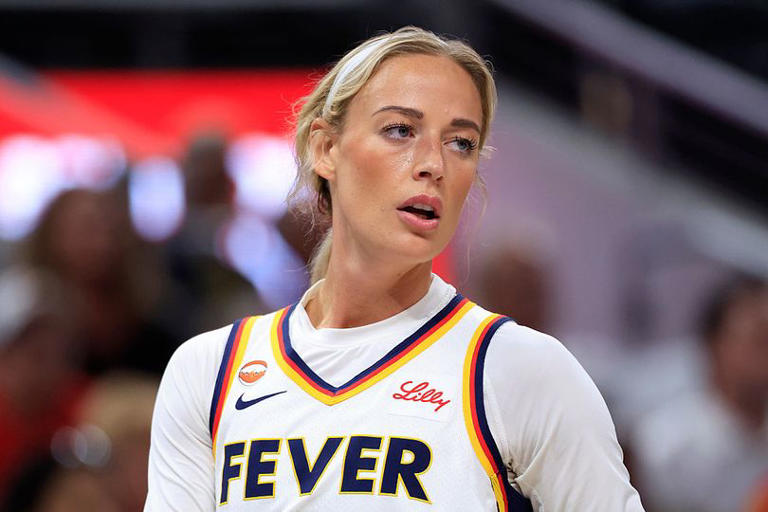
Cunningham, the Indiana Fever star, has been at the forefront of the renewed discussion of trans athletes in women’s sports, with numerous demonstrations outside several arenas. Wherever Cunningham and the Fever play, fans often show out in force as they represent their own sides.
Now, it appears that Cunningham’s comments are causing a divide in the journalism space. Seattle Times columnist Matt Calkins wrote that he would no longer be working for the publication after one of his columns regarding Cunningham was blocked.
• Angel Reese’s brother sees NBA standing go from bad to worse
• WNBA coach makes ‘hate speech’ allegation when quizzed on anti-trans protests
“After 11 years as a sports columnist at the Seattle Times, I have decided to resign,” he posted on social media of his decision. “It was entirely my choice, and it was not an easy one. The impetus was the Times declining to run a column I wrote from the perspective of two female student athletes who were opposed to competing against biological males.
“It was one of several pieces of mine that had been spiked, and I no longer felt like I could properly do my job as a columnist. I lay out the situation in greater detail in the link below, but I want to say that I enjoyed my time with the paper, find the talent there to be immense, and have no animosity toward anyone who works there. It was just time for a change.”
The column centered on Calkins interviewing fans of the star, claiming the main message of his initial piece was that supporting the separation of biological females and males in sports was not “transphobic.”
On his personal Substack, Calkins wrote that he sent a draft of the piece to his editor on July 31, highlighting that there was “no rush to run it.” Days later, he was told that numerous conversations were underway regarding the status of the piece, and more were needed.
He was then told that the piece would not be published because Calkins claimed his editor said he “didn’t tell him” he was writing the column “in advance.”
From there, Calkins opted to quit, stating that he was prepared to leave after several of his pieces were shot down.
His pieces included questioning “whether players for the U.S. Women’s Soccer Team were really the victims of discrimination in their equal-pay lawsuit” and an article in which he “implored people to listen to state-champion basketball coach Mike Bethea — a black man urging the public not to stereotype cops.”
The latter piece was written just days after the murder of George Floyd by police officer Derek Chauvin in May 2020.
As for why the pieces were not run, Calkins claimed his articles “challenged prevailing newsroom narratives and likely would have triggered the outrage mob.”
On the WNBA’s side, commissioner Cathy Engelbert noted that the league is being used to divide fans, especially amid the conversation Cunningham sparked.
“We’re being the center of political football for people who have never watched the WNBA, never have written about the WNBA or reported on the WNBA,” Engelbert said. “People are trying to use the league to sow divisiveness. There’s always going to be haters out there and we denounce it. The vitriol has got to stop against our players.”