A global blackout is a conspiracy theory – but how could you prepare?
Widespread outages have besieged the United States in the last week – leaving tens of thousands of people stranded at airports, bank customers locked out of their accounts, and downed phone lines at hospitals.
Apple suffered issues Tuesday, rendering key iPhone functions useless, and the National Security Agency’s classified internal communications network went down. On Monday, thousands of customers were shut out of their accounts at major U.S. banks like JPMorgan Chase, Bank of America and Wells Fargo before access was restored.
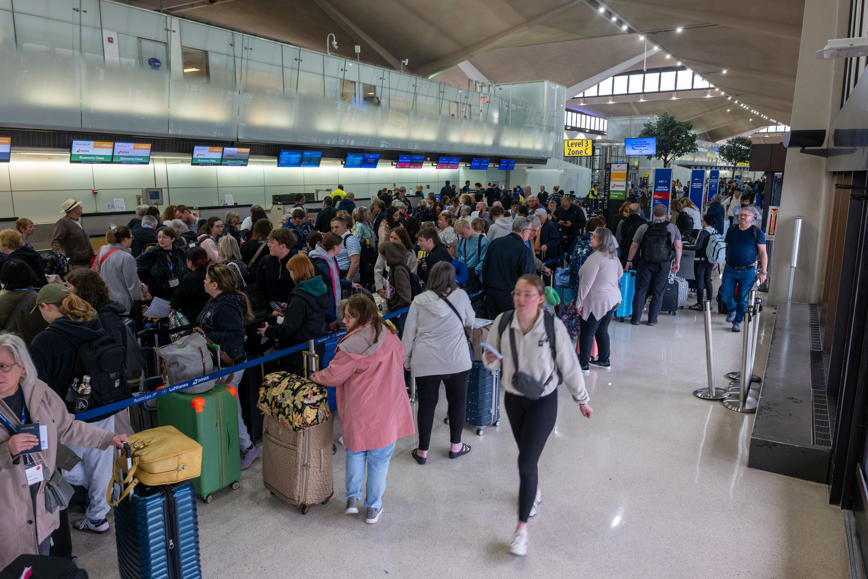
This follows widespread disruption to Microsoft Outlook, Teams and AI Copilot last week that snarled the operations of thousands of businesses, police forces and hospitals. Not to mention a nationwide ground stop on flights by the Federal Aviation Authority, the longest since 9/11, caused by newly installed routers.
The chaos has inevitably led to online conspiracy theories that a global blackout – outages across electrical grids, internet providers and banking systems – would take place Tuesday.
That hasn’t come to pass and likely won’t because of the extreme complexity it takes to coordinate such a global event, experts say. But people have been left to wonder how to prepare for such a life-altering situation in our hyperconnected world, both in terms of practical necessities and finances.
“Accidents rarely come with a warning, and consumers almost never get notice of an attack,” James Mercer, principal at disaster recovery firm Metro Colo Advisory, told The Independent in an email.
Cash is king
In a global blackout, banking systems would be unavailable, Stanislav Kazanov, a cybersecurity expert at software development firm Innowise, told The Independent in an email.
He advised keeping cash at home, enough for two to three days of your needs. Smaller bills work best since ATMs would likely be down and any open stores would likely run out of change quickly.
Disaster recovery expert James Mercer also recommends writing down your bank’s phone number and keeping hard copies of important financial information like a recent bank statement, your bank and investment account numbers and life insurance policy documents.
Ideally, store these documents in a waterproof container to protect them from damage.
Federal protection
The Federal Deposit Insurance Corporation (FDIC), a government agency, insures up to $250,000 in bank deposits per person. This includes money in checking, savings and money market accounts, and cashier’s checks and money orders, the FDIC notes.
The bank-deposits category does not include stock and bond investments, mutual funds, annuities, life insurance policies, and, importantly, valuables and money stored in safe deposit boxes.
“Regardless of the operating conditions, deposits in an FDIC-insured bank or savings institution will continue to be insured up to at least $250,000 in the unlikely event of a bank failure,” the corporation says in its online knowledge center.
Likewise, credit union customers are insured for up to $250,000 in deposits per person by the National Credit Union Administration. The Securities Investor Protection Corporation insures up to $500,000 if a brokerage goes under.
Fake-out
In a time of high anxiety, watch out for scams once internet or phone lines are back up, said Craig Timm, senior director of money laundering at the trade group Association of Certified Anti-Money Laundering Specialists.
“Criminals will try to exploit that anxiety by pushing victims to take urgent action to protect their funds or restore account access,” Timm said. “These scams may take the form of fake bank alerts, phishing texts or emails, or social media posts that claim to offer help.”
That exact scenario happened after the 2024 CrowdStrike outage in the U.S. when a failed update took down around 8.5 million Windows computers, Kazanov said.
“Within 24 hours after the CrowdStrike event, hackers were already registering domain names similar to the actual one, and spreading fake ‘fix’ software,” he said.
If it all goes dark…
If a blackout lasts long enough to shut down financial institutions for an extended period of time and cash becomes useless, emergency supplies will be an important part of surviving.
A good emergency supply list includes the following, according to the Federal Emergency Management Agency (FEMA):
- Canned goods and other non-perishable food items for humans and pets
- Prescription medication and glasses
- Infant formula and diapers
- Financial documents – including insurance policies, IDs and bank account information – stored in a waterproof container
- Change of clothing
- Sleeping bag and blankets
- Fire extinguisher
- Matches
- Personal hygiene and hand sanitizer
- Cups, plates, utensils and can opener
- Children’s activities (books, games, etc.)
- Pencil and paper
- Battery-powered or hand-crank emergency radio
- Flashlight with extra batteries
- First aid kit
- Whistle
- Wrench or pliers
- Local maps.
“It is important that individuals review this list and consider the unique needs of their family, including pets, for items to include,” FEMA notes. “Individuals should also consider having at least two emergency supply kits, one full kit at home and smaller portable kits in their workplace, vehicle or other places they spend time.”
The Independent is the world’s most free-thinking news brand, providing global news, commentary and analysis for the independently-minded. We have grown a huge, global readership of independently minded individuals, who value our trusted voice and commitment to positive change. Our mission, making change happen, has never been as important as it is today.