Iran has already made its first big miscalculation of the war
Even in times of acute tension, diplomats in the Gulf generally shy away from public criticism of their neighbours. But in the heat of this war, Sheikh Mohammed bin Abdulrahman bin Jassim Al Thani, the prime minister of Qatar, has abandoned the usual rules.
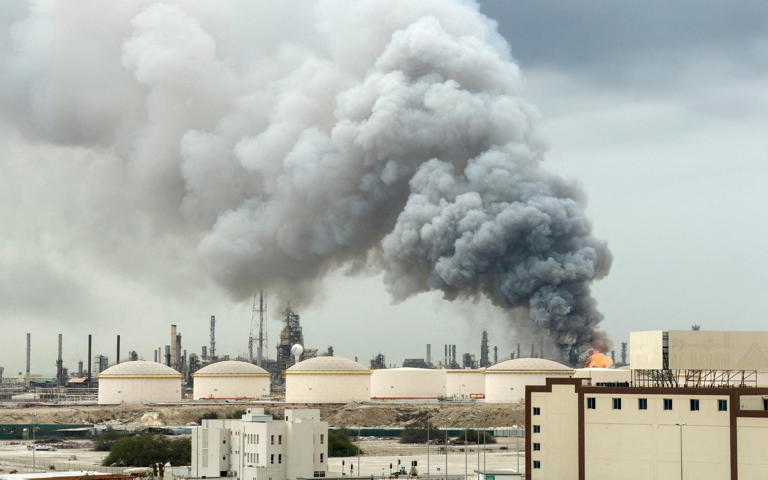
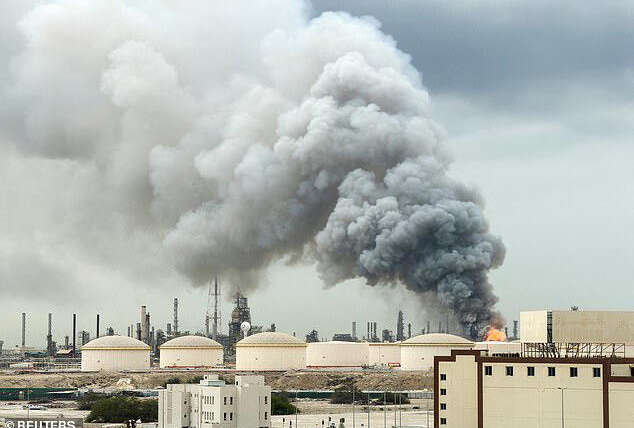
“It is a big sense of betrayal,” he said, referring to Iran’s bombardment of the Gulf states with no less than 3,000 drones and ballistic missiles.
“All the attacks on the Gulf countries – we never expected this from our neighbour,” he added during an interview with Sky News. “We have always tried to preserve a good relationship with Iran, but the justifications and pretexts they are using are completely rejected.”
His words demonstrate far more than mere anger. They suggest that Iran’s furious assault on the Gulf is not just a crime, but a mistake. The reason why Iran began firing its arsenal at its neighbours as soon as the war began was to induce them to go to Donald Trump and urge him to call off the campaign.
The aim was to impose such costs on the Gulf monarchies that they would use their diplomatic weight in Washington to secure an early ceasefire. Saudi Arabia, Qatar and the United Arab Emirates (UAE) are particularly close to the Trump administration. The latter also has a peace treaty and important security ties with Israel, the other belligerent in this war.
If all of them were to tell America to end the conflict because the pain was too great, their position could not be dismissed.
But there is no sign of this happening. On the contrary, Iran’s decision to target the whole region vindicates one of Trump’s central reasons for going to war, namely the overriding imperative to destroy the Islamic Republic’s arsenal of ballistic missiles.
Rather than shortening the conflict, Iran’s attack on its neighbours may have the opposite effect, as the US and Israel are unlikely to halt their campaign until Iran’s missile stockpiles and launchers are neutralised.
Credit: X/@clashreport
Iran is believed to have started with about 1,500 ballistic missiles and at least 100 launchers – the biggest arsenal of its kind anywhere in the Middle East. Hundreds of missiles have been fired and more destroyed on the ground. But until they are all dealt with, at least as far as possible, the region will not be safe.
In addition, Iran has many thousands of drones, which are far easier and cheaper to manufacture, store and hide than missiles. Stopping these killer drones could take longer than halting the flow of missiles – and may not be achievable at all – even though they are less destructive and generally easier to shoot down.
So far, Iran has fired 238 ballistic missiles and 1,422 drones at the UAE, the highest priority target. Facing these attacks, the UAE has succeeded in destroying 93 per cent of incoming missiles and 94 per cent of drones.
As the Gulf state with the highest international profile and the biggest concentration of Western residents and tourists, the UAE has been the target of more than half of all the missiles and drones that Iran has launched since the war began on Feb 28. Yet, in 2022, the UAE restored full diplomatic relations with Iran after a six-year hiatus.
Senior Emirati security officials, including Sheikh Tahnoon bin Zayed Al Nahyan, the country’s senior national security adviser, visited Tehran multiple times to strengthen ties.
Saudi Arabia reopened its embassy in Tehran in 2023 and also sent senior officials to Iran, including Prince Khalid bin Salman Al Saud, the defence minister, who visited last April.
Other Gulf states, like Qatar and Oman, have always been careful to preserve diplomatic ties with Iran. Oman was trying to mediate an agreement between Iran and America when the war broke out. As one former diplomat with long experience of the Gulf notes: “You really don’t want a neighbour with nothing to lose.”
Each of these countries will believe that they made sincere efforts to stabilise their relations with Iran and avoid the current crisis. Yet each has now been attacked – explaining Sheikh Mohammed’s use of the word “betrayal”.
The fact that Masoud Pezeshkian, the Iranian president, has publicly apologised for his country’s bombardment of neighbouring states shows that some in Tehran fear they have blundered. He may believe that the Gulf states will now use their diplomatic influence against Iran, perhaps by urging America and Israel to press on with their onslaught for as long as the missiles and drones are still being launched.
But alienating the Gulf and perhaps prolonging the war must be set against the gain in Iran’s eyes of pushing the oil price above $100 per barrel. By closing the Strait of Hormuz and threatening mayhem on the energy markets, Iran’s missile and drone barrage has succeeded in imposing an economic price that even Trump will not be able to ignore.
Mojtaba Khamenei, Iran’s new supreme leader, will agree with the hardline commanders of the Islamic Revolutionary Guard Corps that maximum retaliation against any possible target is the only viable strategy for a regime that is fighting for its life. He will believe that this is no time for restraint, and that Gulf states like Qatar and Bahrain have made themselves legitimate targets by hosting American military bases.
But the price of this attitude might be a longer war.