Iran now has a clear path to victory
For more than three weeks, American and Israeli jets have rained bombs from Iran’s skies with seeming impunity. Their intelligence agencies have spent years undermining the Islamic Republic from within. Yet, incredible though it may sound, Iran’s remaining leaders now have a clear path to what they would see as victory in this war.
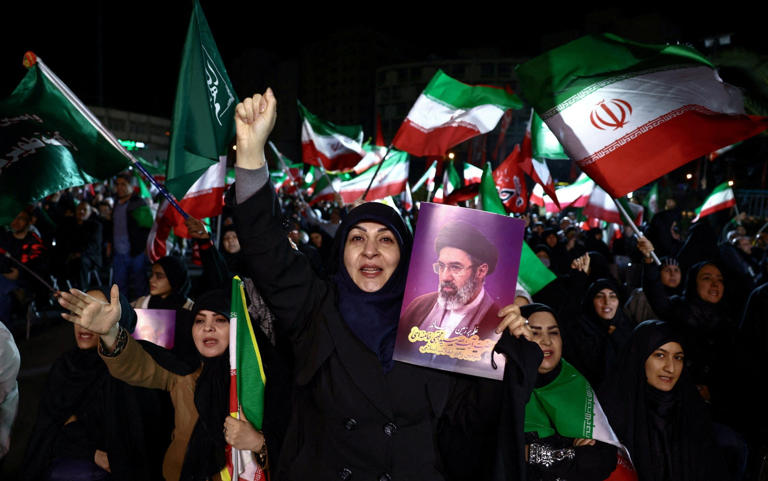
That route, paved with Donald Trump’s hubris, carries four vital signposts: survival, control, revenue and capability.
1. Survival
Iran’s regime regards its own survival as victory. As Trump launched the war on Feb 28, he promised Iranians that the “hour of your freedom is at hand” and “now is the time to seize control of your destiny”, adding: “This is the moment for action. Do not let it pass.”
Brutally effective air strikes suddenly dispatched Ayatollah Ali Khamenei, the late supreme leader, and an array of his senior commanders and ministers.
Yet the regime clung to power and replaced its figureheads. So far, there has been no sign of the popular revolution that remains the only way of causing its downfall, assuming that America does not invade Iran with hundreds of thousands of troops.
Instead, its enemies have changed their rhetoric. Trump no longer talks of regime change except in the narrow sense of finding a supposedly pliable figure from inside the Islamic Republic willing to deal with America.
Benjamin Netanyahu, the Israeli prime minister, still denounces the Iranian regime as “lunatics” bent on “wiping out Western civilisation”, but even he concedes the possibility of the same “lunatics” staying in power.
“If it cracks enough – and with some other things I won’t get into – yes the regime could change. Is it guaranteed? No,” said Netanyahu on March 19. “Is it up to the Iranian people in the final accounting to make use of the conditions that we’re doing in weakening this regime? We’ll see. I cannot tell you.”
The hard men from the Islamic Revolutionary Guard Corps (IRGC) – now the de facto masters of Iran – will have noticed how their foes have gone from revelling in their imminent downfall to declining to predict whether this will happen or not.
True enough, a popular revolution might yet sweep them away. America and Israel could be preparing a sudden coup de main, perhaps comparable to the instant evisceration of Hezbollah, the Lebanese terrorist group, by exploding pagers in 2024.
But, failing either possibility, the regime will probably survive this onslaught. That only highlights Trump’s gravest error. Having forced Iran’s leaders to fight for their lives, he somehow failed to anticipate that they would strike back with everything in their hands, firing missiles at all their Gulf neighbours and closing the Strait of Hormuz.
2. Control
Hence the regime was able to reach the second signpost on its road to victory: retaining control of the Strait of Hormuz, a vital artery of the global economy.
By halting the passage of almost 20 per cent of the world’s seaborne oil, Iran has caused the greatest disruption of global energy supplies in history.
Soaring oil prices have forced Trump to open channels to the very regime whose “unconditional surrender” he demanded as recently as March 6.
And Iran’s likely terms for any deal with America bring us to the third signpost.
3. Revenue
The IRGC has already used its de facto control of the Strait of Hormuz to decide which tankers may pass and which may not.
Iran’s own oil exports have naturally enjoyed safe passage and countries such as China and India are believed to have cut bilateral deals to allow their tankers through the Strait. This has come at a price: Iran’s reported fee is $2m per tanker.
Fearing still greater mayhem on the energy market, America has even waived its sanctions to allow Iran to sell about 140 million barrels of oil currently at sea. Trump has since suggested that America and Iran might “jointly control” the Strait.
That raises a tantalising prospect for the regime: a new and American-approved – and therefore sanctions-proof – source of revenue from the Strait.
Before this war, scores of foreign tankers would pass every day, exercising their right of free navigation on international waters, and Iran would not earn a penny. Now, by threatening to attack any ships it considers hostile, Iran has succeeded in extorting $2m per passage from countries prepared to make deals.
But if Trump is willing to grant Iran some form of control over the Strait as part of settling this conflict, that opens a whole range of possibilities. The regime might hope to gain a new source of funds that it never enjoyed before.
That revenue leads to a final signpost.
4. Capability
If the Iranian regime were to come out of this war not only in power but free to profit from the Strait in a way it never did before, it could use that money to restore the missile and nuclear capabilities that America and Israel have successfully destroyed.
Last Thursday (March 19), Netanyahu described how the two allies were “wiping out [Iran’s] industrial base in a way that we didn’t do before” and pulverising not only the Islamic Republic’s missiles but the “factories that produce the components to make these missiles”.
Yet if the regime survives, it could in principle rebuild all of the above, perhaps aided by a new flow of cash from the Strait.
It would take years for Iran’s leaders to reconstruct their missiles and nuclear plants. Both Trump and Netanyahu would probably have left office by the time any such project reached completion. But instead of removing the Iranian threat, they would have bequeathed it to their successors.
On any view, the Iran that emerges from this war will be a ruined country with little prospect of recovery. Popular despair and fury might yet overwhelm the Islamic Republic.
Yet, for now, the regime has a pathway to what it would regard as victory: surviving to defy America and Israel all over again.
Recommended
Iran lays mines in Strait of Hormuz