Iran warns of consequences beyond Hormuz Strait if US seizes Kharg Island
An Iranian military source warned that new U.S. strikes or an invasion of Kharg Island, a key Iranian oil export hub, could prompt Tehran to escalate by threatening nearby waterways, including the Red Sea and the Bab al-Mandab Strait, telling the Islamic Revolutionary Guard Corps (IRGC)-affiliated Tasnim News Agency the United States would face an “unprecedented” response.
On a potential U.S. invasion of the island, the official warned that American troops would struggle to defend it and would “suffer losses that are unprecedented since World War II.”
Newsweek has reached out to the White House for comment via email on Saturday.
Why It Matters
Late last month, the U.S. and Israel targeted key military targets in Iran and killed Supreme Leader Ayatollah Ali Khamenei and other government leaders. Iran responded by launching missiles and drones targeting Israel and several Gulf Arab states that host U.S. armed forces.
In a Truth Social post on March 13, President Donald Trump wrote the U.S. had just “obliterated every military target in Iran’s crown jewel, Kharg Island.” The island, located in the Red Sea just off of Iran’s shore, is incredibly strategic for the country’s oil exports. The island is about 300 miles north of the Strait of Hormuz.
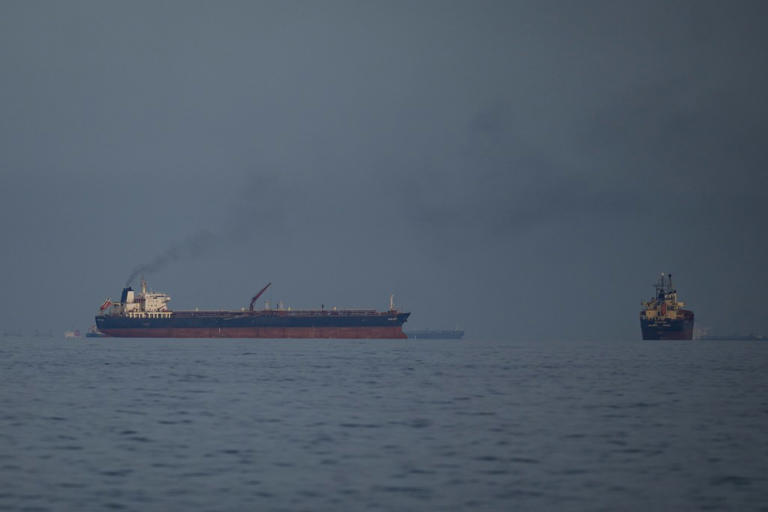
Shipping through the Strait of Hormuz remains heavily disrupted, though Iran has said some vessels from countries not involved in attacks on the Islamic Republic may be allowed to transit. In addition to shipping and trade disruptions, the International Maritime Organization (IMO) reported that 17 vessels have come under attack since February 28, and thousands more impacted.
The Red Sea, bordered by Egypt, Sudan and Eritrea to the west and Saudi Arabia and Yemen to the east, leads south to the Bab el-Mandeb Strait, a roughly 20-mile-wide chokepoint linking it to the Gulf of Aden and the Indian Ocean, making it another key global shipping route.
What To Know
In a Telegram post in Persian, Tasnim News reported an Iranian military source warned if the U.S. were to initiate further attacks or possible invasion of Kharg Island, the Islamic Republic may respond with “insecurity in other straits, including the Bab al-Mandab Strait and the Red Sea.”
The official noted if the U.S. were to attack Kharg Island again, “Iran would set fire to all the [oil] facilities in the region,” which would greatly disrupt already soaring oil prices.
The Trump administration is considering occupying or imposing a blockade on Kharg Island to pressure Tehran, according to Axios, citing four unnamed sources with knowledge of the issue. However, any move to seize the island roughly 20 miles offshore, where 90 percent of Iran’s crude oil exports are processed, could put U.S. troops more directly in the line of fire.
Regarding a potential U.S. invasion, the Iranian official said that “the Americans would have no way to protect Kharg and would suffer losses that are unprecedented since World War II.”
The statement comes as the Trump administration is deploying more warships and nearly 2,500 Marines to the region. On Friday, Trump told reporters asking about further military targeting of Kharg Island, “I may have a plan, I may not,” adding, “It’s certainly a place that people are talking about. But I can’t tell you that.”
A White House official told CBS News on Friday the U.S. military “can take out” Kharg Island “at any time,” and the president “retains all options.”
Kharg Island is essential to Iran’s oil network and has been targeted by the Trump administration as part of its effort to open the Strait of Hormuz. Trump said the March 13 strikes avoided the island’s oil export infrastructure, striking military structures, but warned Iran, if the country does “anything to interfere with the Free and Safe Passage of Ships through the Strait of Hormuz, I will immediately reconsider this decision.”
The Strait of Hormuz is a narrow, yet incredibly strategically important waterway connecting the Persian Gulf to the Gulf of Oman and the Arabian Sea. At its narrowest point, the strait is about 21 miles wide. Around 20 percent of global oil trade passes through the Strait, with any disruption often spiking global prices.
The price of Brent crude, the international benchmark, has soared to over $100 per barrel, around $106 on Saturday.
What People Are Saying
President Donald Trump said in a March 12 Truth Social post: “The United States is the largest Oil Producer in the World, by far, so when oil prices go up, we make a lot of money. BUT, of far greater interest and importance to me, as President, is stoping an evil Empire, Iran, from having Nuclear Weapons, and destroying the Middle East and, indeed, the World. I won’t ever let that happen!”
Author Brandon Weichert said in a March 20 X post: “Kharg Island might very well be a feint. We might be going in from Iraq.”
U.S. Central Command Admiral Brad Cooper said in a video posted on X Saturday: “Iran’s ability to threaten freedom of navigation in and around the Strait of Hormuz is degraded as a result and we will not stop pursuing these targets.”
Treasury Secretary Scott Bessent told Fox Business’s Maria Bartiromo on earlier this week: “We will see what happens with whether that [Kharg Island] becomes a U.S. asset.”
A source with knowledge of the Trump administration’s plans told Axios: “He [Trump] wants Hormuz open. If he has to take Kharg Island to make it happen, that’s going to happen. If he decides to have a coastal invasion, that’s going to happen. But that decision hasn’t been made.”
Senator Tim Kaine, a Virginia Democrat, said on March 2: “We have to have the humility to acknowledge the fact that U.S. servicemembers have already lost their lives and been injured, that we could face serious consequences in the loss and death of our troops, serious consequences in instability in the region, serious consequences in rising energy prices for Americans.”
Senator Shelley Moore Capito, a West Virginia Republican, said in a March 12 statement: “I think that the American people don’t want to see boots on the ground. I think that we can achieve objectives without that, and I would hope that’s the end product.”
Representative Ilhan Omar, a Minnesota Democrat, said in a March 16 X post: “The first week of Trump’s illegal war in Iran cost Americans over $11 billion. Each day costs nearly $2 billion more. Gas prices are the highest they’ve been since 2023. Americans can’t afford this expensive, endless war. It’s time to stop Trump’s reckless abuse of power.”
What Happens Next
The course of the war remains uncertain, with Trump at times saying it could end soon and at others signaling a longer military campaign.