New security chief signals full military takeover of Iran
The appointment of Mohammad Bagher Zolghadr as the new secretary of Iran’s supreme national security council reveals one thing: the Islamic Revolutionary Guards Corps (IRGC) has taken over the running of the country.
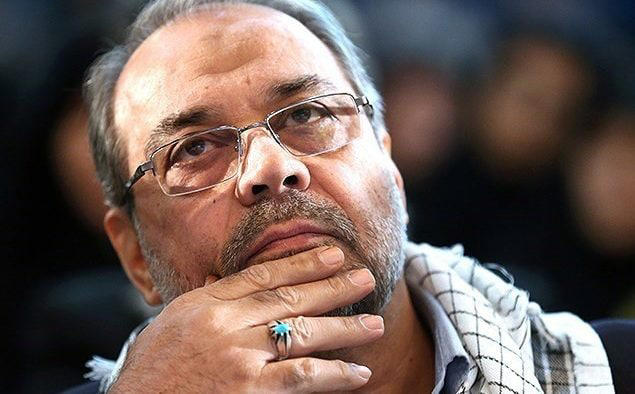
Mr Zolghadr will fill the position left vacant after Ali Larijani was killed in an Israeli air strike on his daughter’s house last Wednesday.
The council is Iran’s highest body for security decision-making. The president chairs it, and it includes the heads of the judiciary and parliament, the foreign and interior ministers, the intelligence minister, two representatives appointed by the supreme leader, and commanders from the Revolutionary Guards and the regular military.
Larijani was Iran’s de facto leader given that Mojtaba Khamenei, the supreme leader, has not been seen in public since the start of the war.
But the choice of Mr Zolghadr as the replacement reveals how dramatically the balance of power has shifted in Tehran – and how little authority the position now holds.
Mr Zolghadr, 72, is a lesser-known former Revolutionary Guard commander. He will inherit Larijani’s title, but does not have his influence and charisma.
While Larijani co-ordinated between competing power centres and maintained enough independence to challenge hardline positions, Mr Zolghadr appears destined to serve as a public face for decisions made by the Revolutionary Guard generals.
The appointment shows the Islamic Republic’s transformation, under wartime pressure, into an increasingly militarised state in which IRGC commanders – not civilian officials or even senior clerics – hold critical top positions.
It also suggests that real negotiations with the US will be handled by figures such as Mohammad Bagher Ghalibaf, the parliament speaker, rather than through the traditional security council apparatus.
By selecting someone without a political base, the IRGC has effectively abolished the council’s traditional co-ordinating function and replaced it with a messenger service.
The IRGC does not want someone who will question its decisions or bring alternative perspectives from the foreign ministry, regular military, or moderate political factions.
The generals want someone who will sit in meetings, take notes and announce conclusions without complicating the process by co-ordinating anything.
Mr Zolghadr’s career has mostly involved showing up and following orders. He reached the rank of brigadier general in the Guards, and has spent decades in the IRGC’s upper echelons.
But he has never been a consequential decision-maker, and his career has been characterised by loyal service to more powerful figures.
He co-founded the Ramadan Headquarters during the Iran-Iraq war, an extraterritorial operations unit that worked with Iraqi Kurdish and Shia opposition groups against Saddam Hussein.
The headquarters later became the blueprint for the Quds Force, the IRGC’s external operations arm, which Qassem Soleimani commanded until his assassination in 2020.
But while Soleimani became one of Iran’s most powerful figures, Mr Zolghadr remained a mid-level commander.
After the war, Mr Zolghadr served for eight years as chief of the IRGC’s joint staff, the third-ranking position in the Guard’s hierarchy. He then served for eight years as deputy commander, the second-ranking position.
Yet despite 16 years at the highest levels of IRGC command structure, he never achieved the political influence of contemporaries like Mohsen Rezaei or Mohammad Ali Jafari.
His advancement owed much to personal relationships rather than strategic vision. He was close to Mr Rezaei, who commanded the IRGC from 1981 to 1997, and to Yahya Rahim Safavi, who followed Mr Rezaei as commander until 2007.
When those protectors left their positions, Mr Zolghadr’s influence waned.
In 2005, Mahmoud Ahmadinejad, the newly elected president, appointed Mr Zolghadr as security deputy at the interior ministry, a position requiring special permission from Ali Khamenei because Mr Zolghadr was still serving as IRGC deputy commander.
The interior ministry’s security deputy oversees the country’s security council – separate from the supreme one – which co-ordinates suppression of protests nationwide, and monitors provincial governors and their security deputies.
Despite initial expectations that Mr Zolghadr’s IRGC backing would ensure longevity, Mr Ahmadinejad grew dissatisfied with him. After just two years, he was pushed out – a rare rebuke for a senior IRGC figure.
He then migrated to the judiciary, serving as adviser to Sadeq Larijani, its chief at the time, and later as deputy for social protection and crime prevention.
The position in the judiciary coincided with increased IRGC influence over Iran’s legal system, with IRGC intelligence interrogators gaining significant sway over prosecutions and trials.
But Mr Zolghadr was not the architect of that expansion – he was a beneficiary of it, occupying space created by more powerful figures such as Hossein Taeb, the IRGC intelligence chief close to Mr Khamenei, the supreme leader.
Since 2021, Mr Zolghadr has served as secretary of the expediency council, the body theoretically responsible for mediating between parliament and the guardian council when legislation is disputed.
Sadeq, a former judiciary chief and Ali Larijani’s younger brother, is the head of the council.
In practice, the expediency council, first under Mr Rezaei and then Mr Zolghadr, has been a sinecure for retired officials rather than an active policy-making body.
The council meets sporadically, issues occasional statements on economic policy and provides a venue for regime grandees to maintain status without exercising real power.
This makes Mr Zolghadr an ideal choice for a supreme national security council secretary position that the IRGC wants controlled but not empowered.
This context explains why Mr Ghalibaf, not Mr Zolghadr, is leading negotiations with the US. Mr Ghalibaf has the political weight, IRGC credentials, and relationship with Mr Khamenei to deliver commitments, but Mr Zolghadr has a title.
If talks become serious, they will take place through channels the IRGC controls directly: Mr Ghalibaf for political negotiations, IRGC commanders for military agreements and perhaps Abbas Araghchi, the foreign minister, for technical nuclear discussions.
The supreme national security council, traditionally the venue for co-ordinating such efforts, appears to have been reduced to a rubber stamp.
The choice of Mr Zolghadr fits a pattern of militarising Iran’s leadership in wartime.
Masoud Pezeshkian, the moderate president, governs alongside an entirely hardline security apparatus.
The judiciary is led by Gholamhossein Mohseni Ejei, a former intelligence ministry official, and parliament is led by Mr Ghalibaf, a former IRGC commander and now another IRGC figure at the top of the country’s security decision-making body.
The message is very clear: the IRGC has taken control of Iran.