Scientists just found ancient underground rocks in Canada quietly making hydrogen on their own — a possible natural wellspring of clean fuel
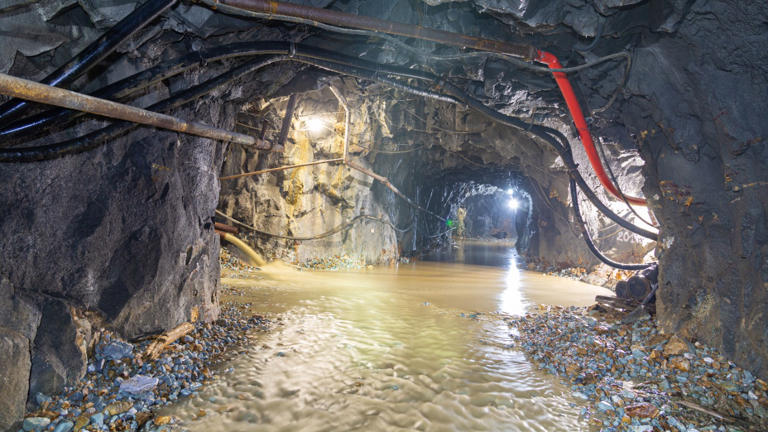
Deep beneath a working nickel and copper mine near Timmins, Ontario, something has been seeping out of billion-year-old rock for longer than most scientific studies last. Hydrogen gas, colorless and odorless, has been trickling from boreholes drilled into the Canadian Shield at a steady average of about 0.008 tonnes per year, sustained across more than a decade of continuous monitoring. That is a tiny volume, roughly enough to power a single hydrogen fuel-cell car for a few months. But the persistence of the flow, and the ancient geology driving it, has caught the attention of researchers who see it as evidence of something much larger.
A team led by geoscientist Barbara Sherwood Lollar at the University of Toronto published the findings in the Proceedings of the National Academy of Sciences, marking the first time anyone has tracked naturally accumulating hydrogen in Precambrian rock over a full decade. The question their data raises is deceptively simple: if rocks this old can produce hydrogen without any human help, could deep geology become a source of clean fuel?
What the boreholes actually show
The measurements come from boreholes originally drilled for mining operations, not hydrogen exploration. Over ten-plus years, instruments recorded a consistent outflow of hydrogen from fractured Precambrian rock, the type of ancient continental crust that forms the backbone of the Canadian Shield. The duration is what separates this from a curiosity. A burst of gas after drilling could be a one-time release of trapped pockets. A flow lasting a decade points to an ongoing geochemical engine.
That engine runs on two well-understood reactions. The first is serpentinization: iron-rich minerals in the rock react with water, producing hydrogen as a byproduct. The second is radiolysis, in which natural radiation from uranium and thorium in the crust splits water molecules underground. A foundational 2014 study published in Nature by Sherwood Lollar and colleagues established that ancient cratonic rocks generate hydrogen through these slow geochemical processes and can sustain subsurface microbial ecosystems with the gas they produce. Earlier work on Precambrian Shield fracture waters found exceptionally high dissolved hydrogen concentrations, with isotopic fingerprints pointing squarely at serpentinization and radiolysis as the sources.
The Timmins site is not a one-off. A 2024 review published in Frontiers in Geochemistry cataloged at least four distinct hydrogen-generation pathways operating within Canadian Shield geology across Quebec alone: radiolysis, hydrothermal alteration, mantle degassing, and organic matter decomposition. The authors mapped potential source-rock environments across the province, suggesting that what researchers observe at Timmins is part of a geological pattern stretching across one of the largest exposed Precambrian formations on Earth.
So the core science rests on firm ground. Hydrogen is physically present and measurable. The supply has lasted long enough to rule out a short-lived artifact of drilling. And the chemistry responsible operates through reactions that geoscientists have studied for decades.
Why the gap between detection and energy source is still enormous
A decade of steady borehole emissions does not, by itself, prove that a commercially viable reservoir sits beneath northern Ontario. The distance between detecting hydrogen and extracting it at useful scale involves several unresolved problems, and researchers are candid about them.
The first is generation rate. The 0.008 tonnes per year tells us how much gas escaped through specific boreholes, not how much the surrounding rock produces in total or how quickly the supply replenishes. The fractures that mining operations happened to intersect may capture only a sliver of a larger system, or they may represent most of what is locally available. Without a three-dimensional map of the fracture network and production zones, scaling up from a handful of boreholes to a basin-wide resource estimate remains guesswork.
Residence time is equally murky. Some of the detected gas could be relatively young, generated over years to decades. Some could have accumulated over geological timescales and only recently found a pathway to the surface through mining activity. Distinguishing ancient trapped hydrogen from near-surface artifacts, modern microbial contributions, and contamination introduced by drilling or metal corrosion remains a significant analytical challenge, as multiple recent peer-reviewed assessments of the geologic hydrogen field have noted.
Then there is biology. Subsurface bacteria feed on hydrogen as an energy source. The fraction they consume before gas reaches a borehole is poorly constrained at Timmins. If microbes are highly efficient at stripping hydrogen from circulating fluids, the amount that accumulates in extractable pockets could be far smaller than gross production rates suggest. The PNAS study itself acknowledges the role of subsurface microbial life as part of the system, but direct microbiological data specific to these mine fractures remain limited.
Reservoir geometry poses yet another challenge. For hydrogen to be extractable at meaningful volumes, it needs to collect in porous or fractured zones capped by impermeable layers, much like conventional natural gas. No publicly available data from the Timmins work describe the lateral extent or thickness of the hydrogen-bearing zone, nor the quality of any geological seal above it. Observing hydrogen in boreholes is not the same as identifying a producible reservoir, because losses during migration, lack of trapping structures, and low flow rates can each prevent commercial recovery even where generation is robust.
Finally, engineering. Hydrogen is the smallest molecule in nature. It embrittles steel, leaks through seals, and reacts with minerals in the subsurface. Designing wells and surface facilities to handle a diffuse, low-pressure gas stream emerging from hard crystalline rock is a fundamentally different problem than producing methane from sedimentary basins. The Timmins measurements do not yet address how infrastructure would perform over years of continuous extraction.
A global race for “gold hydrogen” gives the findings broader weight
The Timmins discovery lands in the middle of a growing international push to find and exploit naturally occurring hydrogen, sometimes called “gold hydrogen” or “white hydrogen.” In Mali, a well near the village of Bourakébougou has been producing natural hydrogen since 2012 and already generates electricity for the local community. Exploration companies in Australia, the United States, and across Europe have staked claims on sites where hydrogen seeps or subsurface chemistry suggest buried reserves. As of mid-2025, the U.S. Geological Survey had begun its first-ever national assessment of geologic hydrogen potential.
What makes the Canadian Shield work distinctive is the rigor of its measurement record. Most natural hydrogen discoveries rely on surface seeps, single well tests, or geochemical modeling. The Timmins dataset offers something rarer: a continuous, multi-year record from instrumented boreholes in a controlled environment, published in a top-tier journal. That does not make it commercially significant on its own, but it gives the broader gold hydrogen thesis a stronger empirical anchor than it had before.
For context, the dominant methods of producing hydrogen today are steam methane reforming, which relies on natural gas and emits carbon dioxide, and electrolysis, which splits water using electricity and is only as clean as its power source. A naturally occurring hydrogen supply that requires no energy input and produces no emissions would, in theory, undercut both on cost and carbon footprint. But “in theory” is doing heavy lifting in that sentence. No one has yet demonstrated that geologic hydrogen can be extracted at volumes and prices competitive with industrial production.
What comes next beneath the Canadian Shield
The Timmins mine sits squarely in the realm of scientific proof-of-concept as of June 2026. The rocks are making hydrogen, and they have been doing so for a very long time. Boreholes can tap into that process and deliver measurable gas to the surface. What has not been demonstrated is whether similar sites can be found, characterized, and engineered in a way that turns a geological phenomenon into a reliable energy source.
Sherwood Lollar’s group and other researchers are expected to push for deeper characterization: more boreholes, better isotopic analysis to separate ancient hydrogen from modern contamination, and modeling of fracture networks to estimate total resource potential. The Canadian government has signaled interest in geologic hydrogen as part of its broader clean energy strategy, though no dedicated exploration program for Shield hydrogen has been announced.
For now, the most honest reading of the evidence is that ancient rocks in northern Ontario are doing something remarkable, quietly splitting water and releasing hydrogen through processes that predate complex life on Earth. Whether that trickle can ever become a torrent is a question that geology alone cannot answer. It will take engineering, economics, and a willingness to drill into some of the oldest rock on the planet with a purpose no one imagined when those mines first opened.