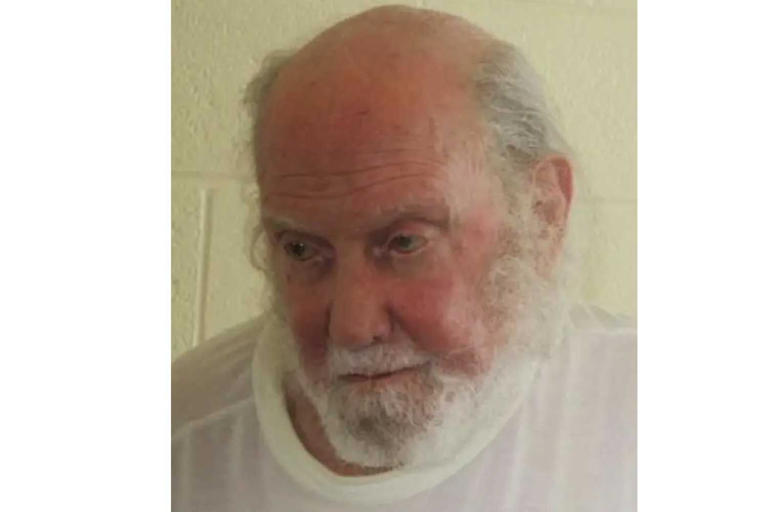
Man believed to be oldest US inmate dies at 101 after being spared execution 8 times
Francis Clifford Smith served more than 70 years behind bars for a murder he insisted he did not commit
NEED TO KNOW
- Smith was convicted of the 1949 murder of a Connecticut yacht club watchman
- Another person later claimed responsibility, but Smith was denied a new trial
- Smith received supervised parole in 2020 and died at a nursing facility in June 2026
Francis Clifford Smith was given what was supposed to be his last meal eight times.
Each time, the Connecticut prisoner was spared execution. He ultimately lived to 101, becoming widely regarded as the longest-serving prisoner in the United States before his death in June.
Smith died in his sleep at a nursing facility while under supervised parole, the BBC reported, citing the facility and the Connecticut Department of Correction.
He had spent more than 70 years behind bars for the 1949 murder of Grover Hart, a night watchman at the Indian Harbor Yacht Club in Greenwich.
Smith was 25 when he was convicted of first-degree murder in 1950, according to Connecticut prison records reviewed by PEOPLE. The records list June 7, 1950, as both his sentencing and latest admission date.
He maintained his innocence for the rest of his life.
Hart was shot during a robbery at the yacht club in the early morning hours of July 23, 1949, according to a 1954 Connecticut Supreme Court decision reviewed by PEOPLE.
The bullet that killed Hart came from a .22-caliber Smith & Wesson revolver, while another bullet and four cartridge cases recovered at the club were fired from a .22-caliber Colt automatic pistol, indicating that at least two people participated in the crime, the court said.
George F. Lowden pleaded guilty to second-degree murder in connection with Hart’s killing, according to the ruling.
The evidence connecting Smith to the crime was circumstantial. Police found the Colt pistol, along with jewelry and other property taken from the yacht club, inside a gray Cadillac parked outside a cafe in Brewster, N.Y.
Smith had been seen at the cafe shortly before police discovered the car. Witnesses also testified that they had seen him driving the Cadillac or a similar vehicle earlier that month, and a shirt belonging to Smith or a member of his family was found inside it, according to the ruling.
Want to keep up with the latest crime coverage? Sign up for PEOPLE’s free True Crime newsletter for breaking crime news, ongoing trial coverage and details of intriguing unsolved cases.
Smith was found hiding in the woods near a reservoir five days after the killing. He gave police a false name, denied that he was Francis Smith and had a bottle of hair dye with him, the court said.
But questions about his conviction emerged in the years that followed.
One witness, Edith Springer, later repudiated testimony connecting Smith to the Cadillac. A court found her recantation not credible and denied Smith a new trial.
Another prisoner, David Blumetti, later claimed that he, rather than Smith, had accompanied Lowden during the robbery and killing. Blumetti said Smith had initially discussed committing a robbery with him but backed out and lent him the Cadillac.
The trial court rejected Blumetti’s account, finding that it contained inconsistencies and contradicted his previous statements. The Connecticut Supreme Court upheld that decision in 1954, though one justice dissented.
The dissenting justice noted that Smith had consistently professed his innocence and had been convicted solely on circumstantial evidence while another person was claiming responsibility for the crime.
Doubts about Smith’s guilt also reached investigators. Major Leo Carroll, an officer who had interrogated Smith, later testified that he believed Smith was innocent, the BBC reported, citing the Boston Globe.
“I’m not even sure he was present at the murder,” Carroll said, per the outlet.
Smith was scheduled for execution eight times and spared each time. His death sentence was commuted to life imprisonment in 1954.
He escaped from prison in 1967 but was captured 12 days later; he was paroled in 1975 but returned to prison about 10 months later after an arrest for petty larceny and weapon possession violated his parole, the outlet reported, citing the Globe.
He declined several subsequent opportunities for parole before accepting supervised release in 2020 and moving into a nursing facility that cares for older people in the justice system.
During his years at Osborn Correctional Institution, Smith became known for sneaking bread out of the dining hall to feed birds, earning him the nickname “The Birdman of Osborn,” prison spokesperson Andrius Banevicius told the BBC.
Smith died in his sleep in June and was later cremated, said David Skoczulek, a spokesperson for the nursing facility.
“Essentially, he died of old age,” Skoczulek added, per the outlet.