Lawsuit alleges Freedom Fuel gas stations touted by Trump are selling stolen fuel
A lawsuit filed this month alleges that there’s a simple reason some stations in the Freedom Fuel Network — the chain of discount gas stations promoted by the White House — have been able to sell gas so cheaply: Some $4 million worth of the gas is stolen.
KRSM, the business named in the suit, denies this accusation.
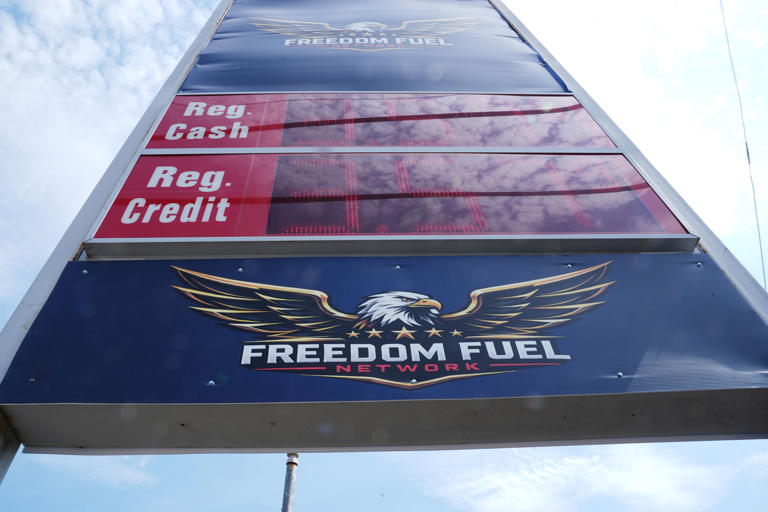
Freedom Fuel stations located around Philadelphia and New Jersey burst into public view in the run-up to the July Fourth holiday, when President Donald Trump posted praise for their discounted pump prices, writing “They are doing this because they love the U.S.A.” The White House later posted a video of drivers filling up at one of the stations and thanking Trump for the low prices — at the time, $3.47 a gallon in honor of the 47th president, though they’ve since crept up.
Neither the White House nor the network’s owners would explain exactly how the stations were able to sell fuel far cheaper than their competitors. The White House told reporters that Freedom Fuel was simply a private company lowering its margins for patriotic reasons and declined to disclose the people behind it — who turned out to be a former New Jersey mayor and NFL special teams coach for the Baltimore Ravens, a GOP donor.
POLITICO’s reporting also linked six of the stations via business records to a New Jersey fuel businessperson named Shamikh Kazmi who, along with his brother Syed Kazmi, have been involved in several lawsuits. The Freedom Fuel Network’s website said that despite “misinformation and baseless speculation … Freedom Fuel Network is proudly lowering prices to benefit our community and strengthen our local economy.”
But according to a complaint filed Aug. 19 by Georgia-based fuel supplier Mansfield Oil Co. in the U.S. District Court for the Eastern District of Pennsylvania, Syed Kazmi’s company KRSM acquired over 1 million gallons of fuel from a Sunoco terminal in Twin Oaks valued at around $4 million — and never paid for it. KRSM sold some of the fuel, the lawsuit alleges, to stations within the Freedom Fuel Network, which now claims to operate 29 locations.
“KRSM was able to sell such fuel for such low prices and garner such publicity because it never paid Plaintiffs for such fuel,” reads the complaint.
KRSM disputed the allegations in an emailed statement, calling the case “an accounting dispute over fuel invoices misplaced by Mansfield Oil” and continuing: “We will not be commenting further on this pending litigation.” A message to Freedom Fuel sent via its website was not returned. Shamikh Kazmi did not immediately respond to a request for comment.
“Syed Kazmi is a principal owner, and President, of KRSM, Inc,” said Urs Broderick Furrer, a lawyer for Mansfield, in a statement. “KRSM has failed to pay for fuel that they lifted off of Mansfield’s account. That is not an accounting dispute. The fuel was delivered to at least 10 of the Freedom Fuel Network locations, as listed on the Freedom Fuel Network’s website.”
A White House official said that “the Administration has had zero contact or dealings with the defendant: KRSM Inc or Sayed Kazmi.” And a source familiar with the Freedom Fuel business said that “KRSM Inc and Sayed Kazmi are not associated with the Freedom Fuel Network in any capacity.”
Companies associated with the Kazmis have previously been subject to other lawsuits alleging fraudulent activity and theft. For instance, a federal judge entered judgment in February in favor of a fuel distributor that alleged in a civil lawsuit that Shamikh Kazmi’s company had taken roughly $667,000 worth of fuel over 10 days in August 2021 without fully paying for it. Shamikh Kazmi denied the allegations, but the court entered a default judgment after what the judge described as the defendants and their lawyers’ “serial flouting of Court orders and the Federal Rules of Civil Procedure” during the case.
In another suit, 7-Eleven accused Syed Kazmi’s KRSM in 2022 of stealing tens of thousands of dollars worth of cigarettes, and the judge again found in favor of the plaintiff in 2024. KRSM disputed 7-Eleven’s allegations of breach of contract, claiming 7-Eleven was the one that breached the contract.
The current lawsuit also alleges that KRSM is not authorized to conduct business in Pennsylvania or New Jersey at all. New Jersey’s Division of Consumer Affairs declined to comment. The Pennsylvania attorney general’s office did not respond to a request for comment.