Abdul El-Sayed walked into a Fox News grilling — and turned every question into an affordability pitch
In a tense prime-time interview on Fox News, Michigan’s Democratic Senate nominee swerved question after question back to one topic: affordability. The exchange — and his rival’s appearance on the same network — offers a preview of how both parties plan to fight over a Senate seat considered crucial to chamber control.
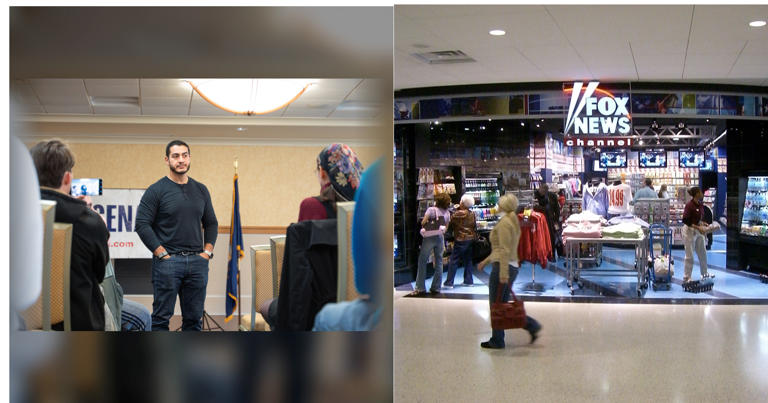
Dr. Abdul El-Sayed, the Democratic nominee for Senate in Michigan, told Fox News host Jesse Watters to “be a journalist” during a tense, combative prime-time interview on Monday, then spent much of the 25-minute exchange steering away from culture-war questions and back to the affordability crisis facing Michiganders.
“You want to bring up all this culture war,” El-Sayed told Watters during the interview. “I’m not here to fight a culture war. I’m here to fight the affordability crisis that people are facing.”
The clash matters beyond the viral clip. Michigan’s Senate race is considered crucial to which party controls the chamber, and El-Sayed’s willingness to walk into prime-time Fox News, then fight the format, is a deliberate test of a Democratic messaging strategy: run at Republican media instead of around it.
What actually happened on Watters’s set
According to reporting from The New York Times and NBC News, the interview was “smiling yet tense.” Watters pressed El-Sayed on a rapid-fire set of hot-button topics: whether he supports abolishing Immigration and Customs Enforcement, Shariah law, gender reassignment surgery, and whether “men should play women’s sports.”
Through laughter and interruptions, Watters repeatedly reminded his guest who was in charge. “You’re filibustering,” he said at one point. “Pipe down one second.” Elsewhere: “That’s a dodge, Abdul.”
According to the reported account of the interview, El-Sayed’s counter came on the question of what the interview was even about. He told Watters to “be a journalist” — a pointed rebuke at a host whose questions El-Sayed framed as a distraction from pocketbook concerns. The jab also touches a long-running debate: Watters’s colleague Sean Hannity has described himself as “an advocacy journalist or an opinion journalist,” underscoring how blurry the line between opinion and news has become on Fox’s prime-time lineup.
The affordability pivot, question by question
El-Sayed’s answers followed a consistent template: take the hot-button premise, refuse the frame, and return to kitchen-table economics.
- On ICE: He called the agency “brutish and ineffective,” pointing out that before ICE there was the Immigration and Naturalization Service. “We were able to enforce our immigration policies without shooting people in the face and the back of the head. The INS worked a lot better,” he said.
- On immigration generally: “When I travel the state, and I have traveled my state, more people are asking me about how they’re going to afford their gas and groceries. They’re not asking me about immigration.”
- On electric cars: He reframed the question around tariffs, saying the “bigger question” is “why the president just started a trade war or escalated a trade war with Canada,” which he argued would make cars far more expensive. He used the same answer to pitch higher taxes on people making over $100 million.
The through-line was clear and, arguably, the point. Every hostile question became a launchpad for the same message about costs.
Why a Democrat went into the lion’s den
El-Sayed is a progressive who won a hard-fought primary earlier this month and has worked to quiet moderate Democrats’ worries that he is too left-wing to win a battleground state. Reporting from The New York Times described the appearance as signaling a growing effort to reach Republican voters — and previewing his general-election messaging.
That calculus is easier to understand when you look at the prize. Michigan’s race is considered crucial to which party controls the Senate. Appearing on Fox News lets a Democrat claim he is willing to face skeptical voters directly, even if the studio audience is not exactly friendly territory.
There’s also an argument about the medium itself. Sean Hannity, Watters’s colleague on the same network, has previously claimed the label “journalist” for himself, telling interviewers he is “an advocacy journalist or an opinion journalist.” El-Sayed’s “be a journalist” jab leans into that long-running ambiguity: if opinion hosts want to be treated as journalists, the implication runs, they should ask questions voters actually care about.
Rogers attacked him on Fox News the same night
While El-Sayed was sparring with Watters, his Republican opponent, former Representative Mike Rogers, was making his own Fox News appearances. At a town hall with Sean Hannity on Monday, Rogers called El-Sayed “the most extreme candidate” and a “manufactured candidate” with a “pattern of deception.”
Rogers accused El-Sayed of having called for defunding the police, releasing criminals from prison, and backing the Green New Deal — “which for Michigan is a killer,” Rogers said. He also touted his campaign’s ground game, saying volunteers were approaching 6 million doors knocked across the state, and claimed his campaign was drawing support from voters who traditionally back Democrats.
The two candidates’ Monday appearances on the same network underline how central Fox News remains to Republican persuasion — and how both camps are treating the airwaves as terrain worth contesting as the race heats up.
Does dodging work, or does it read as evasive?
Fair-minded observers will disagree about what the interview showed. El-Sayed’s defenders can point to a coherent strategy: he was not elected to litigate culture-war provocations, and his argument on set was that voters he meets ask about gas and groceries, not immigration. Redirecting to the economy is a message discipline, not a dodge, in this view.
Critics, including Rogers’s campaign, will say the performance confirmed their portrait of a candidate who won’t give straight answers on policing, immigration, or transgender issues — and who only survived the interview by talking past it. Watters’s repeated “that’s a dodge” line will no doubt show up in Republican attack ads, cut with the candidate’s own answers.
What remains genuinely unclear is whether these dueling Fox News appearances moved a single persuadable voter, or whether they simply rallied each side’s base. Michigan’s undecided middle — voters worried about groceries and gas more than either ICE or culture-war ultimatums — will likely decide that.
What to watch as the race unfolds
With a contest both parties consider crucial to Senate control, expect more combative media forays from both camps rather than fewer. Watch whether El-Sayed repeats the affordability-only frame in debates and local interviews, and whether Rogers can broaden his attack beyond “extreme” labels into an affirmative economic pitch of his own.
The deeper question the Watters interview raised has no clean answer yet: in a media environment where opinion hosts set the terms, is the winning move to challenge their credentials — or to simply give them the soundbite they came for?