How a failed North Texas brothel case turned into a landmark prosecution in Minnesota
One of the most successful brothel prosecutions in the U.S. – with more than $3 million in restitution judgments for the survivors – began as a failure in North Texas.
The case against Waralee Wanless, a high-ranking North Texas brothel operator, emerged when Addison police investigated a cry for help delivered on a flash drive. The tip included the culprits’ names and addresses where women were being held against their will.
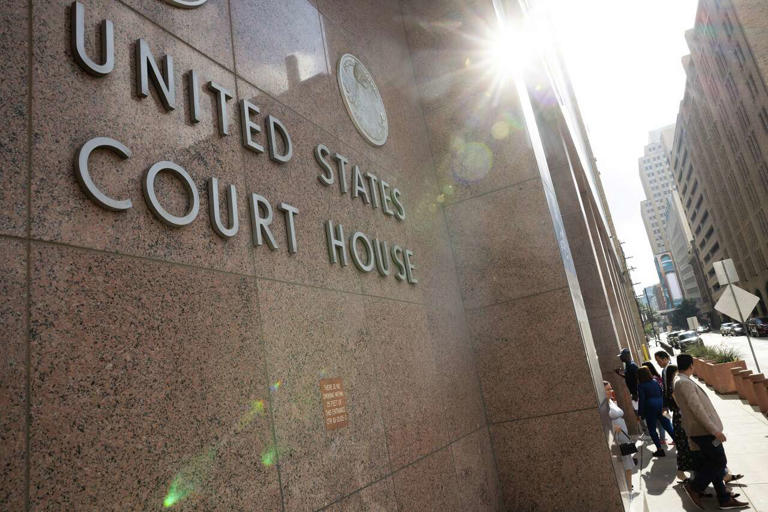
Police raided the apartments in 2013 with federal agents, making arrests and seizing evidence, court records show. State charges were brought against the suspects in Dallas but later dropped without explanation.
North Texas authorities failed to connect Wanless’ brothel operations to a larger organized crime network with tentacles in other states – as far north as Minnesota.
When the Dallas prosecution fizzled, Minnesota authorities picked it up as part of their investigation into a larger nationwide sex trafficking ring – and made it a national model for how such cases should be handled.
When Wanless arrived in Dallas in 2010, she worked as a prostitute and lived at a “spa” in a shabby building on a notorious street in a seedy, industrial area of Northwest Dallas, court records show. Emerald Street – near Interstate 35 and Royal Lane – was known for its decrepit, windowless buildings that housed around-the-clock “red light” brothels with such names as Bikini Body Works, Tokyo Spa and Blue Angel Body Bath, court records show.
Men walked in off the street at all hours without vetting. Some became violent with the women. Police raids were a familiar sight.
Wanless fled the spa when it was raided by police, court records show. She married one of her customers and eventually became a sex trafficker by buying the “bondage debt” of at least five other Thai women beginning around 2012, prosecutors said.
In doing so, Wanless effectively “owned” the women, prosecutors said.
Wanless forced the women to pay their debts by having sex with men in upscale apartments she controlled in Addison and Frisco as a “house boss.” She also operated brothels in Chicago and Washington, D.C., prosecutors said.
The victims, mostly young women from Thailand, owed bondage debts of between $40,000 and $60,000 – far more than what it cost their smugglers to bring them to the U.S., prosecutors said. They were advertised on websites such as Backpage and sent to brothels in cities across the country, where they were forced to have sex for money “all-day, every-day,” often with up to 10 customers per day, court records say.
The case against Wanless and seven others was dismissed by the Dallas County district attorney in 2016 “in the interest of justice.”
Three days before the dismissal, it was disclosed that one of the detectives on the case had resigned from the force after admitting he embezzled from the Addison Police Association for many years.
Resurrected
Fortunately for the survivors, Minnesota federal authorities had since 2013 been conducting their own investigation into a sex trafficking network with operations Wanless and other Texans were part of. They relied heavily on the evidence uncovered by Addison police.
They called their enforcement operation Bangkok Dark Nights. By October 2016, the first series of arrests was made on federal charges out of Minnesota – only a few months after the Dallas DA’s case dissolved.
Eight of the 39 defendants – spread over two separate indictments – were Texans. And three of those, including Wanless, were living in North Texas.
When she was arrested in 2017 on the Minnesota charges, Wanless was driving a Lexus SUV and maintained a bank account through which $150,000 had flowed over the past year, court records show. Her lawyers said she earned that money as an independent sex worker and part-time ride-share driver.
A Thailand native, Wanless had a resident visa and was living in The Colony with her third American husband, court records show. Minnesota prosecutors described Wanless as “one of the highest-level players in this organization.”
“We have a case here where Ms. Wanless owned other women,” Assistant U.S. Attorney Laura Provinzino said at the sentencing hearing.
Prosecutors undertook an aggressive accounting of the traffickers’ finances to learn the conspiracy generated $30 million from 2009 to 2017. With the help of an IRS agent, they documented the movement of cash through unlicensed money transmitting services and bank accounts. They said a sophisticated money laundering network allowed the organization to “flourish” for so long.
“Money laundering is the lifeblood of the sex trafficking organization; it cannot effectively operate without a means of transferring cash profits across the country and back to Thailand,” Provinzino said in a court filing.
Numerous cash deposits were made to different bank accounts, some established in victims’ names. Then the money was consolidated and wired regularly to Thailand, court records show. It can be accomplished with “little more than access to a smartphone,” said Provinzino, who is now a federal judge.
Though much of the profits were already sent overseas, Minnesota prosecutors sought forfeiture and restitution judgments against most of the defendants so the survivors could receive compensation. Following the second round of arrests in 2017, Minnesota law enforcement had seized more than $500,000 in cash, court records show.
Many of the forfeitures were agreed to in guilty pleas. Ultimately, more than $3 million in restitution was ordered to be paid to 17 victims in the Minnesota case.
Wanless went to trial in Minnesota and was convicted in 2018 by a jury. Two years later, she was sentenced to 12 years in prison and ordered to pay $250,000 in restitution to her victims as well as a $1 million forfeiture judgment.
The evidence against her from the Dallas County files, collected by Addison police in 2013, turned out to be Minnesota prosecutors’ strongest, court records show.
The nearly 400 pages of material included a debt ledger, banking records, and a victim’s visa and travel documents that were seized from Wanless in 2013.
Checks in the mail
A survivor of that trafficking ring who spoke to The News through an interpreter said she was smuggled into the U.S. from Thailand around 2016 and made to work off her debt by having sex with men. She said her passport was taken from her. She met another woman who was confined to the same apartment for two years to pay down her bondage debt. That’s when she decided to escape.
After three months of forced sex work, a man who was part of the operation brought her with him to buy groceries. She saw her chance to escape and took it.
After being rescued, the woman had to testify against her traffickers before a jury in a case related to the Minnesota prosecution.
She told The News her life before being brought to the U.S. was very hard. Once here, and confronted with the reality she would be forced to work in a brothel, her first thought was whether she would live or die.
Since her rescue, she’s been working for an organization in the U.S. that helps other trafficking survivors.
“I have a good job now,” she said. “And a good boss. My son is here.”
She is still receiving restitution checks – most in small amounts.
A victim advocate in the Minnesota brothel case said she was unaware of anyone receiving a lump sum restitution payment.
“None of the victims got one big check,” said Panida Rzonca, an attorney with the Thai Community Development Center in Los Angeles, which helped survivors in the case.
There were other problems.
“A lot of these checks got lost in the mail,” she said, or the checks were returned because survivors moved.
“The system is very antiquated in some ways,” Rzonca said, and electronic restitution payments would work better.
Many of the 39 defendants in the Minnesota sex trafficking case ended up in prison. Some are paying restitution from their inmate accounts. A total of 17 victims requested restitution, authorities said. Many of the victims continue to receive checks, Rzonca said.
How much of the total forfeited property went to the victims versus the government is not clear. The Justice Department does not keep a public accounting of such transactions.
Some of the Minnesota defendants forfeited sizable sums. Michael Morris, for example, agreed to forfeit more than $285,000, court records show. Morris was a “house boss” in the criminal organization who ran three brothels in California, prosecutors said.
Bhunna Win, a money launderer for the organization, gave the government a cashier’s check for $525,000 when she pleaded guilty, court records show. Win, a San Diego mother with a business degree, ended up paying all of her almost $750,000 in restitution, court records said.
Some defendants were able to pay more restitution than others, Rzonca said. And not all defendants owe restitution to the same victims, she noted. Many victims called her, puzzled about the series of small amounts they were receiving by mail.
“It’s not an easy system to navigate at all,” she said. “I don’t think the victims understood what was going on.”
Rzonca said some brothel victims left Minnesota and the U.S. Only when the court wasn’t able to reach them were other options presented, she said, such as using wire transfers to send them restitution.
The fault, she said, does not lie with Minnesota prosecutors. Rzonca said they continually fought for the victims to receive compensation.
“There was no question where they stood on the issue.”