Voices: Hyrox ‘poopgate’ shows how far women feel they need to push themselves
What comes to mind when I say the name “Paula Radcliffe”? If you’re Gen Z or older, there’ll likely be one reply – and sadly for the legendary British long-distance runner (who held the women’s marathon world record for 16 years), it won’t be her many outstanding athletic achievements, but the fact that she pooed herself during the 2005 London Marathon.
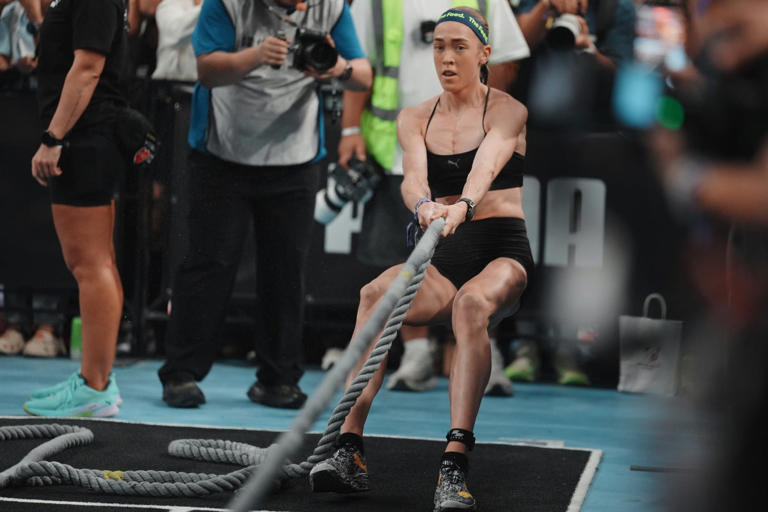
So, too, then, for Australian Hyrox athlete Joanna Wietrzyk, who has earned herself the deeply unfortunate accolade of becoming infamous for defecating during a global indoor race in Beijing. She continued with the rowing machine, sledge push and medicine ball throwing events, despite being covered in her own excrement.
Wietrzyk may have gone on to win the women’s solo event in 61 minutes and 23 seconds (though she’s since apologised and forfeited her victory, following an eye-watering backlash), but the pictures and video footage will haunt her for a lifetime.
At first, Wietrzyk, who’s just 22, was defiant – she posted a (now deleted) image of herself lying down attached to an IV drip pouting at the camera, with the caption: “Go hard or go home … a win is a win.” But, she later conceded: “I regret the decision to not have stepped off the track. I recognise that I should have made a different choice. I take responsibility for my decision to continue and am deeply sorry for the discomfort and disruption it caused.”
I saw some of the footage from the event, and all I can really say is: wow. It’s unequivocally disgusting, and – many would say, selfish – to push through the barriers of basic decency in the pursuit of your own success; to ignore the conditions you’re creating for your fellow competitors. There are very real hygiene and disease and contamination-related safety concerns (as one friend bluntly put it), to “making people do burpees in her splatters”.
For more from Vix, sign up to her Independent Women newsletter – a weekly dose of smart, sharp and unflinching stories on the issues that matter most.
So, how has it come to this? I spoke to a few athletes I know, who have all competed (variously) in powerlifting, CrossFit, Hyrox and boxing competitions. One told me she thinks it’s unequivocally “selfish” – that “no one wants to pull out of an event, but sometimes needs must – and this was a need”. Another told me she feels “angry” about it – that there’s “a difference between being accepting of bodies and what women’s bodies do, and being rude and selfish”.
“In the Hyrox and CrossFit world, there’s a fixation on pushing and exceptional performance,” one athlete told me. “I had to stop taking part in competitions because I was being forced to push myself beyond my limits. There’s a general perception that if you don’t beat your PB [personal best], or the person next to you, it’s not good enough. I just got sick of it.”
She also said that once you start competing, there’s a subtle pressure to stop listening to your body and what feels right. “These sports foster the idea that nothing matters except winning. To keep going, like she did, is grossly offensive and selfish – but it’s also tragic. Why do we think it matters so much? What does it say about women in sport – and the pressure we put on ourselves?”
But a former powerlifter said he believes simply that “an extreme sport requires an extreme mindset”. “Her sport requires the maximum effort, so from her point of view, I actually don’t have a problem with it at all,” he said. “It shows how hardcore she is to not give a s**t about it and to do it anyway.
“There are female powerlifters who wet themselves during lifts, especially deadlifts, and people are cool with it. In MMA, the white ring is completely red by the end of the night with blood and spit. This is hardcore sport – it is what it is. If anyone’s to blame, it’s the event organisers. By not stopping her, they gave her permission to carry on.”
What I think this outcry really shows is the pressure put on women to succeed “at all costs”. To carry on, even when carrying on equals the ultimate humiliation: incontinence.
I know dozens of women with weak bladder control after giving birth who can’t get through a simple sneeze or jump or cough without wetting themselves. I also know women who start running ultra-marathons at 40; who push themselves beyond what seems possible or conceivable. And I don’t think we should blame – or shame – those who forget themselves “in the moment”, when they’ve been given conflicting messages from all sides and have been left facing impossible odds.
After all, we still live in a world in which fails to foster girls in sport even from primary school age; which brands the Lionesses’ successes “women’s football” (rather than just “football”, despite their legacy beating the men’s team, hands down).
Just this week, we saw fierce backlash to a new ad starring Sydney Sweeney, who appeared naked to promote sports betting on basketball and football. Dozens of female champions damned the “reductive” and “infuriating” viral campaign for failing to take women’s sports seriously; for reducing female endurance and physical prowess to simple sexual objectification.
I agree with those women – but I also think it runs deeper than that. I’m uncomfortable with the shaming of this young Hyrox competitor, and feel sad about the pressure that presumably led her to making the shocking decision to carry on. I suspect she would have been damned if she did continue and damned if she didn’t.
Perhaps what the “gross” controversy really shows is that once again, women can’t have it all – that we are simultaneously being told to push ourselves faster and harder if we want to succeed; or – in Sweeney’s case – that when it comes to sports, we should be quieter and softer and attractive and wholly unserious.
It’s not the poo that’s the problem, it’s the messaging.
The Independent is the world’s most free-thinking news brand, providing global news, commentary and analysis for the independently-minded. We have grown a huge, global readership of independently minded individuals, who value our trusted voice and commitment to positive change. Our mission, making change happen, has never been as important as it is today.