‘Devastating’: Retired firefighter says he lost most of his retirement savings investing in stocks that were targeted by a famous short-seller
Retired Texas firefighter Billy Banks (1) made an investment he hoped would strengthen his retirement savings – but instead, it resulted in an $80,000 loss. And his loss is playing a role in a broader legal case against a notorious short-seller.
Banks testified in a Los Angeles federal courtroom that, in 2018, he moved roughly $110,000 from mutual funds in his 401(k) into cannabis company CV Sciences (2), after becoming increasingly aggressive with his investing strategy. He said he believed the company was a worthy one, with CBD products that could help people with stress and pain management.
Must Read
-
Jeff Bezos backs a platform that lets anyone invest in rental homes for as little as $100 — 6 ways to build wealth like a landlord without actually being one
-
Dave Ramsey warns nearly 50% of Americans are making 1 big Social Security mistake — here’s what it is and 3 simple steps to fix it ASAP
-
The tax breaks in Trump’s ‘big beautiful bill’ expire after 2028 — and experts say most people won’t act in time. What to do before the window closes
Banks said the investment initially appeared to be paying off. While vacationing with his wife, he watched the value of his position climb to roughly $190,000.
“It was like I had been watering this plant for weeks, and here it is,” he told the courtroom (1).
But the gains proved short-lived. Banks testified that shares of CV Sciences fell sharply after public criticism from Andrew Left — founder of Citron Research and one of Wall Street’s most prominent short sellers, who has just been convicted of 12 counts of securities fraud and one count of taking part in a securities fraud scheme. He faces up to 25 years in prison; sentencing is set for August.
One loss turned into another
Banks said that even as shares of CV Sciences cratered, he continued to believe in the company and its products. But as losses grew, he said he eventually decided he could no longer continue holding the stock.
“It was like trying to catch a tiger tail. You couldn’t catch up with the thing,” he told the courtroom.
After selling his shares, Banks said he was left with roughly $30,000. He invested the remaining money into another cannabis company, Namaste Technologies, now known as Lifeist Wellness, hoping to recover some of his losses.
According to court documents (4), Citron Research later released a report and social media post urging investors to sell Namaste shares, writing: “Some cannabis stocks are overvalued, and some are total jokes. This is a joke. Drop it like it’s hot.”
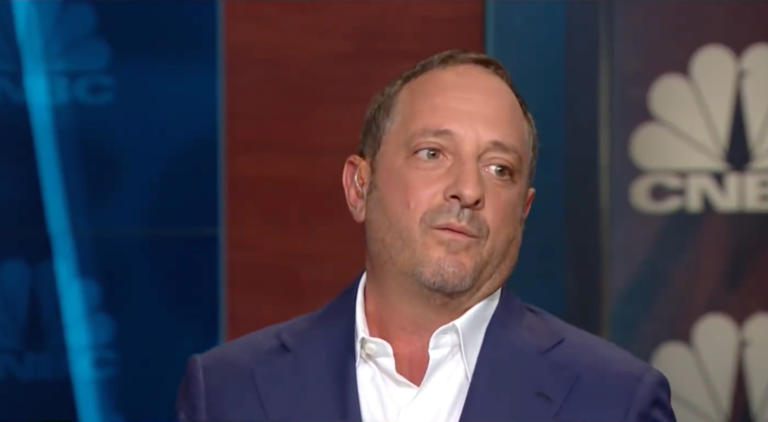
Court documents also state that during a televised Bloomberg interview (5) that aired in September 2018, Left told viewers he “would keep shorting [Namaste] until it goes to 0.”
Banks was horrified, he told the court: “When he said he was going to short it to zero, I saw my funds going to zero.” He testified that he lost about 80% in this investment, calling it “devastating.”
Prosecutors said Left made public statements about more than 20 stocks before taking positions that benefited after markets reacted, generating more than $20 million in profits.
Read More: Forget Florida — this is why these two unexpected states are the new retirement hot spots
The defense says investors made their own decisions
Over the years, Left built a following through Citron Research by publishing reports on companies he believed were overvalued and sharing market commentary with retail investors.
During the trial, his legal team argued he should not be held responsible for retail investors’ losses. Attorneys said Left, who pleaded not guilty (6) to the charges, never advised investors to buy shares of CV Sciences or Namaste, and maintained that Banks may have avoided steeper losses had he sold sooner rather than continuing to hold the stocks as they declined.
The defense also argued that Left’s criticism of Namaste ultimately proved accurate, and more broadly maintained that his market commentary reflected genuine opinions (3), not an effort to manipulate investors.
“He trades based on his own ideas about what’s good and bad,” attorney Adam Fee said during opening statements (3).
Prosecutors told jurors a very different story. They argued Left leveraged his public profile and influence to sway retail investors and create market reactions that benefited his trades.
“He said whatever he had to, whether it was accurate or not, to get a market reaction,” Assistant U.S. Attorney Andrew Roach said (3). “Because that’s what he was looking for. To generate a market reaction. To generate panic.”
One investor, Adam Gray, testified that he regularly followed Left’s stock commentary but eventually began questioning his behavior after noticing what he believed were inconsistencies in his trading strategy. Gray said Left appeared to take a bullish position in one cannabis company while publicly criticizing competing companies.
“To me, it just seemed off, like that shouldn’t be happening,” Gray said (1). He later submitted a tip to the Securities and Exchange Commission, though it remains unclear whether it played any role in launching the investigation.
Following his conviction, Left wrote, in a text exchange with journalist Andrew Ross-Sorkin: “I was actually criminally convicted on manipulating Nvidia Facebook and Tesla for telling the truth and making a profit. I am a bit speechless.”
The risk of putting too much into one bet
Banks’s experience may resonate with many retirement savers already worried about whether their nest eggs will be enough. According to a survey from Gallup (7), 82% of Americans worry they won’t have enough money to live comfortably in retirement. Retirement accounts often represent years of accumulated savings, which can make losses especially difficult to recover from later in life.
Concentrated bets can be especially risky because it means large portions of savings are tied to a single investment, as in Banks’s experience. Financial firms like Vanguard (8)have long argued that diversification, or spreading investments across different companies, industries and asset classes, can help reduce the impact of any one investment taking a hit.
While diversification doesn’t eliminate risk, it can help soften the blow when a single stock takes an unexpected turn. Investors considering major changes to retirement accounts may also want to speak with a financial advisor about their long-term goals, risk tolerance and overall investment strategy before moving large portions of their savings into one position.
While investors may draw different lessons from Banks’s story, the legal battle at the center of it is still unfolding. If convicted of securities fraud, Left could face up to 25 years in prison (3).