Trump says the $5,000 dividend will happen. Here’s what stands between the promise and a check
President Donald Trump says a $5,000 “Trump Dividend” will reach adult U.S. citizens if Republicans retain control of Congress. But as of September 27, no law authorizes the payments, no final funding mechanism has been announced and several major questions about eligibility, cost and congressional approval remain unresolved.
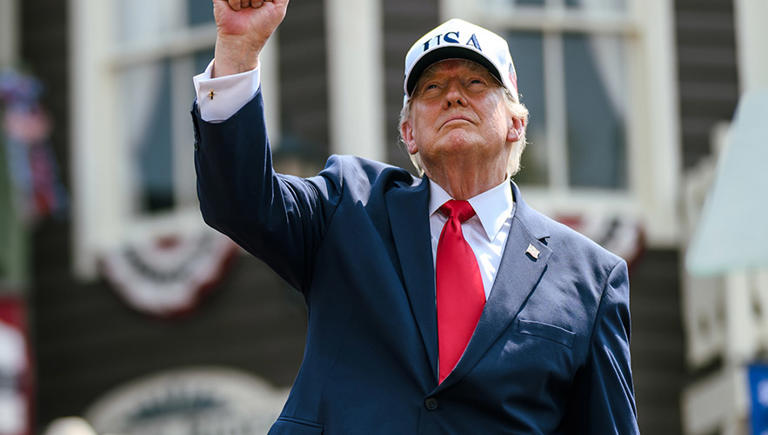
President Donald Trump has turned a promise of a $5,000 payment to adult U.S. citizens into one of the most prominent economic pitches of the 2026 midterm campaign. He announced it at the Republican convention in Dallas on September 9 and later wrote that the dividend “will happen,” tying the proposal directly to Republican victories in both the House and Senate.
The pledge is real. The payment program is not, at least not yet. The White House has endorsed the idea, Treasury Secretary Scott Bessent says his department is examining how it could be structured, and Sen. Bernie Moreno, a Republican from Ohio, says he is drafting legislation. Congress has not passed a dividend bill, however, and the administration has not identified a legally available source of money large enough to cover the estimated cost.
What Trump is promising
Trump’s public description has been unusually broad. At the Dallas convention, he said every adult U.S. citizen would receive $5,000 if Republicans won both chambers of Congress in the November 3 midterm elections. He also said recipients would have to spend the money in the United States, though he did not explain how such a restriction would be administered.
The White House repeated the promise the next day, comparing the proposal to a company distributing cash to shareholders. Trump then reinforced it on Truth Social, saying critics hoped it would never happen and declaring that it would. On September 13, he again told reporters the checks were “going to happen, 100 percent.”
That leaves several basic questions unanswered. The administration has not released a final plan explaining whether there would be an income cap, how citizenship and age would be verified, when payments would go out, whether the money would be taxable, how a domestic spending requirement could work or what legal authority would permit Treasury to distribute the funds.
The price tag is about $1.2 trillion
The central obstacle is scale. Estimates from FactCheck.org and the Committee for a Responsible Federal Budget put the cost at roughly $1.2 trillion if about 240 million to 245 million adult citizens received the full $5,000.
That would make the proposal far larger than a typical tax rebate and place it in the range of major federal spending programs.
Trump has pointed to the economy, private investment and tariff revenue as evidence that the country can afford the payment. Those are not interchangeable sources of federal cash. Private investment in factories, data centers and other projects can increase economic activity, but it does not become Treasury revenue dollar for dollar. Federal spending still needs a legally available source of funds.
Tariff revenue also falls well short of the estimated one year cost of the dividend. FactCheck.org, citing Treasury statements, reported that net tariff revenue totaled about $264 billion in 2025 and about $64 billion through July 2026 after accounting for refunds associated with tariffs invalidated by the Supreme Court.
The Tax Foundation estimated that newer tariffs could raise about $125 billion in net federal revenue in 2027. That would amount to roughly one tenth of the estimated $1.2 trillion needed for a single $5,000 payment to the broad adult population Trump has described.
Fiscal analysts have also challenged the idea that a payment of this size could be made without broader budget consequences. The Committee for a Responsible Federal Budget estimated that an unpaid $1.2 trillion dividend would significantly widen the federal deficit and could increase inflationary pressure by boosting consumer demand.
Bessent has told Congress he believes a structure could be found that would not increase the deficit. He has not publicly identified offsets large enough to demonstrate how that would work.
Why Congress remains central
Trump has suggested that he may not need a new act of Congress to issue the payments. Bessent told lawmakers on September 15 that Treasury was examining that question and believed there might be ways to structure the plan without increasing the deficit. He did not identify a specific legal mechanism.
House Speaker Mike Johnson, a Republican from Louisiana, has taken a different view. Johnson said Congress would need to act, while also saying lawmakers would consider the president’s proposal. Moreno has said he is preparing legislation so the dividend could be taken up after the election if Republicans retain both chambers.
The Constitution’s Appropriations Clause says money may be drawn from the Treasury only under appropriations made by law. That does not automatically settle whether some authority already enacted by Congress could be used for a particular payment program, but it explains why the source and scope of congressional authorization matter.
As of September 27, no enacted statute specifically creates a nationwide $5,000 Trump Dividend.
Support is also not uniform within the Republican Party. Moreno has embraced the proposal, while other Republican lawmakers have raised concerns about the deficit, inflation and the lack of detailed funding information. Democrats have broadly opposed the election linked plan.
Those differences matter because any new legislation would still have to pass Congress under whatever procedure lawmakers ultimately choose.
The DOGE dividend never became law
The current proposal has a clear predecessor. In February 2025, Trump said he was considering a “DOGE dividend” based on savings expected from the U.S. DOGE Service.
The idea originated with investor James Fishback, who proposed returning 20% of DOGE savings to taxpayers and applying another 20% toward the federal debt.
Fishback’s headline figure was a $5,000 payment for each qualifying taxpaying household, but the proposal depended on DOGE producing about $2 trillion in savings.
Trump publicly said he liked the concept and discussed it as a potential way to return government savings to taxpayers. No law creating those checks was enacted.
The savings assumption also failed to produce the pool contemplated in the original proposal. By 2026, reported DOGE savings remained far below the $2 trillion premise needed to support the proposed $5,000 household payment.
The DOGE dividend therefore never advanced into a nationwide payment program.
That episode illustrates an important distinction that also applies to the current pledge. A president can publicly endorse a dollar figure or funding idea long before Congress, Treasury and other agencies have a legal and administrative system capable of sending money.
The tariff dividend also stalled
Trump floated another broad payment in November 2025, saying most Americans should receive at least $2,000 from tariff revenue while excluding people with high incomes.
Treasury officials said at the time that legislation would be required. No nationwide tariff dividend program was ultimately enacted.
The legal and fiscal picture changed further on February 20, 2026, when the Supreme Court held that the International Emergency Economic Powers Act did not authorize the sweeping tariffs Trump had imposed under that statute.
The decision led to a refund process for affected importers and reduced the net revenue generated by those levies.
Trump subsequently pursued tariffs under other legal authorities, so tariff revenue did not disappear. But the specific promise of a $2,000 nationwide payment never became a federal check program.
That history is directly relevant to the new $5,000 pledge because tariffs are again part of the administration’s argument that a large payment can be financed.
The underlying question is not simply whether the federal government collects tariff revenue. It is whether enough legally available money exists to pay the dividend while meeting other federal obligations and without requiring additional borrowing.
Some Trump era payments did happen
It would be inaccurate to say that Trump backed cash payments have never reached Americans.
During Trump’s first term, Congress enacted two rounds of pandemic Economic Impact Payments that he signed into law.
The March 2020 CARES Act authorized payments of up to $1,200 for each eligible adult and $500 for each qualifying child. Congress later approved another round in December 2020 that provided up to $600 for each eligible adult and $600 for each qualifying child.
Those checks were not unilateral presidential dividends. They were tax rebates created by legislation passed by Congress during the COVID 19 emergency.
The distinction matters because those payments illustrate the conventional path for a large federal cash program. Congress defined eligibility and authorized the money, while Treasury and the IRS administered the payments.
Trump also announced a $1,776 “Warrior Dividend” for roughly 1.45 million service members in December 2025.
That payment was real, but the IRS later clarified that it came from a $2.9 billion congressional appropriation for supplemental military housing allowances. It was directed to eligible service members rather than the general public.
The existence of that program therefore does not establish that a president can independently create a much larger nationwide payment for every adult citizen.
Other programs are not comparable checks
Trump Accounts add another complication to any simple count of how many payouts Trump has promised.
The 2025 tax law created tax advantaged investment accounts for children and a federal pilot contribution of $1,000 for eligible U.S. citizen children born from 2025 through 2028.
The IRS said more than one million children had been enrolled for the federal contribution by March 31, 2026.
That represents a federal contribution, but it is not a $1,000 spendable check handed directly to an adult. The money goes into a child’s investment account under rules established in federal law.
Treating that program as interchangeable with stimulus payments or a nationwide adult dividend would blur both its eligibility requirements and its purpose.
The same caution applies to the $500 Affordable Care Act refunds Trump announced on September 10.
The White House says nearly one million people in 30 states who bought coverage through the federal marketplace without premium assistance will receive $500 refunds, with checks scheduled to begin in October.
As of September 27, that program remains prospective and applies to a defined group of insurance customers rather than the entire adult population.
Adding the face values of all these initiatives into one grand total can therefore create a misleading comparison.
The DOGE proposal involved $5,000 for qualifying households. The earlier tariff proposal involved at least $2,000 for many individuals with an income exclusion. The military payment covered eligible service members. Trump Accounts benefit qualifying children. The ACA refunds target a specific insurance population. The new Trump Dividend is being described as $5,000 for every adult U.S. citizen.
They are different programs with different eligibility rules, legal foundations and funding structures.
What happens next
The decisive development will be whether the administration or its congressional allies produce a concrete legal and financial plan.
Moreno has said he is drafting legislation. Johnson has said Congress should process the proposal. Bessent has said Treasury is studying whether existing authority could be used and how a payment could be structured without increasing the deficit.
None of those steps, by itself, creates a legal entitlement to a $5,000 check.
If legislation emerges, the details will determine whether Trump’s original promise remains intact.
An income limit, narrower eligibility requirements, a smaller payment, a tax credit instead of a direct check or a program distributed over multiple years could dramatically change the cost and the number of people who benefit.
Any proposed funding source would also need to be evaluated against revenue already committed elsewhere, existing federal spending obligations and the broader budget outlook.
For now, the newest verified status is straightforward.
Trump has made the $5,000 dividend a firm political promise and tied it to Republican control of Congress. The payment itself remains proposed.
Past Trump era cash initiatives show both possible outcomes. Some programs were enacted and paid after Congress authorized them. Others received significant attention, were publicly promoted and never became law.
The $5,000 Trump Dividend has not yet crossed that line.