A Miami mechanic spent 46 years building a life. ICE flew him 1,100 miles past the border to get rid of him.
Julio Borrell landed in Florida in 1980, one of more than 100,000 Cubans who arrived that year during the Mariel boatlift. He was 26. Over the next 46 years he opened a repair shop, raised seven children born on American soil, and never missed an immigration check-in — until last December, when a routine appointment turned into an arrest. He spent roughly four months inside the Florida facility known as Alligator Alcatraz, was transferred to a processing site in Eloy, Arizona, then put on a nearly two-day bus ride south. He landed in Tapachula, a city on Mexico’s border with Guatemala he says he’d never even heard of. The Atlantic recently chronicled his ordeal, reporting he was carried well over 1,100 miles from the nearest point to cross back into the U.S.
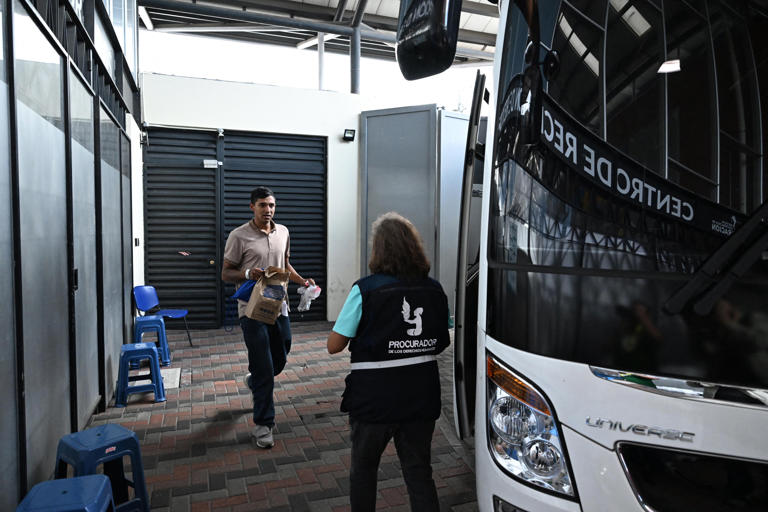
Now 72, Borrell survives by patching tires on Tapachula’s streets, saving toward a room he can rent. He’s the head of a family — seven children, eleven grandchildren, a great-grandchild — he now reaches only through a borrowed phone. On the street one day he ran into another face from Miami: a friend who’d held a green card and got deported anyway. He told his daughter he isn’t giving up. “I won’t die in Tapachula.”
A Deliberate Southern Pivot, Not a Fluke
Borrell’s routing wasn’t an accident of paperwork. Since February 2025, under a Mexican-run initiative known as the Interior Repatriation Programme, U.S. authorities have steadily shifted deportation flights away from established border-town infrastructure and toward two remote cities well over a thousand miles from any crossing point: Tapachula, in Chiapas, and Villahermosa, in Tabasco. Immigration researchers argue the added distance is the point — someone dropped hundreds of miles south is far less likely to try crossing again than someone released a few blocks from Tijuana or Ciudad Juárez.
The flight data backs that up. Human Rights First’s ICE Flight Monitor project logged a record 245 U.S. removal flights in April 2026, and every one of the 68 that went to Mexico that month touched down in either Tapachula or Villahermosa — up from just 25 such flights in March. The group’s own report flagged the timing bluntly: “Beginning on April 13, removal flights to Mexico ramped up dramatically.” Researchers tie that spike to what looks like a steep, near-total drop-off in removals of Mexican citizens through the official land crossings, with officials instead flying them — including, since December, unaccompanied children — deep into the country’s interior.
Mexican security officials cited by the newsmagazine Proceso reported that 712 Mexican citizens landed in Tapachula over a single mid-May weekend on flights out of Texas and Arizona — 611 men, 70 women and 31 minors. Mexico’s National Migration Institute puts the broader count at roughly 203,000 Mexican nationals deported from the U.S. since January 2025, with 15,834 of them routed specifically through Chiapas, according to the agency’s own bulletin as of this spring.
Cubans Left Without Anywhere to Go
Deportees who aren’t Mexican face a harder landing still, since Mexico isn’t home and Havana often won’t take its citizens back. A Human Rights Watch investigation titled “Casting Us Aside to Die” found that of roughly 18,000 people who were removed from the U.S. despite holding neither American nor Mexican citizenship between January 2025 and early March 2026, close to 13,000 — about seven in ten — were pushed into Mexico, with Cubans forming the single largest group at 4,353. Researchers interviewed 53 deportees for the report; 41 were Cuban men, and reporting on the investigation describes the group as skewing older, with roughly a third already past 60 and chronic health conditions common.
A City Never Built to Absorb This Many People
Whoever arrives finds a place unequipped for them. Tapachula’s population runs around 350,000, and the city is now also home to an estimated 60,000 foreign migrants — enough that the International Organization for Migration has taken to calling it “TapaYork,” per reporting from The Atlantic. The U.S. State Department separately lists Chiapas as a level-three “reconsider travel” risk over cartel and gang activity, one of just a handful of Mexican states carrying that designation.
Josué Leal, who runs a migrant shelter in Villahermosa, described the danger plainly: “Migrants are the merchandise of organized crime,” he said, since criminal groups know many have relatives sending money from the United States. Cuban-focused outlets have documented a string of disappearances among deportees who drift toward tourist hubs like Cancún looking for informal work, with advocates estimating that well over 6,000 Cubans remain stranded across Chiapas and Tabasco today.
Mexico’s government has publicly maintained it plays no role in deciding where deportees get routed once they’re inside the country. The Atlantic‘s reporting, however, cites testimony from more than a dozen deportees describing coordination between American and Mexican officers during the handoff itself.
Why It Matters in South Florida
For Miami’s Cuban and broader Latino community, none of this is abstract. Several Cubans stranded in Tapachula have told reporters they’re organizing a march north to draw attention to their cases, aware the trip could take months. Last year’s federal reconciliation package steered tens of billions of additional dollars toward ICE enforcement — the House’s original version had earmarked $14.4 billion specifically for transportation and removal operations before that figure was folded into a broader lump-sum allocation in the final law — funding advocates expect will keep both the flight volume and the distances involved climbing. For families like Borrell’s, that means tracking loved ones from a thousand miles south, one borrowed phone call at a time.