Born upside down: He lived
HE LIVED HIS ENTIRE LIFE WITH HIS HEAD UPSIDE DOWN.
When a child is born with serious medical challenges, the first reactions from the people around them can shape the rest of their life. In the case of Claudio Vieira de Oliveira, his story became a powerful example of how love, determination, and family support can completely change what is possible.
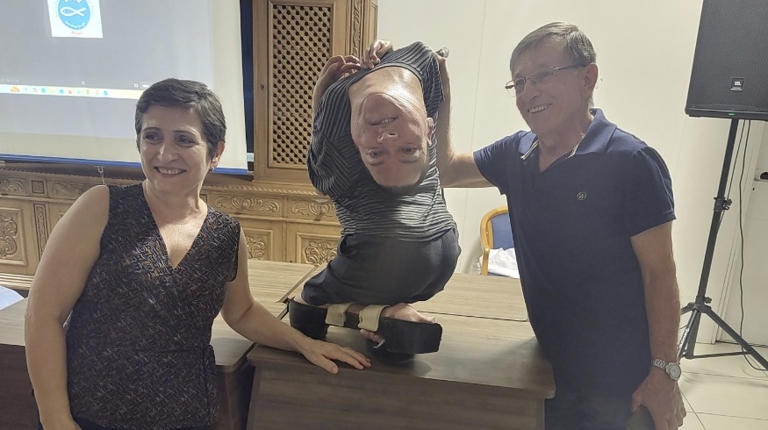
Claudio was born in 1976 in Monte Santo, Bahia, Brazil, with a rare congenital condition known as arthrogryposis multiplex congenita. This condition affected the development of his joints and body in ways that made movement extremely difficult from the beginning. He was born with major physical differences, including severe joint stiffness and a body structure that required lifelong care and adaptation. His condition was unusual and complex, and many people did not expect him to survive.
His mother, Maria José Vieira de Oliveira, refused to accept the idea that her son had no future. Instead of giving up on him, she took him home and cared for him with deep dedication. Her decision gave Claudio the chance to grow up in a family environment where he was loved, supported, and treated as a person with value and potential.
That support became the foundation for an extraordinary life. Claudio learned early that he would need to find his own ways to do things other people often take for granted. He worked hard to become more independent and to participate in daily life as much as possible. Over time, he found creative ways to write, use a phone, and operate a computer with the help of assistive methods and determined practice.
He also learned to move in ways that suited his body. Rather than focusing on what he could not do, he concentrated on what he could accomplish. That mindset helped him build confidence and develop a strong sense of self. His family played an important role too, helping him with tasks that required physical assistance while encouraging him to remain active and involved in the household.
Claudio’s life was not limited to basic survival. He pursued education, built friendships, and found ways to enjoy many parts of life. He sang, socialized, attended festivals, and took part in activities that brought him happiness and connection. His story showed that disability does not erase personality, ambition, or joy.
One of his major achievements was earning a degree and becoming a certified accountant. That accomplishment reflected years of persistence and discipline. It also showed that with access, support, and determination, people with severe disabilities can pursue meaningful goals and build professional careers.
Later, Claudio also became known as a motivational speaker and author. He shared his experiences with audiences in Brazil and beyond, using his story to encourage others not to underestimate people because of appearances or physical limitations. His autobiography helped spread his message even further, offering a personal look at resilience, independence, and self-belief.
What makes Claudio’s story especially powerful is not just the medical condition he was born with, but the way he lived beyond it. He was not defined by predictions or assumptions. Instead, he became a symbol of perseverance and a reminder that a meaningful life can take many forms.
His journey challenges people to rethink how they define strength. It is easy to assume that disability equals inability, but Claudio’s life shows something very different. With support, adaptation, and determination, he created a life filled with learning, work, communication, and purpose.
At its heart, Claudio Vieira de Oliveira’s story is about dignity and resilience. It reminds us that every person deserves the chance to be seen for who they are, not only for what their body can or cannot do. His life stands as proof that hope can exist even in the most unexpected circumstances.