Britain can’t escape the fallout from the world’s forgotten war
What is the worst humanitarian crisis in the world? According to YouGov’s polling, 95 per cent of Britons were unable to answer that simple question, with 42 per cent erroneously citing Gaza and 23 per cent mistakenly selecting Ukraine.
At the last count, 70 per cent of the electorate was unaware that the most acute hunger crisis on Earth is in – Sudan.
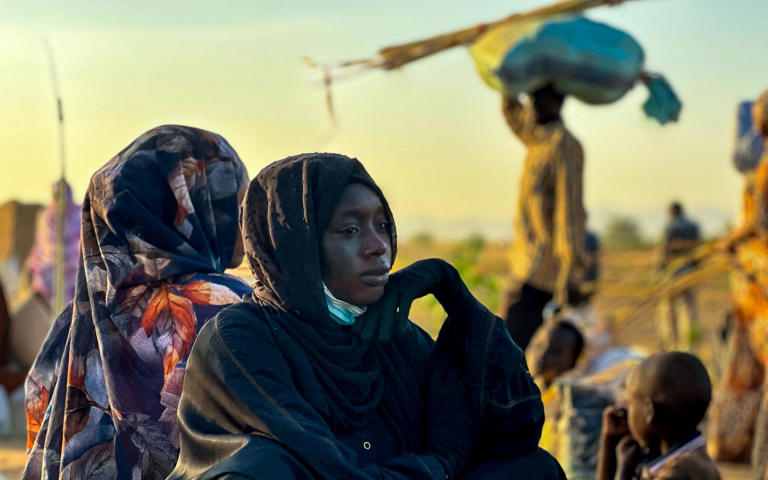
Since April 2023, more than 400,000 people have lost their lives as a result of conflict there. That’s more than five times the deaths in Gaza, plus more than 10 million displaced, rampant malnutrition and 34 million desperate for aid. In 2025, the Joe Biden administration declared it a genocide. Donald Trump’s officials have since agreed.
From Britain’s point of view, the problem is not simply a moral one. When you have the good fortune to live in a democracy, the problem tends to wash up on your shores, whether economically, militarily, geopolitically or physically. Sudanese people now account for the second biggest national group crossing the Channel. What happens in Sudan doesn’t stay in Sudan.
The war itself is complex and does not resolve into an easy narrative. It is a proxy theatre involving a bewildering array of powers competing to enforce their own agendas, with the civilian population little more than an afterthought.
Although Britain is the “penholder” on Sudan at the UN Security Council – meaning that the Foreign Office is expected to lead on the issue – Ed Miliband doesn’t seem to have much of a clue. But then, banging on about Darfur won’t win Holborn and St Pancras.
Sitting just above the Horn of Africa, Sudan sprawls the ancient crossroads with the Arab world. Eight times the size of Britain, Sudan’s economic development lies in the Nile valley, which bisects the country from south to north.
Its population of 53 million is young and comprises hundreds of ethnic and linguistic communities. The largest group is Sunni Arab, with strong Sufi traditions, concentrated in the north. Christians and followers of indigenous religions are found from the Nuba Mountains southwards. Britain governed the country from 1899 until independence in 1956.
The first time many people heard of this in Britain was during the Darfur conflict in 2003, when rebel groups revolted against the regime of Omar al-Bashir, accusing him of oppressing non-Arabs. The dictator, who had strong ties to the Islamist Muslim Brotherhood, responded by unleashing the Janjaweed, a rabble of savage Arab militias that revelled in massacre, rape, ethnic cleansing and torching villages.
After three decades of despotism, Bashir was overthrown in 2019 and incarcerated. Under a transitional government, Sudan seemed on the brink of a democratic revolution. In 2020, desperate for economic relief, it even agreed to become a signatory to the Abraham Accords peace deal with Israel.
The following year, however, the civilian leadership was overthrown by a coalition led by the Brotherhood-aligned Sudanese Armed Forces (SAF), which were thirsty for power and worried about a reckoning for past atrocities. In 2023, the coalition descended into war with itself, as the descendants of the notorious Arab Janjaweed, now known as the Rapid Support Forces (RSF), took on the rump of the Brotherhood-linked state that had created it.
Thus emerged the fault line that has attracted such intense regional attention. The Islamist-leaning SAF is backed, of course, by Iran, which supplies it with Mohajer-6 drones and other materiel, and seeks strategic dominance.
It is joined by Saudi Arabia, which is motivated to protect Red Sea shipping and prevent the contagion of instability, particularly given the Houthi insurgency in its neighbour Yemen. Egypt, which wants to secure its southern border and Nile water interests, is a further ally.
To different extents, others include the malevolent powers of Turkey, Qatar and Pakistan. Russia, which covets the plentiful Sudanese gold reserves and a strategic foothold on the Red Sea, has been known to play both sides.
Meanwhile, the RSF – formally accused of genocide by the UN and the United States – has allegedly been backed by the United Arab Emirates (though Abu Dhabi denies this), which is deeply opposed to the Brotherhood, whether in the war-torn wastes of East Africa or on the radicalised university campuses of Britain.
To varying degrees, they are accompanied by Chad, Ethiopia, Kenya and Libyan factions, all of which are friendly towards the Emiratis. As outrage has piled upon outrage, Abu Dhabi has emphasised its plague-on-both-your-houses approach: it insists that neither of the two blood-soaked sides can form part of the future of Sudan.
Strangely enough, Andy Burnham, who has deep ties to the UAE from his time as Mayor of Manchester – Sheikh Mansour, of Abu Dhabi’s ruling family, owns Manchester City football club and has significant local business interests – has been unable to tackle this conflict with the passion aroused for Gaza.
Yet atrocities are everywhere, and British taxpayers’ money is never far away. This year, we are giving £146m, enough for 10 new primary schools, in aid to Sudan, not to mention the £194m we are donating to Pakistan, Turkey, Kenya and Ethiopia.
Take Cairo, to which we hand £3m a year, alongside hundreds of millions of pounds in development investments and financial guarantees. The more than 1.5 million Sudanese refugees flooding into Egypt are treated cruelly, with arbitrary arrests, forced deportations, inhumane detention and racism. So much for the Refugee Convention. Yet still the British money flows.
Then there’s the lesson of failed states. What if Sudan becomes a jihadist playground, either through lawlessness, like in postwar Iraq or Libya, or after an Islamist victory? What if Sudanese terrorists infiltrate Britain in small boats (as may have happened already)? What if shipping in the Red Sea becomes further disrupted? What if the Iranians gain a port across the water from the Saudis and up the coast from the Houthis? Arms trafficking? Smuggling networks? Mercenaries?
Britain cannot intervene in every conflict. But neither can we keep firehosing the region with money we don’t have while clinging to the comforting fantasy that the blowback will never reach Dover. While Mr Miliband sanctions Israel and bickers over the downgrading of the Jerusalem consulate, Sudan, the great forgotten war, is about to bite us hard.