China rivalry ‘no excuse’: US Democrats allege corruption in Trump’s mining deals
Lawmakers say strategic competition over critical minerals doesn’t justify abandoning safeguards that prevent funds from being misused
US Democratic lawmakers on Wednesday accused the Donald Trump administration of using the critical minerals contest with China as an excuse for corruption – alleging billions of dollars in deals were enriching the president’s family and friends.
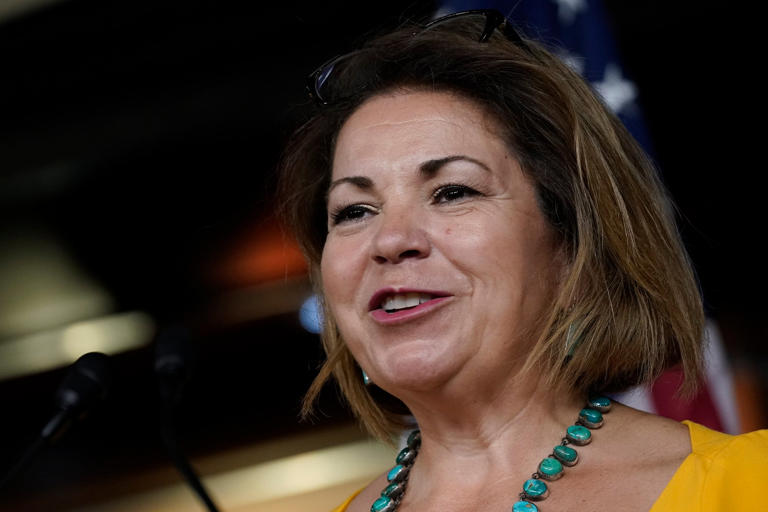
“Competition with China is no excuse for abandoning safeguards that prevent taxpayer funds from being misused for private enrichment,” said Linda Sanchez, the Democratic lawmaker from California, at a Ways and Means Committee hearing titled “Strategic Partnerships to Secure Critical Resources and Supply Chains”.
“We also cannot say that because China is a strategic competitor, every mining deal is automatically a good deal.”
Do you have questions about the biggest topics and trends from around the world? Get the answers with SCMP Knowledge, our new platform of curated content with explainers, FAQs, analyses and infographics brought to you by our award-winning team.
The Trump administration has poured billions of dollars into domestic and overseas mining projects, acquired stakes in US mining companies and established bilateral and international partnerships in a bid to break China’s chokehold on critical mineral supply chains.
Beijing holds a near monopoly in the processing of major minerals such as graphite, gallium, tungsten, germanium and rare earth elements – metals that are critical to military systems, semiconductor manufacturing and robotics.
While US industry leaders and mining experts have welcomed the investments on national security grounds, many have raised concerns about a lack of transparency and favouritism in awarding mining contracts.
Sanchez cited multiple mineral agreements, including the Commerce Department’s US$1.6 billion investment in USA Rare Earth, one of the companies at the forefront of America’s bid to challenge China’s global dominance in rare earth production.
She alleged a potential conflict of interest in the deal, as Cantor Fitzgerald – owned by the sons of Commerce Secretary Howard Lutnick – acted as the lead placement agent for the private share offering tied to the government’s investment.
Lutnick denied the allegations on Wednesday, brushing off the issue as “minor stuff anyway”.
“I had no idea that Cantor was involved with the company at all. Never came up to me. I then passed it to my team,” Lutnick told CNBC.
“My kids bought my companies, so I am no longer involved in my old companies at all.”
During the congressional hearing, another Democratic lawmaker from California, Judy Chu, said while there was “broad agreement” that America needed to strengthen critical mineral supply chains, recent agreements had raised credible questions about conflict of interest.
“But if the federal government is going to spend billions of taxpayer dollars doing it, the public deserves to know where that money is going and who is benefiting,” she said.
The lawmakers also cited a June New York Times report that said Trump’s and Lutnick’s families had financial ties to 14 companies working with the federal government on mineral deals.
Public Citizen, a non-profit, released a report on Wednesday alleging that companies with little mining experience or expertise were being awarded federal contracts, citing the administration’s infusion of more than US$2 billion into the sector last month.
“The massive amounts of taxpayer funds involved in these deals require public disclosure of terms, ownership, financing and government guarantees to avoid corrupt practices,” said Melinda St Louis, director of Public Citizen’s Global Trade Watch, who testified at the hearing.
Last month, Trump held a round table with several mining company executives, announcing deals worth over US$2 billion and more than US$180 million in investments for mining workforce development.
“We are putting our miners back to work, and we are reclaiming America’s rightful place as the minerals superpower of the world,” Trump said. “We are making mining great again.”
China has increasingly leveraged its dominance in critical mineral supply chains, imposing export controls on raw materials and related technologies as retaliation against US tariffs, sanctions and restrictions on advanced chip exports.
Its export controls on seven rare earths in April, imposed in retaliation for US tariffs, triggered temporary factory closures around the world. A temporary US-China truce reached in Busan, South Korea, in October last year prevented further escalation but highlighted the deep vulnerabilities in supply chains.
Last week, the South China Morning Post reported that the Busan agreement is likely to be renewed during the expected meeting between Chinese President Xi Jinping and Trump later this month. However, the administration is racing to move away from China-linked supply chains.
Washington has signed bilateral and multilateral agreements – including the Forge Initiative, a partnership of more than 50 countries, and the State Department-led Pax Silica coalition of 24 nations – aimed at building supply chains for critical minerals and strategic technologies outside China.
Despite a whole-of-government approach, the US continues to face near-term supply chain challenges.
In July, US Trade Representative Jamieson Greer said Washington was still not receiving sufficient critical mineral exports from China.
“We are getting a flow of critical minerals from China. It’s not as much as we would want. It’s not at the pace we would want, but we are getting them,” Greer said during his testimony before the Senate Finance Committee.
Treasury Secretary Scott Bessent also raised the rare earths issue during his July video call with Chinese Vice-Premier He Lifeng, saying that he expected Beijing to “fully meet” its commitments on rare earths.
However, China said it followed a “responsible and non-discriminatory approach” on its rare earth export controls and the measures were not “targeted at any specific country”.
“Given the dual-use nature of rare earth-related items, China has adopted relevant measures pursuant to its export control regulations,” embassy spokesman Liu Chang said in July.
“We need to wake the hell up,” said Mike Kelly, the Republican Congressman from Pennsylvania, during the hearing.
“This is not a political issue. This is a policy issue. This is about the safety and the security of the United States of America.”
More Articles from SCMP
How Japan aims to convert ageing warships into leverage to counter China
Chinese students, wary of geopolitics, seek international diplomas without leaving home
Jockey Club delays mainland China races as turnover hits record HK$331.7b
Can Singapore be the ‘natural choice’ to bridge Asean and Central Asia?
This article originally appeared on the South China Morning Post (www.scmp.com), the leading news media reporting on China and Asia.