FAA’s new AI contractor gave $2,500 to Sean Duffy’s son-in-law months before the ground stop
A nationwide ground stop grounded thousands of flights, and now the company behind the FAA’s brand-new AI system is facing questions about its political donations to the transportation secretary’s family.
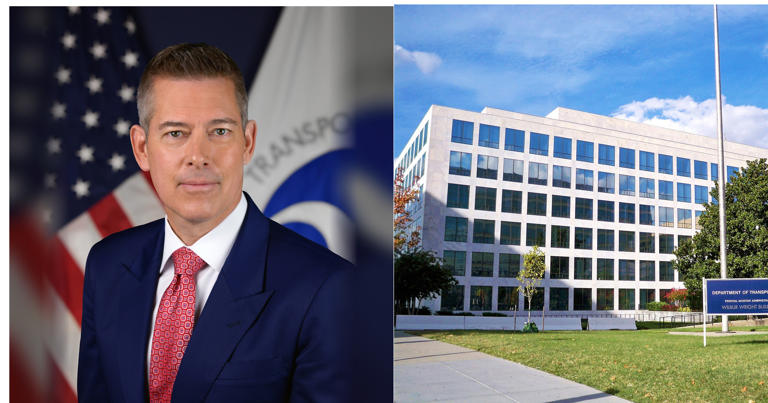
A nationwide ground stop froze air travel across the United States on Friday, November 13, 2026, stranding tens of thousands of passengers. By Saturday, attention had shifted to a second story: Air Space Intelligence, the contractor behind the FAA’s newly launched AI air traffic system, had donated campaign money to Transportation Secretary Sean Duffy’s son-in-law.
Federal records show the donation was $2,500 to the congressional campaign of Rep.-elect Michael Alfonso of Wisconsin, made in March of this year. Early reports put the figure at $12,500, but the actual amount on file is smaller. The company’s contract, however, is not small: it was awarded work worth up to $875.9 million.
What Happened to America’s Flights
The FAA issued a nationwide ground stop on November 13 after telecommunications problems destabilized the communications and radar systems air traffic controllers rely on. More than 3,500 flights were grounded, roughly 25,000 were delayed, and over 9,000 were canceled, according to FlightAware. Disruptions carried into Saturday, when more than 4,000 cancellations — about 18% of U.S. departures — were recorded.
At a Saturday briefing, Duffy and FAA Administrator Bryan Bedford traced the failure to routine contractor maintenance at a small, remote facility, where decades-old copper telecommunication lines were being swapped for fiber optics. Full recovery was expected by Sunday evening.
Duffy Points at a Legacy Contractor
Duffy directed much of his criticism at L3Harris, the FAA’s longtime telecom contractor, saying the company “didn’t meet the moment.” He noted that L3Harris has worked for the agency for more than 20 years and actually owns the network used to control airspace.
“We have an incredibly old telecommunications system,” Duffy said, repeating his call for Congress to fund a faster overhaul of the FAA’s analog infrastructure. He said the modernization effort is about 70% complete but could stretch to 2032 if underfunded.
The Transportation Department is still investigating whether the failure came from an installation error by L3Harris or a faulty router. L3Harris says it has been working with the FAA to modernize its communications infrastructure and has completed more than 70% of the planned conversion.
The Donation Raising Eyebrows
Separately from the outage, Raw Story reported that Air Space Intelligence’s PAC contributed to the campaign of Alfonso, Duffy’s son-in-law, who won a congressional seat in Wisconsin. The donation was made in March, months before the company’s system went live.
The timing drew attention because the company’s SMART system — Strategic Management of Airspace, Routes and Trajectories — had launched just days before the ground stop. CNN national security analyst Juliette Kayyem wrote that the FAA had onboarded the new AI system three days earlier, adding it was “hard to believe it’s a coincidence.”
Air Space Intelligence pushed back publicly. On X, the company stated: “The current ground stop is not based on or a result of the SMART system, any product of ASI or our integration with FAA and ATC.”
Why the Conflict Questions Persist
The donation matters because of the contract behind it. One month after Duffy announced Air Space Intelligence would build the FAA’s AI-powered traffic management system, Politico reported the FAA was working to buy an ownership stake in the company — an unusual arrangement that drew early alarm from members of Congress.
Critics also flagged that the nation’s frontline aviation safety workforce had reportedly been left out of the loop on the new system. Whether the donation influenced any decision is not established by any reporting so far; what’s documented is a family financial link, a large contract, and a system rollout that coincided with the worst airspace disruption in years.
What Remains Unclear
Several questions are still open. The investigation into the technical root cause — user error versus a faulty router — has not concluded. The FAA has not explained what role, if any, the SMART system played in Friday’s operations, beyond the company’s own denial.
It’s also unclear whether any ethics review of the FAA’s proposed ownership stake in Air Space Intelligence is underway, or whether the donation to Alfonso will trigger congressional scrutiny. Lawmakers who raised concerns earlier appear likely to press for answers as the ground stop’s fallout continues.
The Takeaway for Travelers and Taxpayers
The airspace is open again, but delays and cancellations are expected to linger as schedules recover. The bigger story may outlast the travel chaos: an aging telecom backbone, a multibillion-dollar modernization effort running years behind, and a new AI contractor whose political ties are now part of the public record.
Watch for the DOT’s findings on the router failure and any congressional response to the FAA’s unusual relationship with Air Space Intelligence. Both will shape how much trust the flying public puts in the next chapter of air traffic control.