How Ukraine is taking down Putin’s deadly new drones
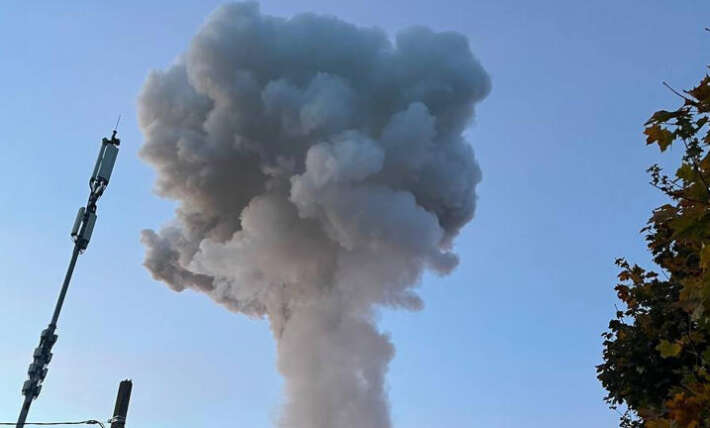
Russia’s latest jet-powered attack drones are forcing Ukraine into a lethal arms race against the clock. A new generation of Russian Geran-4 and Geran-5 drones – which are quicker, more sophisticated and harder for Kyiv’s air defences to intercept – have been hammering its cities.
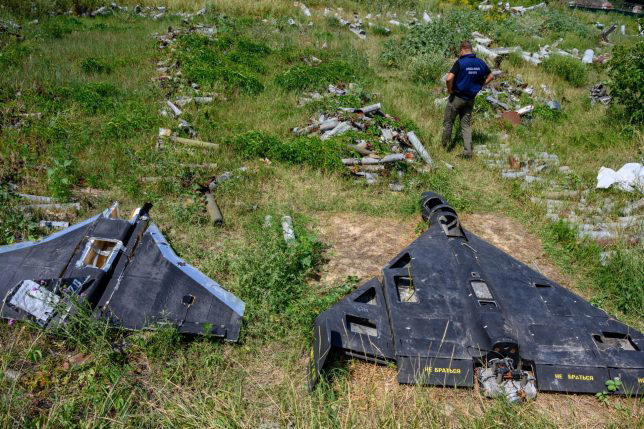
Kyiv is now scrambling to develop defences that can catch them before they reach their targets, with Ukrainian companies developing a new generation of high-speed interceptors designed specifically to hunt them down.
It is a game of cat and mouse with deadly consequences.
Ukrainian drone maker Wild Hornets says its new Sting S interceptor has destroyed several Geran-5 drones during combat testing, along with roughly a dozen of the slower Geran-4s. It said the interceptions took place over recent weeks and that it plans to begin mass production once all of its testing is complete.
The Sting S is one of several interceptor systems that Ukrainian forces are combat-testing in real time in the skies over Ukraine, including the WIV SPYS, developed alongside Germany, and the Zorelit v5 and Zirka, designed to automatically detect and destroy incoming attack drones.
The race to develop interceptor systems is a striking new reality of the war: Every time Russia updates its attack drones, Ukraine has to ramp up the weapons used to destroy them, sometimes in a matter of months.
Ukrainian military intelligence says Russia’s new Geran-5 drones can travel at speeds of up to 370mph and carry a warhead weighing roughly 90kg. This makes them a threat to civilian and military targets across vast swathes of Ukraine.
“Ukraine is already developing interceptors capable of intercepting jet-powered drones,” Hans Petter Midttun, an independent analyst on hybrid warfare, told The i Paper. He said that four Ukrainian interceptor-drone types have already demonstrated the ability to engage Russian jet-powered Geran drones.
The shift is part of a much broader battle in the skies over Russia and Ukraine.
Petter Midttun said that Ukraine has been “actively hunting” Russia’s air defence systems from the first day of the war, destroying over 1,665 systems in total. “On top of this, Ukraine is fast developing strike capabilities it did not possess at scale at the start of the full-scale war.”
Ukraine also has its own inventory of jet-powered attack drones and is developing its first conventional ballistic missile, he said.
When Russia first began deploying Iranian Shahed attack drones at the start of the war, they were relatively slow. Even so, the piston-engine Geran-2, Russia’s domestically produced version of Iran’s Shahed-136, became one of the defining weapons of Moscow’s campaign against Ukrainian cities and infrastructure. For Ukraine, countering them became an immediate and ongoing contest.
“There has been a fairly constant struggle against the Gerans/Shaheds since they were first used,” said Sam Cranny Evans, editor of UK-based defence outlet Calibre Defence. He said that, initially, jamming and mobile defence crews were effective, then the scale increased and Ukraine had to scale with it.
Then, “the Russians improved the Geran to make it fly higher and with increased immunity to jamming, so Ukraine improved the jamming”.
Cranny Evans said that Ukraine has gradually become better at stopping drones, but as Russia introduces increasingly advanced equipment, the challenge facing Kyiv is changing, too.
“Faster Gerans with more complex electronics require sophisticated responses, which are less readily available. So, adaptations like the interceptor drones will help, but they’re part of a very large and complex system, not the sole solution in and of themselves,” he said.
One of Ukraine’s responses has also been to develop drones with a very specific purpose. Rather than bombing a city, destroying a tank or attacking a soldier, their job is to take out other drones. Reports indicate that 67 Ukrainian companies are now working on solutions to counter Russia’s new Geran drones.
Last month, Ukrainian President Volodymyr Zelensky released footage of what he described as a new drone interceptor developed by an unnamed manufacturer. Ukraine’s security service then released footage showing an interceptor reportedly destroying a jet-powered drone during a military counter-intelligence operation.
Military technology has always evolved, with attack weapons producing better defences and vice versa. However, what is happening in Ukraine is compressing the usual cycle into months or less.
A weapon that works against one generation of drones can become obsolete as soon as its target gets faster. One interceptor became ineffective after roughly four months in 2025, when the speed of the targets increased from around 105mph to more than 125mph, Taras Tymochko, a specialist at Come Back Alive, told Reuters.
“This is happening terrifyingly fast,” Robert Tollast, a research fellow in military sciences at the Royal United Services Institute think-tank, told The i Paper. “One of the hallmarks of this conflict is that the technology is just being fielded at a phenomenal scale.”
Both sides are in a battle for efficiency, Tollast said, with Ukraine seeking to shoot down enough incoming drones to make the cost of production uneconomical, while Russian forces aim to stretch Ukraine’s defences so thin that drones can get through.
Ukraine is trying to develop an ecosystem of weapons to meet the constantly changing threat, rather than a single interceptor that seems right for that moment. Artificial intelligence is also being drawn in. Wild Hornets says its AI systems are designed to assist human operators rather than carry out fully automatic interceptions. Drone pilots remain key, at least for the moment.
But going forward, the deadly cat-and-mouse game will only speed up. Changes in technologies that once took years are now down to months. In the future it could be weeks, or less. The drone war taking place over Ukraine and Russia is no longer simply about who can build the best or most weapons, but who can adapt them the fastest.
And while Ukrainian interceptors may be able to take down the new Russian attack drones, Tollast said the best solution might be offence rather than defence. “The antidote isn’t just the air defence equation,” he said. “It’s Ukraine being increasingly enabled to go on the offence deep into Russia and hit the launching sites – what you’d call shooting the archer.”