Johns Hopkins health researcher released after airport ICE detention
After Johns Hopkins University public health researcher Fatima Ameaka was detained by immigration authorities as she boarded a domestic flight on Tuesday, the Department of Homeland Security said she had overstayed her visa “in violation of our nation’s laws.”
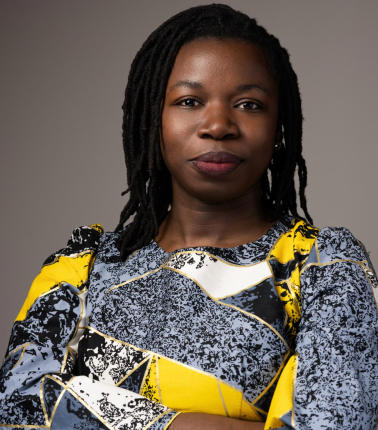
Ameaka’s lawyer, Benjamin Osorio, said that claim is “not true,” citing immigration documents he says buttress his client’s case.
Ameaka — a native of Cameroon whose Hopkins colleagues have praised for her work advancing public health — was transported from Baltimore-Washington International Marshall Airport to ICE facilities in Virginia, Louisiana and Texas before being released late Friday.
Her case shows how the Trump administration has begun using domestic air travel and alleged visa violations by foreign nationals as a way to step up deportations around the country.
Homeland Security officials say their goal is “to ensure that aliens in our country illegally can no longer fly unless it is out of our country to self-deport.” Some immigrants and their attorneys said the effort is already working to discourage flying, with some lawyers warning their clients not to take the risk.
Ameaka, 31, entered the U.S. legally in June 2023 on a Fulbright Scholarship to study for a master’s in public health. Her Fulbright ended in June 2024 and she was hired as a research associate at the university in September of that year, according to her LinkedIn profile and interviews with her colleagues.
Tom Inglesby, director of the Johns Hopkins Center for Health Security, where Ameaka was employed, said she came to the U.S. for a “Fulbright degree, and then stayed on with a visa to work in our center.” A copy of an employment authorization document, provided by her lawyer, shows it expiring in December 2029.
A Department of Homeland Security detention notice filed with Ameaka’s arrest includes inaccurate information that is contradicted by the government’s own records, according to Osorio, Ameaka’s attorney.
The notice said that Ameaka was admitted into the U.S. as a “nonimmigrant crewmember (Sea or Air)” with authorization to temporarily remain in the United States, and that she remained in the country beyond June 14, 2024 “without authorization” from federal authorities.
But U.S. Customs and Border Protection records show that Ameaka was admitted under a J-1 student visa, according to a screenshot provided by Osorio.
A spokesperson for DHS did not respond to a request for comment on the discrepancy.
Osorio said that after Ameaka arrived on the student visa, she successfully applied for temporary protected status, which the Biden administration had expanded to include Cameroonians due to armed conflict in that country. Ameaka later applied for asylum, according to Osorio.
In August 2025, the Trump administration terminated temporary protected status for people from Cameroon, saying it was no longer necessary or in the national interest.
Inglesby described Ameaka as “an extremely warm, kind, generous person.” He said Ameaka is a talented researcher who was studying how to improve public health responses to epidemic diseases.
“She has been an outstanding colleague, she is beloved by all of her co-workers, family, and friends,” Inglesby said. “We’re all super worried about her.”
In a statement Friday, Johns Hopkins spokesperson Doug Donovan said that while the university could not comment on the specifics of her situation, it is actively working to provide support for Ameaka and her defense.
“The university understands the fear and concern this instills in members of our community,” Donovan said.
A GoFundMe organized by Ameaka’s colleagues quickly raised more than $40,000 to help cover legal costs. The Baltimore Banner previously reported that Ameaka had been detained.
Sen. Chris Van Hollen (D-Maryland) criticized her arrest in a social media post Friday evening.
“Fatima came to the US on a Fulbright scholarship & is a researcher at Johns Hopkins. She had previously filed for [temporary protected status] & currently has a pending asylum case. But ICE has detained her & is working to deport her. She is not the ‘worst of the worst’ & deporting her is not making us safer. We must stand up & speak out,” Van Hollen said in the post.
Ameaka was able to leave two voicemails to people close to her in the moments after her arrest, and family and other supporters had been concerned she would not have access to the medication she needs for a chronic medical condition while in custody. Friends expressed relief late Friday when she was released and headed for a hotel, though their concerns about the ongoing case remained.
“I think most people would agree that we probably shouldn’t be detaining people who are here lawfully, are in lawful pending status, have no criminal history and are a productive member of society,” Osorio said.