Madeleine Westerhout abruptly resigns after off-the-record Bedminster dinner exposes private Trump family talk
Madeleine Westerhout’s departure was not driven by a public policy dispute. It centered on the risks that come with private access to a president. Her exit after an off-the-record dinner near Bedminster showed how high the stakes could be for staff members working closest to Donald Trump.
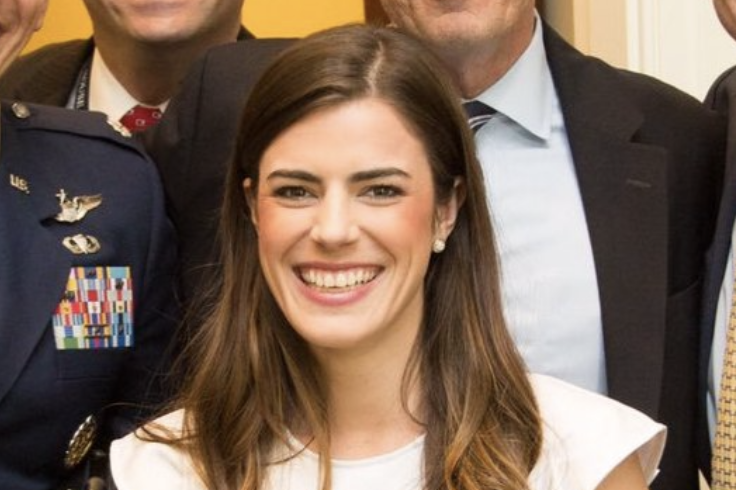
Westerhout resigned as Trump’s personal assistant on August 29, 2019, after reportedly sharing details about the Trump family and Oval Office operations with journalists during an off-the-record dinner near Bedminster, New Jersey. Her departure underscored how a job built around direct access to the president could carry serious consequences when private information was discussed outside the White House.
The episode was more than another personnel change in the Trump administration. It highlighted the difficult line between informal conversations with reporters, personal loyalty and the discretion expected from an aide responsible for managing access to the president.
A gatekeeper with rare access
Westerhout was not a Cabinet secretary or one of the most visible officials in the administration.
Her position still placed her close to the center of Trump’s daily operation, where a personal assistant could be responsible for managing visitors, schedules, access and private routines.
That made her an important gatekeeper.
People in such positions may see and hear information that is unavailable even to some higher-ranking officials. Their effectiveness can depend heavily on confidence that sensitive conversations and personal details will remain private.
Westerhout had been involved with Trump’s operation since the 2016 presidential transition.
Before entering the White House, she worked for the Republican National Committee and had previously been part of Mitt Romney’s 2012 presidential campaign. During Trump’s transition, she was among the staff members helping manage activity around Trump Tower.
That background gave her extensive familiarity with Trump’s team and routines.
It also made the reported disclosures more significant because they reportedly touched both on members of Trump’s family and on the internal functioning of the Oval Office.
The dinner near Bedminster
NBC News reported at the time that a White House official and another person familiar with the matter confirmed Westerhout had resigned.
A source told NBC that her departure followed a dinner with reporters earlier that month near Trump’s golf club in Bedminster.
The exit was described as sudden.
Westerhout was reported to have discussed personal information involving members of Trump’s family along with details about Oval Office operations.
Those subjects created an obvious problem for an aide whose position depended heavily on personal trust.
Public reporting established the general sequence of events, but it did not provide a complete transcript or detailed account of everything Westerhout said during the dinner.
The reporting also left some uncertainty about exactly how her departure was handled.
Westerhout was said to have resigned, but Trump did not publicly clarify whether he had directly fired her, leaving open the question of how voluntary the resignation was.
Trump balanced praise and criticism
Trump addressed Westerhout’s departure the following day while leaving the White House for Camp David.
According to NBC News, he said he had spoken with her and that she told him she had been drinking during the dinner.
Trump’s public reaction was notably mixed.
He spoke positively about Westerhout while also saying she should not have made what he described as hurtful comments.
He also criticized the reporters involved, arguing that they had violated an off-the-record agreement.
That complaint raised a separate issue from whether Westerhout should have discussed the information in the first place.
Trump did not publicly describe Westerhout as a political adversary or attack her in the same way he sometimes criticized former officials.
His remarks nevertheless made clear that the reported disclosures had crossed an important boundary in an administration where personal loyalty and discretion carried considerable weight.
Off-the-record does not erase risk
The Bedminster dinner illustrated a longstanding tension in relationships between political staff members and journalists.
An off-the-record understanding can restrict what reporters publish or attribute, but it does not eliminate the professional risks of sharing sensitive information.
From Trump’s perspective, the problem was not simply that journalists had learned private details.
The broader concern was that a trusted aide had reportedly discussed matters involving his family and internal White House operations at all.
Informal meetings between officials and reporters can serve different purposes.
Staff members may see them as opportunities to build relationships, provide background information or explain events outside the structure of a formal briefing.
Critics of such gatherings argue that casual settings can blur professional boundaries and encourage comments that would never be made publicly.
Westerhout’s case showed how quickly that calculation could change.
A private social gathering away from Washington could still become a career-defining event for a White House aide, particularly one whose position depended on confidentiality.
One departure in a turnover era
Westerhout left the administration during a period already marked by frequent turnover among senior advisers, communications officials and agency leaders.
Her resignation should not be treated as identical to every other departure from the Trump White House.
Her case was centered less on a public disagreement over policy and more on privacy, access and personal confidence.
Those issues were especially sensitive because they went directly to whether someone working close to Trump could be trusted with family matters and private conversations.
The episode also showed that years of service did not guarantee security.
Westerhout’s work during the presidential transition and her extended time within Trump’s inner circle did not prevent a rapid departure once the reported dinner comments became known.
Questions that public reporting left open
The available reporting established that Westerhout left the White House after the Bedminster dinner and that Trump said she had made a mistake.
It did not fully disclose everything she reportedly told journalists or provide a complete account of the internal discussions that led to her resignation.
Another practical question involved how the White House would replace someone whose role depended so heavily on personal familiarity.
A successor could assume scheduling and access responsibilities, but accumulated trust is much harder to transfer than a formal job description.
The broader lesson from Westerhout’s resignation was not simply that the Trump White House experienced frequent turnover.
It was that proximity to the president could create both influence and vulnerability.
The same access that made an aide valuable could make a perceived breach of confidence especially damaging.