MAGA erupts at USS Abraham Lincoln sailors as 250-day deployment complaints trigger fierce backlash
The debate over the USS Abraham Lincoln is no longer confined to conditions aboard the ship. As the carrier heads home, political backlash has placed sailors and their families at the center of a wider argument over how seriously their complaints should be taken.
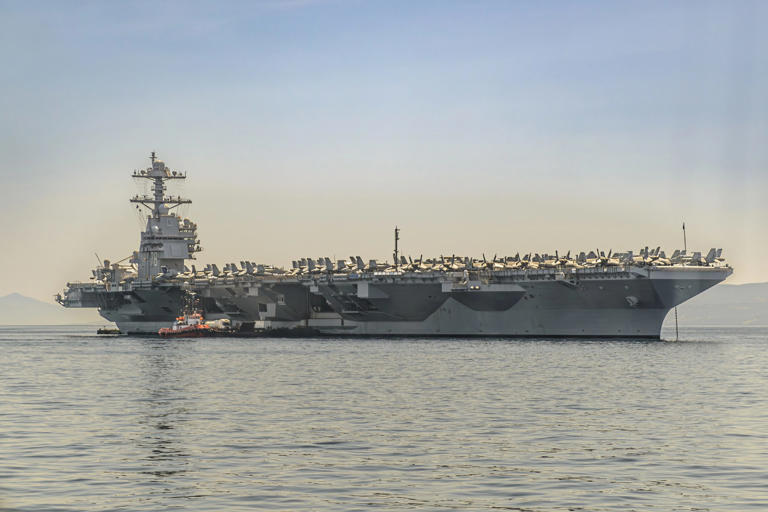
MAGA supporters have criticized Navy sailors over complaints involving the USS Abraham Lincoln, according to a Rolling Stone report, turning accounts from the carrier into a political controversy. The backlash matters because the United States Navy crew is returning from an unusually long deployment that included family reports of food shortages, supply problems and concerns about morale.
NBC News reported that the USS Abraham Lincoln is now making its way back toward San Diego after spending more than 250 days at sea. The dispute is not simply about whether every allegation can be independently confirmed. It is also about whether sailors and their relatives should be treated as credible voices when conditions during a deployment become a matter of public concern.
Complaints became a political target
The controversy developed from reports about life aboard the Lincoln during its extended deployment in the Middle East. Relatives who spoke with NBC News described concerns involving limited food and supplies, interruptions to hot water, delayed mail and worries about sailors’ mental health.
Those accounts have not been presented as a comprehensive official review of conditions aboard the carrier. They are personal reports passed along by family members, alongside statements from Navy and administration officials who have challenged the broader characterization of the situation.
That distinction matters. A complaint can be serious without proving every allegation, just as an official denial can offer important context without fully settling what individual sailors experienced.
Political reactions that portray the issue as weakness, disloyalty or excessive complaining risk overlooking that middle ground.
A deployment far beyond expectations
NBC News reported that the Lincoln departed San Diego on November 21 and had originally been expected to complete its deployment in May.
Instead, the mission was extended as the United States remained involved in the war with Iran following U.S. and Israeli strikes at the end of February.
By the time the carrier left the Middle East, it had been deployed for roughly nine months and had spent more than 250 days at sea. NBC reported that the ship had not made a port visit since December, meaning the crew had spent more than 200 consecutive days at sea.
That operational setting is central to understanding the complaints.
Aircraft carriers are designed for lengthy deployments, and their crews train to operate under demanding conditions. Even so, carrier deployments typically include port visits that provide opportunities for resupply, maintenance and time away from the confined routine of shipboard life.
NBC reported that roughly 5,000 sailors and Marines were aboard the Lincoln.
On a vessel of that size, problems do not have to affect every member of the crew to become significant if they continue for an extended period.
Officials challenged the grim picture
Senior military and administration officials have disputed suggestions that the Lincoln experienced a broad operational or welfare crisis.
Adm. Brad Cooper, commander of U.S. Central Command, said concerns had been addressed and wrote that the carrier had one of the lowest rates of mental-health-related cases in the active carrier fleet.
Defense Secretary Pete Hegseth said reports describing conditions aboard the ship had been “completely misrepresented,” according to NBC News.
President Donald Trump also dismissed concerns about the length of the deployment, saying it was “not nearly long enough.”
Those responses illustrate a longstanding tension in reporting on military operations.
Commanders have responsibilities involving operational security, readiness and confidence in deployed units. Sailors and their families, meanwhile, may experience daily hardships that are not reflected in high-level assessments of whether a ship remains capable of performing its mission.
NBC also reported that U.S. officials did not view several man-overboard incidents as evidence of a fleetwide or shipwide mental health crisis.
The incidents, combined with reports of sailors struggling during the prolonged deployment, nevertheless increased anxiety among families and generated concern within the Navy community.
Why the rhetoric around sailors matters
Service members operate under rules and pressures that can make public complaints especially difficult.
They may face restrictions on what they can say, may be unable to discuss their location or mission and often depend on relatives to raise concerns outside official military channels.
That makes sweeping attacks on sailors particularly consequential.
Critics are entitled to question claims that have not been verified or to argue that difficult living conditions are an unavoidable part of military service. But portraying the sailors themselves as the problem can discourage people from raising legitimate concerns involving food, maintenance, mail service or mental health support.
Families also do not have access to the entire operational picture.
A canceled port visit, supply limitation or service interruption may result from security concerns, scheduling demands or mission requirements that cannot be explained publicly while an operation is underway.
Their accounts are therefore valuable evidence of what sailors experienced, but they are not the same as a formal investigation or comprehensive Navy assessment.
A more useful public discussion can recognize both realities. A deployed crew can continue performing effectively under extreme pressure while still facing conditions that deserve scrutiny.
Homecoming does not settle every question
Cooper said he visited the crew to tell them they would be returning home, and NBC reported that the Lincoln was expected to arrive in San Diego within weeks.
The homecoming will end the immediate strain of the extended deployment, but it will not automatically answer what problems occurred, which conditions improved or what lessons Navy leadership may draw from the experience.
Several questions remain unresolved.
It is still unclear whether reported shortages and service interruptions were isolated or widespread, how Navy officials evaluated morale during the prolonged period at sea and whether families received enough information as concerns increased.
Public reporting has produced competing accounts rather than a final independent determination covering every allegation.
The episode also carries a broader political lesson.
Supporting the military does not require assuming that every institution always has complete information or that every hardship reported by a sailor should be dismissed as insignificant.
The Lincoln’s deployment can be viewed as an important operational achievement while the experience of its crew is still examined seriously.
As the USS Abraham Lincoln returns home, the argument over the complaints does not have to remain trapped in partisan reaction.
The lasting issue is whether the Navy has sufficient systems, transparency and trust to hear concerns from service members before those concerns grow into a larger public controversy.
What is known and unresolved
NBC News reported that the Lincoln’s deployment lasted roughly nine months and included more than 250 days at sea.
Family members described shortages, interruptions to services and concerns involving morale and mental health.
Navy and administration officials disputed portrayals of a broad crisis and said concerns aboard the ship had been addressed.
Public reporting has not produced a final independent accounting of every complaint or established how widely each problem affected the crew.
The reporting cited includes Rolling Stone’s account of the political backlash and NBC News coverage of the USS Abraham Lincoln’s deployment, family concerns and responses from military and administration officials.