Man dips finger in Yellowstone hot spring, accidentally falls in and dissolves
A 23-year-old man was vaporized by the extreme heat and acidic water of a Yellowstone hot spring after he slipped into the pool while testing its temperature before taking a dip.
Colin Nathaniel Scott, from Portland, Oregon, had traveled to Yellowstone National Park with his sister, Sable Scott, when the pair ventured away from the safety of the boardwalk at Norris Geyser Basin on June 7, 2016.
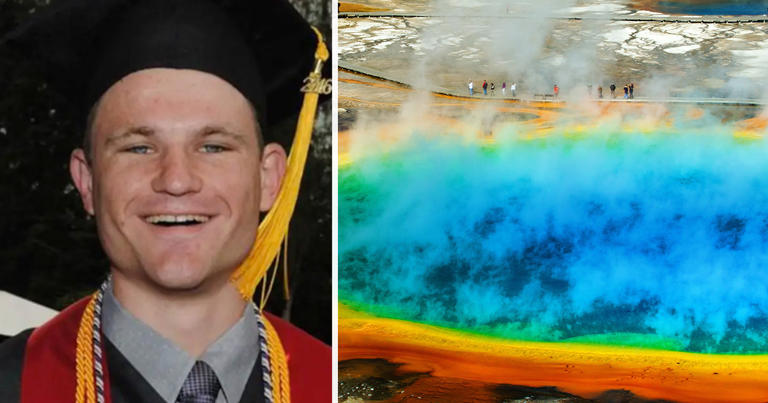
The young man was celebrating his graduation from Pacific University and had planned on starting his doctoral program in the fall.
But the trip would lead Colin and his sister into one of Yellowstone’s most volatile thermal areas, where the extraordinary landscape comes with very real dangers.
‘Hottest thermal area’
Yellowstone is famous for the hot springs, geysers and other thermal features scattered across its landscape, all powered by an enormous volcanic system beneath the park. According to the National Park Service (NPS), two magma bodies sit beneath the Yellowstone Caldera, providing the heat that drives the hydrothermal activity visitors see at the surface.
That underground heat can create extraordinarily dangerous conditions above it, particularly at Norris Geyser Basin, described by the NPS as the “hottest and most changeable thermal area in Yellowstone.”
The park’s website explains that there are “very few thermal features at Norris under the boiling point (199 degrees Fahrenheit at this elevation),” while most of the waters there are acidic.
“There’s a closure in place to keep people from doing that for their own safety and also to protect the resources because they are very fragile. But, most importantly for the safety of people because it’s a very unforgiving environment,” Deputy Chief Ranger Lorant Veress told KULR at the time.
Despite those warnings, Colin and Sable had “intentionally” ventured beyond the boardwalk with something very specific in mind.
‘Hot potting’
According to Veress, the siblings were searching for somewhere to go “hot potting” – the practice of soaking or bathing in naturally heated geothermal water. While hot potting is permitted in some designated places elsewhere, entering Yellowstone’s thermal features is illegal because of the extreme temperatures and unpredictable conditions.
“[They] were specifically moving in that area for a place that they could potentially get into and soak,” Veress told KULR. “I think they call it hot potting.”
Dipped fingers in scalding spring
Speaking with investigators, Sable told investigators that she and her brother had left the boardwalk near Pork Chop Geyser and walked several hundred feet up a hill as they searched for a suitable pool.
With Sable recording their trip on her cellphone, Colin reached “down to check the temperature of a hot spring when he slipped and fell into the pool,” the incident report explained.
And “the smartphone recorded the moment he slipped and fell into the pool and her efforts to rescue him.”
‘Significant amount of dissolving’
After rescue rangers reached the hot spring, Colin was dead and his body could still be seen floating in the water. However, the dangerously unstable thermal area made reaching him difficult, and an approaching lightning storm eventually forced rescuers to abandon the recovery operation for the night.
When they returned the following morning, his wallet and flip-flops were recovered but there was no body left to retrieve.
“In a very short order, there was a significant amount of dissolving,” Veress told KULR.
The combination of extreme heat and acidic water had vaporized Colin’s remains during the hours rescuers were unable to reach him.
Scalding water under thin crust
Colin’s horrific death highlighted exactly why visitors are repeatedly warned to stay on Yellowstone’s designated boardwalks and trails, particularly around its thermal areas, where “boiling water surges just under the thin crust of most geyser basins.”
The NPS warns visitors against touching thermal features or runoff, reminding people that “is illegal to swim or bathe in any water that is entirely of thermal origin.”
“Since 1872, deaths related to hot springs are more than double those from bears and bison combined – 22 people have lost their lives due to scalding,” the agency warns.
Share this story to help spread the warning about the deadly dangers of Yellowstone’s hot springs and why visitors should always stay on designated boardwalks and trails.