Mark Carney imitates Trump’s hand gestures in viral speech as year of insults boils over
A year of “governor” jokes and 51st-state taunts tested the patience of one of America’s closest allies, and the polite playbook Carney used at the White House is visibly wearing out. The stakes run far beyond rhetoric, into stalled trade talks and a USMCA review.
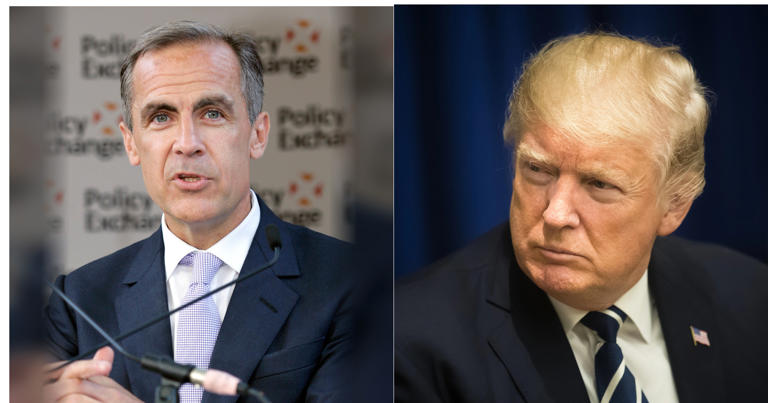
According to CNN, President Donald Trump has spent more than a year insulting Canada’s leader, often calling Prime Minister Mark Carney “governor” and raising the idea of making Canada the 51st state. Carney’s response for most of that period was a smile. That response is no longer the default.
The change showed up in two recent episodes: a filmed rebuttal after Trump told Davos attendees that “Canada lives because of the United States,” and a viral speech in which Carney imitated Trump’s signature hand gestures. The timing is notable, because it coincides with stalled trade talks and Canada’s push to deepen ties with Europe in one of the world’s largest bilateral relationships.
The Oval Office moment that set the tone
The pattern dates to May 2025, when Carney, then newly elected, visited the White House. Trump raised his well-worn threat of annexing Canada as the 51st state. Carney replied calmly, with a smile: “As you know from real estate, there are some places that are never for sale.” The line drew a laugh from Trump himself.
CNN’s account describes that conciliatory posture as largely defining Carney’s first 18 months in office. Even as the trade war between the longtime allies deepened and Trump’s attacks intensified, Carney kept up a good-natured stance while advocating for Canada in negotiations and on the world stage.
The accordion gesture heard in Ottawa
The tone shift became unmistakable during a speech Friday to members of Carney’s Liberal Party in Ottawa. Discussing a major new clean energy deal, which Carney said was the “functional equivalent of 18 Hoover Dams,” he stretched his hands apart in an exaggerated imitation of Trump’s “accordion-style” gestures.
“18 Hoover Dams,” Carney repeated with a knowing smile, drawing raucous laughter from the room. The clip spread widely online, and CNN reported that the moment reflects a broader tone shift, with Carney in recent months appearing more comfortable poking fun at the U.S. leader.
The jab landed at a delicate moment. Trade talks between Washington and Ottawa have once again stalled, and Carney’s government has been promoting a new, high-profile partnership with the European Union as a way to diversify Canada’s economic options.
“Canada thrives because we are Canadian”
The Ottawa speech was not an isolated incident. After Trump told attendees at the World Economic Forum in Davos that “Canada lives because of the United States,” Carney responded in a filmed address upon his return to Québec City, according to TIME.
“Canada does not live because of the United States. Canada thrives because we are Canadian,” Carney said. He argued that diversity is “a strength, not a weakness,” called Canada “the greatest country in the world to be a regular person,” and said thriving should not require wealth, a particular skin color, or a particular faith. “We are masters in our home,” he added. “This is our own country, it’s our future, the choice is up to us.”
Trump, for his part, accused Canada of getting “a lot of freebies” from the United States and said Canadians should be “grateful.” Referring to a speech Carney had delivered the day before, Trump told the Davos audience, “I watched your Prime Minister yesterday, he wasn’t so grateful.”
A withdrawn invitation and a widening rift
The exchange had consequences. Trump later rescinded an invitation for Canada to join his Gaza Board of Peace, which he had unveiled at Davos, announcing the decision on Truth Social. “Please let this letter serve to represent that the Board of Peace is withdrawing its invitation to you regarding Canada’s joining, what will be, the most prestigious Board of Leaders ever assembled, at any time,” Trump wrote.
Carney had announced earlier in the week that he had received the invitation but did not confirm whether he intended to accept. The withdrawal extended the dispute beyond trade policy and into diplomacy itself.
Why this feud carries real economic weight
Theatrics aside, the relationship at stake is enormous. The United States and Canada operate one of the largest bilateral trade relationships in the world, with highly integrated energy and automotive markets, according to the Congressional Research Service. Canada was the second-largest U.S. goods and services trade partner in 2025, and per Statistics Canada, it exported 72% of its goods to the United States.
Trade has been governed by a succession of agreements since 1989, most recently the 2020 United States-Mexico-Canada Agreement. Tensions have climbed since 2025 following the imposition of U.S. tariffs on Canadian goods, and the three countries are now engaged in a USMCA review that could reshape the pact. If it is not renewed, USMCA is set to expire in 2036, and revisions may require congressional approval.
That dependence helps explain why Carney’s government has been courting Europe. Canada has been promoting a new, high-profile partnership with the European Union as it looks to diversify its economic options while U.S. tariffs remain in place.
What happens next remains genuinely unclear
It is not yet obvious whether Carney’s sharper tone is a lasting strategy or a pressure tactic aimed at reviving stalled talks. Neither government has laid out what a de-escalation would require, and the sources do not indicate how the new posture will land in Washington or in Ottawa.
What is clear is that the old playbook, a smile and a polite deflection, no longer describes Carney’s approach. With the USMCA review underway, trade negotiations stalled, and Trump having rescinded a diplomatic invitation after Carney’s remarks, both leaders now face choices about where the relationship goes next. Whether the accordion impression becomes a footnote or a turning point depends on whether either side decides to de-escalate.