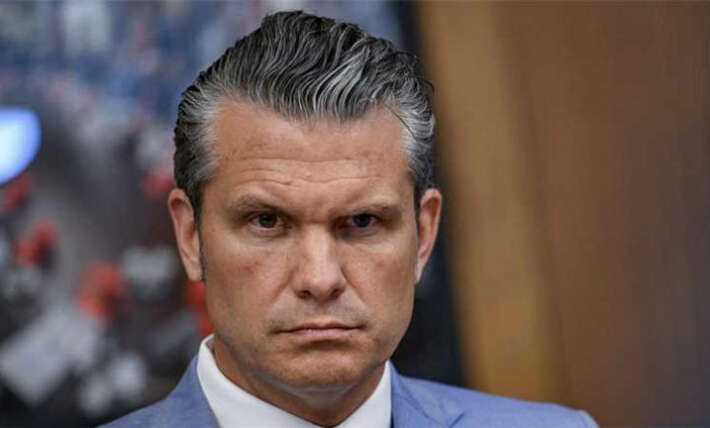
Michigan GOP Senate candidate Mike Rogers said to ask AIPAC not to campaign on his behalf
Republican Senate candidate Mike Rogers has asked the American Israel Public Affairs Committee (AIPAC) not to campaign on his behalf, fearing support from the pro-Israel lobby could harm his chances of winning the November general election in Michigan, according to a new report.

The decision reported by Axios demonstrates how far AIPAC’s standing has fallen in American politics, after it once enjoyed overwhelming support from both sides of the aisle.
Over the past year, most Democratic Party candidates have distanced themselves from AIPAC, and accusing one’s opponent of being tied to the pro-Israel group has increasingly becoming the norm, regardless of whether it’s true.
But Rogers’s reported decision to distance himself from AIPAC shows the desire to disassociate from the group now exists in both parties, as the lobby is battered by hostility from both the right and the left.
Polls have shown that Americans are increasingly hostile toward Israel.
Rogers spoke with AIPAC chair Michael Tuchin in Los Angeles last week. The next day, AIPAC shelved an already-prepared video ad targeting Rogers’s Democratic opponent and outspoken Israel critic Abdul El-Sayed, Axios reported.
Rogers’s decision to distance himself from AIPAC infuriated officials in the group, which had already spent over $30 million to defeat El-Sayed in the Democratic Party and was prepared to spend millions to help elect the Republican nominee in the general, the report said.
Rogers’s aides warned AIPAC before the Democratic primary that they believed El-Sayed would beat moderate Haley Stevens, but the pro-Israel group insisted on staying involved, thinking Stevens would win, Axios said.
The progressive, anti-Israel candidate ended up defeating Stevens by 1% of the vote, 48.5% to 47.5%.
Read: Abdul El-Sayed’s Michigan primary win is a watershed moment for anti-Israel Democrats
AIPAC still wanted to stay involved in trying to defeat El-Sayed, but Rogers’s campaign believes the lobby’s involvement has backfired and will continue to be detrimental, according to sources who spoke with Axios.
The bitter and expensive campaign between El-Sayed and Stevens attracted national attention not just because the general election for the seat will help decide which party controls the Senate. It also became the most notable proxy battle between the Democratic Party’s establishment and progressive wings, with positions on Israel and the Middle East at the forefront of the fight.
El-Sayed, a former Wayne County health director, campaigned on “Medicare for All,” finance reform, and ending military aid to Israel. He has voiced opposition to the idea of a Jewish state and has said money is the only reason Democrats who “believe in human rights” would support Israel.
Earlier this month, Senator Bernie Sanders urged Democratic leaders to ban super PAC spending in primaries, focusing on the efforts of AIPAC to influence the crucial Michigan Senate race.
“It is absurd that they spend tens of millions of dollars to try to determine who the Democratic nominee is and, if they fail, then proceed to support the Republican candidate in the general election,” said Sanders.
Critics say the demonization of AIPAC is linked to age-old antisemitic tropes about Jewish wealth and Jews wielding outsize power in politics.
Despite the outsize focus, AIPAC is not among the top lobbying groups in the US, ranking 18th in contributions last year, 21st in outside spending, and 191st in lobbying, according to OpenSecrets.
In general spending, other countries, including China, Qatar, Japan, South Korea, Saudi Arabia and the United Arab Emirates, spend more on lobbying in the US than Israel.