The winners and losers of oil’s new world order
The war in Iran has triggered the largest oil-supply disruption in modern history.
The crisis in the Strait of Hormuz is forcing governments to redefine energy security for an age of geopolitical fragmentation—one in which resilience depends not only on how much oil the world produces, but where it flows, who can get it and which countries are able to absorb the shock when it is interrupted.
Nearly 15% of global oil supply has been removed from the market. Crude prices remain elevated above $100 a barrel after initially spiking higher. They will very likely move sharply higher as inventories run dry.
But while the oil market is global and rising costs are felt everywhere, the consequences are not evenly distributed.
Asia has been hit first and hardest. Last year, the region relied on the Middle East for roughly 60% of its imported oil. The disruption has been particularly severe not just for crude but for refined products like diesel and jet fuel, which have doubled in price since January.
In wealthier countries, pricier oil generally shows up first as inflation and weaker growth.
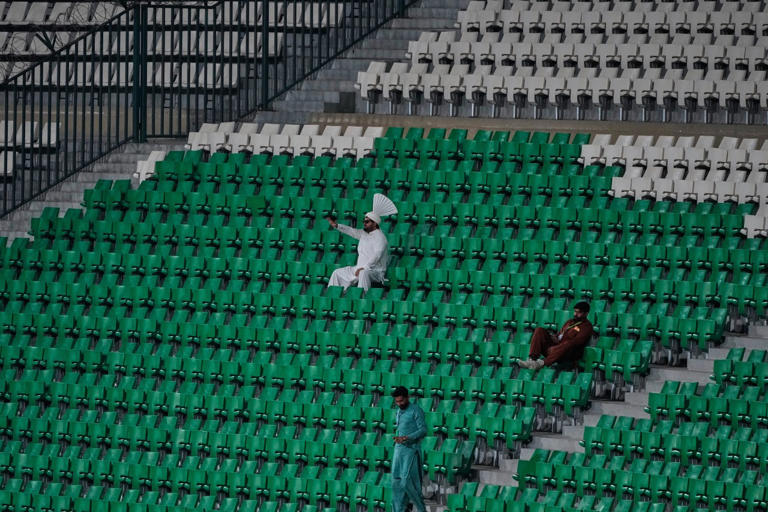
In lower-income importing countries, it manifests as shortages: Bangladesh has limited air conditioning to a balmy 77 degrees. Laos has shortened the school week from five days to three. Sri Lanka made Wednesday a public holiday. In Pakistan, cricket teams are playing to empty stadiums as fans are urged to watch from home rather than travel.
Shale production, which sharply curbed U.S. oil imports from the Middle East since its boom starting in the 2000s, has so far shielded the U.S. to a degree. But gasoline prices have already risen to more than $4.50 a gallon from under $3 before the war, costing the average household more than $150 a month.
The most consequential effects of the crisis, however, may not be the immediate price spikes around the world but the strategic policy shifts they prompt.
Impact Two decades ago, the U.S. imported around 60% of the oil it consumed. Today it’s the world’s largest oil producer and a major net exporter. Oil use as a share of the economy has also steadily fallen in recent decades. The surge in supply means that physical shortages will take longer to reach American shores. Consumers are paying more at the pump, but the broader macroeconomic damage is smaller because increased consumer spending at the pump now flows to domestic producers rather than abroad. Plus, natural-gas prices surged in Europe and Asia but barely rose in the U.S., a price divergence that has saved U.S. consumers trillions since the onset of the shale revolution.
Long View In a global market, American consumers still pay higher prices at the pump when a supply disruption occurs overseas, and there are relatively few tools to mitigate disruptions of this scale. As prices rise, politicians may be tempted to embrace more extreme—and economically and geopolitically harmful—options, such as banning oil exports. Longer term, today’s crisis holds at least the promise of forging more common ground, as it is both true that America’s position has been strengthened by producing more oil and gas, and that the U.S. would still be less vulnerable to supply shocks if we used less oil through tighter fuel-economy standards, more electric vehicles, and better mass transit and rail.Impact As a major oil and gas exporter, Canada is better positioned than most other countries. According to Goldman Sachs, Canada is among the economies that stand to see the largest GDP gains from higher oil prices. Mexico is in a tougher spot. It produces crude, but declining output and limited refining capacity leave it dependent on imported gasoline and diesel, much of it from the United States. That makes Mexico vulnerable not just to global crude prices but to refined-product shortages, Gulf Coast price spikes and the risk that U.S. domestic politics revives calls for restricting fuel exports.
Long View The crisis may strengthen the case in both countries for long-delayed efforts to reach markets beyond the U.S., such as a pipeline to the West coast to export Canadian crude. Security concerns will reinforce the shift in Mexico’s politics in support of developing its own shale gas, while its broader response has been to double down on “energy sovereignty” through refining and investment in the state-owned oil company Pemex—a costly strategy that will take time.
South and Central America: Tapping Domestic Supply
Impact South America depends heavily on imported refined products, and higher fuel prices are creating fiscal and political pressures. However, the region has significant domestic oil and gas production, large renewable and hydropower resources and several major sources of future oil and gas supply that lie outside the Gulf and are thus free from Hormuz risks. That makes the region more strategically valuable if Middle East supplies carry a higher risk premium.
Long View The interest in investing in countries such as Brazil, Guyana and Argentina, which were already expected to drive much of the growth in non-OPEC supply over the next several years, will extend to other potential producers such as Suriname. Venezuela is the wild card. As its new leadership seeks to attract foreign investment, exports approached 1 million barrels a day in March, the highest level since 2019, although significant risks remain.Impact The repercussions for China have been mixed. China is a large net importer, and as oil prices rise and it loses access to discounted Iranian barrels, the cost to import barrels has risen sharply. China’s April bill for crude oil imports was up 13% from a year earlier. Still, China holds large petroleum stockpiles. As it curbs imports through the use of inventories and reduced refinery runs, China is also reselling crude it was contracted to buy to other countries, often at a profit.
Long View The crisis will reinforce, not upend, Beijing’s energy strategy. China spent years curbing the growth of oil use. Compared with the U.S. or Europe, petroleum makes up a smaller share of its primary energy mix, and it has electrified more of its automobiles and energy system overall. China’s 15th Five-Year Plan, released just after the war started, called for becoming an “energy powerhouse” through “strategic resilience” and “technological sovereignty” with non-fossil sources. The disruption of oil and gas supplies will only strengthen those ambitions.
India: Stability Amid Regional Fragility
Impact India is more vulnerable than China. It imports nearly 90% of the crude it consumes, and before the war roughly half of those barrels moved through Hormuz. The shock has forced New Delhi to lean harder on Russia—but not on the bargain terms it enjoyed after the Ukraine invasion.
Long View India has more fiscal capacity, larger inventories and more diversified suppliers than its poorer neighbors such as Pakistan, Bangladesh and Sri Lanka, so it is unlikely to face the same shortages. But expensive crude worsens inflation, strains budgets and raises the cost of shielding consumers. The country’s longer-term response may require diversifying supply while accelerating oil displacement through solar, batteries, electric vehicles and rail.
Impact Japan is highly exposed to oil and gas disruptions: imports meet more than 85% of its energy consumption, and in 2025, nearly all of Japanese crude oil imports transited through Hormuz. Japan has been the second-largest contributor to the International Energy Agency’s emergency stock release after the U.S., making available the equivalent of roughly 70 days of Japanese consumption—an enormous drawdown by historical standards. The conflict is raising overall import costs and electricity prices at a time when Japanese consumers and businesses continue to struggle with inflation.
Long View As a resource-poor island that is heavily dependent on maritime trade for essential goods like food and energy, energy security has long been a serious policy concern in Japan. The crisis will reinforce these concerns and strengthen the case for restarting more nuclear reactors, accelerating offshore wind and solar and improving grid flexibility and storage. But Japan’s basic import vulnerability will remain, leading it to further prioritize energy efficiency, electrification of more of the economy, and maintaining larger buffers against disruption.
Impact Few actors have benefited as visibly, at least in the short term, as Vladimir Putin. Before the war, Russia’s oil-export revenue had fallen to its lowest level since the start of the Ukraine invasion in 2022. Its economy appeared on the brink of recession. The Iran war has been a gift for Putin. The U.S. decision to ease sanctions on Russian oil helped Moscow monetize already-loaded barrels at higher prices, and Russia doubled its main source of oil tax revenue in April. (The fiscal benefit has so far been smaller than the oil-price surge suggests, as part of the increase was offset by payments to oil companies to keep domestic fuel prices down.)
Long View In the long run, Putin’s windfall may prove short-lived. Ukrainian attacks and constraints on investment and technology have accelerated the long-term decline of Russia’s oil industry, hampering its ability to structurally increase oil production capacity for the long-term in response to today’s higher prices. And Ukrainian attacks are intensifying, with at least 21 strikes on Russian assets and infrastructure in April. Russia’s refinery runs last month were the lowest since 2009.Impact Most of Iran’s neighbors are suffering major losses but to different degrees. Saudi Arabia and the U.A.E. are better positioned because they invested in pipelines to the Red Sea and Gulf of Oman, allowing each to bypass Hormuz for roughly half its prewar exports. Oman, located outside the strait, has seen oil revenues rise 80% weekly compared with last year. Saudi revenues are up 10%, despite reduced export volumes. By contrast, Iraq’s exports have fallen sharply. Kuwait has exported little oil or refined products for 10 weeks. Qatar’s liquefied natural gas exports are offline, and damage to some of the country’s export facilities during the conflict could take considerable time to repair.Long View As storage reaches capacity, Middle East producers have been forced to stop production of roughly 13 million barrels a day of output. Once the strait reopens, it could take months to restore that supply, especially in Iraq and Kuwait where large mature fields and aging infrastructure make stoppages harder to reverse. For many producers, a priority will be reducing exposure to chokepoints through new pipelines and export routes that bypass Hormuz, and reaffirming they are a trustworthy supplier.Impact Iran’s position is complicated. It’s losing substantial export revenue as the U.S. blockade hinders crude shipment, but in the early phase of the crisis may have benefited from higher prices and temporary sanction relief, with some of its barrels sold far above the discounts the country had accepted on the black market. Because its oil fields and export infrastructure on Kharg Island appear to have suffered relatively little damage, Iran may restore exports relatively quickly if and when the strait reopens.Long View Tehran may emerge with new leverage. It has floated the idea of charging a toll to keep the strait open. Even if the war ends without such an arrangement, Iran has demonstrated that its ability to block Hormuz may be as powerful as the threat of a nuclear weapon.
Impact Europe imports far less crude through Hormuz than Asia does, but it faces higher costs as competition intensifies for available barrels. When it comes to oil products such as jet fuel, Europe is particularly vulnerable, owing to its dependence on Middle East imports. The head of the International Energy Agency warned in mid-April that Europe had “maybe 6 weeks of jet fuel left,” after which consumers will see even higher fares and more canceled flights. By contrast, electricity prices, which soared during the 2022 crisis, are not significantly higher, as the initial natural-gas price spike has eased and alternative sources of power have picked up some of the slack.
Long View European governments have begun discussing voluntary conservation measures. Much like the 2022 energy crisis following Russia’s invasion of Ukraine, this one will reinforce Europe’s imperative to electrify more of the economy with domestic power sources, including by reconsidering opposition to nuclear energy in some countries. But this strategy creates another vulnerability: a dependence on China for solar panels, batteries, electric vehicles and critical-mineral processing, which a recent report from a former U.K. national security official and leading China scholar suggests could create its own risks.
Impact Oil and gas exporters in north, west and central Africa—including Algeria, Libya, Nigeria, and Angola—may benefit from higher prices and new investments in production capacity. Much harder hit are oil importers closer to the Gulf, including Egypt, Ethiopia, Kenya and Zambia. Many countries, even some producers, import much of the refined fuel they consume. Higher crude prices raise the cost of diesel, gasoline, cooking fuel, transport and food, while governments have limited fiscal room to cushion the blow.
Long View The crisis will strengthen the case for both refineries and renewables. There are already plans to build a massive new refinery in East Africa, and countries such as Ghana, Angola, Uganda may quickly follow suit. For Africa’s poorest importers, every mini-grid, solar farm, battery and electric bus that displaces fuel imports reduces exposure to the next oil shock, though high borrowing costs, currency risk and weak grids remain major constraints. This situation will likely expand China’s existing investments in these industries in Africa and increase demand for Chinese products such as solar panels, inverters and batteries.
Energy Diversity and Security
The longer the Iran war continues, the more divided the energy world will become across existing geopolitical and geographic fault lines.
China will cast the conflict as proof that American hegemony has become a source of global instability rather than order, while heightened anxiety over oil and gas risk pushes more countries toward the clean-energy technologies Beijing controls.
Wealthy countries will respond by diversifying supply, strengthening buffers and accelerating alternatives, while poorer ones will often be forced to choose what is cheapest rather than most secure.
Importers will pay a premium for diversified supply, while exporters will pay for routes to market that are less vulnerable to disruption.
Here in the U.S., perhaps the biggest lesson is that even the world’s largest producers cannot insulate themselves from shocks in a global market.
Jason Bordoff is the founding director of the Center on Global Energy Policy and a professor of professional practice at Columbia University’s School of International and Public Affairs, and a former senior director on the staff of the U.S. National Security Council and special assistant to former President Barack Obama.