Trump’s knuckles ‘turned white’ after Elon Musk’s Epstein post reached Oval Office, Ted Cruz says
Sen. Ted Cruz says a June 2025 Oval Office meeting abruptly collapsed after President Donald Trump was handed Elon Musk’s explosive Epstein post. The anecdote is new, but the underlying record requires a distinction: appearing in Epstein related files does not, by itself, establish misconduct.
Sen. Ted Cruz says he watched President Donald Trump’s anger surface in real time when an aide handed him a printed copy of Elon Musk’s June 5, 2025, post claiming Trump appeared in government files related to Jeffrey Epstein.
Cruz described the episode in a Sept. 2 appearance on Patrick Bet David’s PBD Podcast, saying he had been in the Oval Office trying to persuade Trump on a school choice provision when the paper arrived. According to Cruz, the president read it, his “knuckles turn white,” and the policy discussion immediately ended.
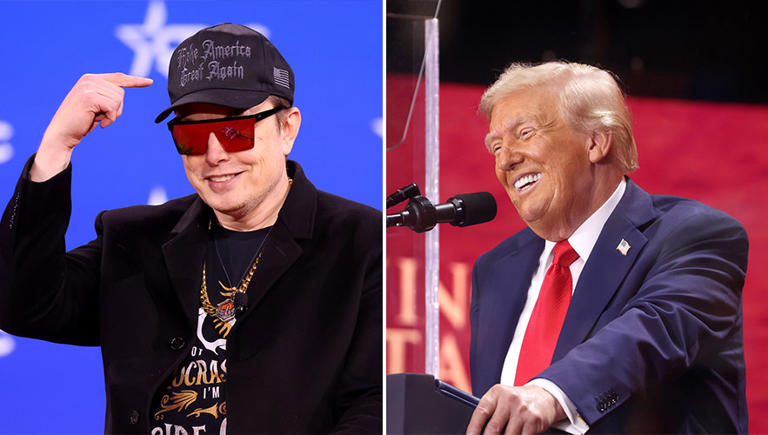
Cruz says the meeting derailed
Cruz’s account is a first person recollection of a private White House moment, not an official transcript of the meeting. He said Trump was using his phone less, so aides would print social media posts for him. Natalie Harp, Trump’s executive assistant, brought in the Musk post, Cruz said.
The senator recalled not knowing what was on the page until Trump showed it to the people in the room. He said the president became intensely angry and used language Cruz jokingly described as including curse words he had not heard before. The school choice conversation, Cruz said, “went off the rails.”
The detail fits Trump’s documented information flow. Harp has long been known as a “human printer” because she supplies him with hard copies of stories, posts and other material. CBS News reported in August that she remains his special assistant and executive assistant.
Cruz’s new account does not independently prove why Trump reacted as he did. It does establish, if his recollection is accurate, that Musk’s post reached Trump almost immediately and changed the course of a policy meeting.
What Musk actually claimed
Musk’s post came during the spectacular collapse of his political alliance with Trump. Earlier on June 5, the two men had traded escalating public attacks after Musk turned against Trump’s major tax and spending legislation. Trump threatened to examine or terminate federal subsidies and contracts benefiting Musk’s companies.
Musk then wrote on X that Trump was “in the Epstein files” and asserted that this was “the real reason” the records had not been made public. CNN reported at the time that the accusation became a tipping point in the feud and said it could not verify Musk’s claim about the reason for nondisclosure.
That second part matters. A name appearing in investigative files is not proof of a crime, and it does not establish why officials released or withheld particular records. Epstein related files contain references to victims, witnesses, employees, associates, public figures and others.
Musk deleted the Epstein post within days. On June 11, he said he regretted some of his posts about Trump because they had “went too far,” without specifying every post he meant. Associated Press and ABC News reporting noted that the deleted Epstein accusation was among the messages at issue.
Trump’s name was already documented
The narrow proposition that Trump’s name appears in Epstein related material was not new even when Musk posted it. Trump and Epstein had a documented social relationship in the 1990s, and previously public records included Trump’s name in Epstein’s contact book and flight logs.
The Associated Press reported in July 2025 that Trump flew on Epstein’s jet multiple times between Florida and the Northeast. It stressed that the released material did not implicate Trump in wrongdoing, and there is no documented evidence he visited Epstein’s private island.
Those distinctions are essential because “the Epstein files” is not a single verified client roster. In a July 2025 memorandum, the Justice Department and FBI said their review found no incriminating “client list,” no credible evidence that Epstein blackmailed prominent people as part of his crimes and no evidence sufficient to predicate investigations of uncharged third parties.
That memo also said no further disclosure was then warranted, largely because the holdings included victim information, sealed material and child sexual abuse material. Congress later changed the legal disclosure framework.
Bondi briefing became a flashpoint
A month after the Trump Musk rupture, The Wall Street Journal reported that Attorney General Pam Bondi and then Deputy Attorney General Todd Blanche had told Trump during a May 2025 White House briefing that his name appeared multiple times in Epstein related files.
According to the Journal, officials told Trump that many other prominent names appeared in the material and that such references were not evidence of wrongdoing. Officials also described some material as unverified hearsay and said the department did not plan additional disclosures then.
The White House attacked the Journal report as “fake news.” But an administration official separately told Reuters that the White House was not denying that Trump’s name appears in Epstein files, noting that his name had already appeared in briefing material made public. Bondi and Blanche said at the time that nothing in the reviewed files warranted further investigation or prosecution.
There was also tension with Trump’s earlier public answer. On July 15, when asked whether Bondi had told him his name appeared in the files, Trump said no and described the briefing as very quick. The later Journal report said the May briefing did include that information.
None of that establishes Musk’s asserted motive for nondisclosure. It does, however, mean that the core factual question of whether Trump was named somewhere in the broader record became separate from the much more serious question of what any particular reference meant.
Congress changed the disclosure rules
The political dispute did not end with the Justice Department’s July 2025 memo. Pressure for broader disclosure continued, including from lawmakers and parts of Trump’s own political coalition.
On Nov. 18, 2025, the House passed the Epstein Files Transparency Act 427-1. The Senate approved it unanimously, and Trump signed it into law on Nov. 19. The statute required the attorney general, within 30 days, to make publicly available in a searchable and downloadable format the unclassified Justice Department records covered by the law, subject to specified exceptions.
Exceptions include protections for victims’ identifying information, child sexual abuse material, material that could jeopardize an active federal investigation and certain depictions of death, abuse or injury. The law also required Congress to receive an accounting of releases, withholdings and redactions.
The Justice Department released hundreds of thousands of pages beginning Dec. 19 and later said it had published about 3.5 million responsive pages. Its Jan. 30 announcement said more than 500 attorneys and reviewers participated.
The department maintained that its production satisfied the statute. That conclusion soon became the subject of litigation.
Judge ordered more compliance work
Independent journalist and lawyer Katie Phang sued Blanche in April 2026, challenging the department’s compliance with the transparency law. On June 25, Senior U.S. District Judge Emmet Sullivan granted a preliminary injunction requiring the government to produce specified material or explain why it should remain withheld, address foreign language records and comply with the law’s redaction reporting requirements.
The procedural posture is important. Sullivan did not conduct a trial and issue a final judgment that every disputed document had been unlawfully withheld. His opinion said the government had failed to respond substantively to Phang’s merits arguments at that stage and therefore, under the court’s rules, had conceded them for purposes of the preliminary injunction motion.
The order nevertheless imposed concrete obligations. Among the disputed materials were underlying FBI interview notes connected to typed FD-302 reports. Those reports concern allegations made by a woman who accused Trump of sexual assault when she was a minor. The allegation has not been corroborated, Trump denies wrongdoing, and the disclosure lawsuit does not determine whether the allegation is true.
That is another certainty line worth preserving: a court ordering the government to disclose or justify withholding investigative notes is not a judicial finding that the allegation contained in those notes occurred.
Sullivan pressed DOJ in August
The dispute intensified at an Aug. 13 status hearing. Courthouse News Service reported that Sullivan repeatedly pressed a Justice Department lawyer about the basis for redactions, the status of the required reporting and why handwritten FBI interview notes had not been produced.
The department argued that some handwritten notes were duplicative of typed interview reports and that handling handwritten material raised additional risks of exposing victim information. Phang’s lawyers challenged that explanation and later filed examples showing that DOJ had released other handwritten FBI notes elsewhere in its Epstein production.
Sullivan did not immediately resolve that factual dispute. Instead, the case continued through additional filings. The public docket shows the department filed a response on Aug. 27 and that Phang’s next reply was due Sept. 3.
The judge’s comments during the August hearing were unusually pointed. He reminded government lawyers that he had held Justice Department attorneys in contempt in a prior case and warned that he was prepared to enforce his orders if necessary. But as of the latest public docket, no contempt finding had been entered in Phang’s case.
DOJ has now appealed
Blanche filed a notice of appeal on Aug. 24 seeking D.C. Circuit review of Sullivan’s June 25 preliminary injunction. The appellate case was docketed as Phang v. Blanche, No. 26-5299, with initial submissions due Sept. 24 and possible dispositive motions due in October.
The appeal does not itself erase Sullivan’s injunction or resolve the disclosure dispute. The district court proceedings over the handwritten notes and other compliance questions have continued, so the government is simultaneously appealing the injunction and litigating compliance before Sullivan.
Cruz’s story adds a human detail
What Cruz contributes now is not a new document from the Epstein investigation. It is a vivid description of how the Trump Musk rupture landed inside the Oval Office at the precise moment their alliance was disintegrating in public.
His account also connects three different stages of the controversy that are easy to collapse into one: Musk’s unverified June 2025 claim about why records were being withheld; later reporting and public documents confirming Trump’s name appears in Epstein related material; and a subsequent statutory and court fight over whether the Justice Department has fully complied with Congress’s disclosure mandate.
Those are related facts, but they are not interchangeable.
Cruz said he viewed the Musk post as a “hand grenade” dropped into the meeting. More than a year later, the personal feud has cooled, but the legal dispute over the records has not. The newest verified development is no longer Musk’s deleted post. It is an active federal appeal and continuing district court litigation over what the government must disclose, what it may redact and how it must explain those choices.