Two dozen TikTok staffers were messaging past midnight about one teen’s account, racing to ship a feature before the news hit
Chase Nasca was 16 when he took his own life. A year later, TikTok employees were still going through his account in an internal work chat. Someone from the company’s trust and safety team listed what the app had been showing him, and three coworkers replied with a crying emoji. The conversation ran late into the night, and most of the people in it were there for one reason — to figure out what the company would say about him publicly.
Those messages are now evidence in lawsuits against social media companies. In 2021, TikTok rewrote part of its recommendation system so that a person watching one troubling video would be less likely to get a run of them. A confidential internal report, described by Bloomberg Businessweek on Aug. 4, says the company then withheld that rewrite from about 10% of U.S. users on purpose. The other 90% had it by early 2022.
Must Read
- Jeff Bezos backs a platform that lets anyone invest in rental homes for as little as $100 — 6 ways to build wealth like a landlord without actually being one
- Dave Ramsey warns nearly 50% of Americans are making 1 big Social Security mistake. Here’s what it is and 3 simple steps to fix it ASAP
- The tax breaks in Trump’s ‘big beautiful bill’ expire after 2028. Here are 4 moves to make before the window closes
That left roughly 15 million people on the older system while the company measured what the safer version was costing it in terms of viewing time. Chase lived in Suffolk County, New York, and his account was one of them.
Why TikTok sped up its For You feed reset
Businessweek had gone to the company for comment on a 2023 story. That’s what the late-night chat was for. Two dozen employees were in the chat, and court documents reveal the response taking shape across several days and several nights.
A staffer on the communications team wrote that colleagues were ”developing on-the-record quotes to show empathy.” The same staffer wanted a feed-reset feature out the door faster, to “show progress ahead of the story.”
TikTok launched it for everyone on March 16, 2023. The Businessweek story ran the following month.
None of this was visible at the time. A court unsealed the exhibit earlier this year, with Chase’s name and the experiment redacted.
Read More: Vanguard reveals what’s coming for U.S. stocks — and it could be bad news for this group of investors
What the sealed report says about the teen’s account
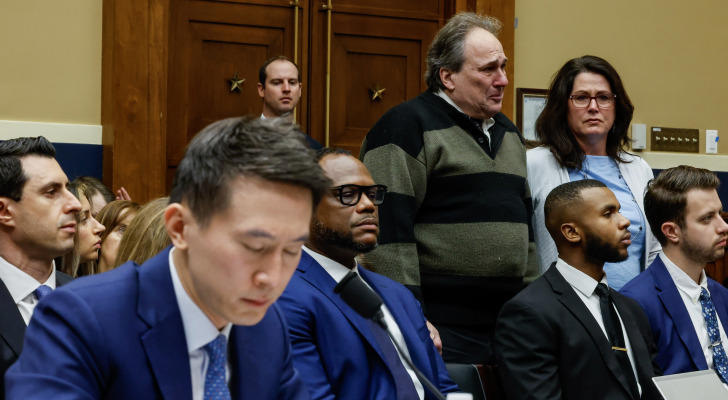
Staff from TikTok’s safety and algorithm teams wrote the report that same March, and it follows what Chase watched right up to the end. The document carries a “privileged and confidential” marking and remains under court seal. Two weeks after the review was completed, CEO Shou Chew testified before the House Energy and Commerce Committee on March 23, 2023.
Back on Dec. 16, 2021, TikTok said publicly that it was working to “interrupt repetitive patterns” and testing ways to stop serving people run after run of similar videos on subjects such as extreme dieting or sadness — the kind of content the company itself admitted could hurt a vulnerable person who sees too much of it in a row. Most U.S. users had that system by early 2022, and Chase’s account was selected at random for the control group on Jan. 25, 2022.
Brandon Maffei, a school friend, noticed a shift around then in what Chase forwarded him. The jokes stopped and suicide content took their place, Maffei told Businessweek the following year. Chase was dead within a month. His account stayed live, and his mother, Michelle Nasca, found it a year afterward, still delivering the same material.
What TikTok says, and where the case stands
Asked about the document, TikTok sent a written statement. A spokesperson said the company is “deeply committed to the safety and well-being of users,” particularly teenagers, and pointed to what it spends on trust and safety work. “Our hearts break for any family that experienced a tragic loss,” the spokesperson said.
Not everyone inside the company knew about the test. A former trust and safety team leader, whom Bloomberg did not name, said he had no idea it was running. Experiments like this are normal at social platforms, he said — his problem was with how this one was set up. Far too many people got swept into the control group, and nobody carved out under-18 accounts or self-harm material.
Chase’s parents have been trying to get TikTok in front of a jury since March 2023. Their wrongful death suit was thrown out last year. TikTok argued it was protected by Section 230, the federal law that shields websites from being sued over what their users post. The judge agreed, and the family is appealing. In June 2026, the Arkansas attorney general’s office asked to depose Chase’s father, Dean Nasca, for its own case.
What parents can change in the app today
If your teen is on TikTok, the feature those employees pushed to launch is worth knowing about. TikTok’s own instructions run through profile, then the menu button, then settings and privacy, then content preferences, then refresh your For You feed. It clears existing recommendations and restarts the algorithm, and TikTok warns the action can’t be reversed.
That doesn’t touch the part that costs your household money. Edison Research found that 83% of weekly U.S. TikTok users aged 13 and older had taken some action after seeing an ad in the app, and that 43% had bought something. The feed built to hold a teenager’s attention is the same one selling to them.
The reset is still three menus deep, and it only works if somebody goes looking.
TikTok has not yet responded to questions from Moneywise about whether the control group included minors, or whether the refresh feature’s launch was moved up because of the pending story.