China’s neighbor hits 1,200-second mark in hypersonic missile engine testing
India has made progress toward developing hypersonic cruise missile technology. On Saturday in Hyderabad, the Defense Research and Development Organization (DRDO) completed a 1,200-second ground test of its actively cooled scramjet combustor.
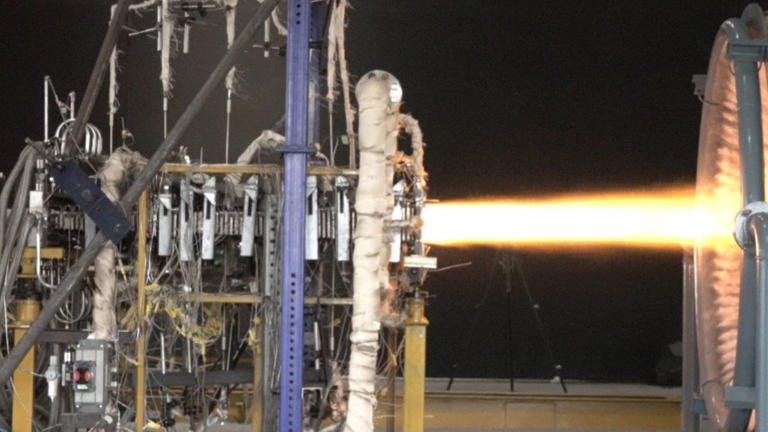
This successful test lasted almost 20 minutes, nearly twice as long as a previous test in January.
The test was held at the Scramjet Connect Pipe Test (SCPT) facility, which is run by the Defense Research and Development Laboratory (DRDL), a main missile research center for DRDO. Officials said this achievement boosts India’s efforts to develop hypersonic weapons that can fly faster than Mach 5 (3,790 mph).
Hypersonic cruise missiles are designed to travel at very high speeds while remaining maneuverable. These systems are difficult to intercept with current air defense networks and are a key area of focus for countries such as the United States, Russia, China, and India.
Long-duration engine test clears key milestone
The recent trial aimed to confirm how the full-scale scramjet combustor performs over extended periods of operation. Scramjets are air-breathing engines that use supersonic combustion to keep producing thrust at hypersonic speeds.
According to DRDO, the system uses active cooling technology to handle the intense heat created when flying faster than five times the speed of sound. Engineers ran the test at the SCPT facility in Hyderabad, which is built to simulate the high-speed airflow needed for hypersonic propulsion research.
The 1,200-second test is a big step up from the earlier test this year, which lasted just over 700 seconds. Longer run times are important for hypersonic cruise missiles because they need to keep stable combustion and stay structurally sound during long flights.
“This successful test positions India at the forefront of advanced aerospace capabilities and continuously emerging war technologies. The remarkable feat is achieved through a cutting-edge supersonic air-breathing engine that utilizes indigenously developed liquid hydrocarbon endothermic fuel, a high-temperature thermal barrier coating, and advanced manufacturing processes. The ground tests conducted at the SCPT facility have successfully validated the design of an advanced active cooled scramjet combustor as well as the capabilities of a state-of-the-art test facility,” the Ministry of Defense (MoD) said in a statement.
Engineers solved extreme heat and flame challenges
One of the main challenges in hypersonic propulsion is maintaining a stable flame as air flows through the engine at very high speeds. DRDO scientists said the combustor uses a new flame-stabilization method that keeps combustion going even when airflow exceeds 0.93 miles per second.
Researchers tested several ignition systems and flame-holding methods before choosing the current scramjet setup. Stable combustion is crucial because even minor issues within the engine can cause power loss at hypersonic speeds.
Another challenge is dealing with temperatures that exceed steel’s melting point. To solve this, DRDO and the Department of Science and Technology labs collaborated to develop an advanced ceramic thermal barrier coating. Officials said this material provides the high thermal resistance needed for long hypersonic flights.
The Ministry of Defense also noted the development of a special, locally produced endothermic fuel for the scramjet engine. DRDL and industry partners developed this fuel together. Officials said the fuel has two main benefits for hypersonic use. It helps cool the engine more effectively and makes ignition easier, even in extreme conditions.
India has steadily expanded its hypersonic research over the past few years as nations race to develop faster and harder-to-intercept missile systems. Military analysts believe hypersonic weapons could reshape future warfare because of their speed, maneuverability, and ability to strike targets rapidly over long distances.