The IDF is finally probing Hind Rajab’s killing. Don’t expect accountability
The IDF is investigating five high-profile cases, including the killings of Hind Rajab and Palestinian paramedics. But hundreds of other incidents that raise questions about the army’s rules of engagement remain unexamined
August 20th, 14PM August 20th, 16PM
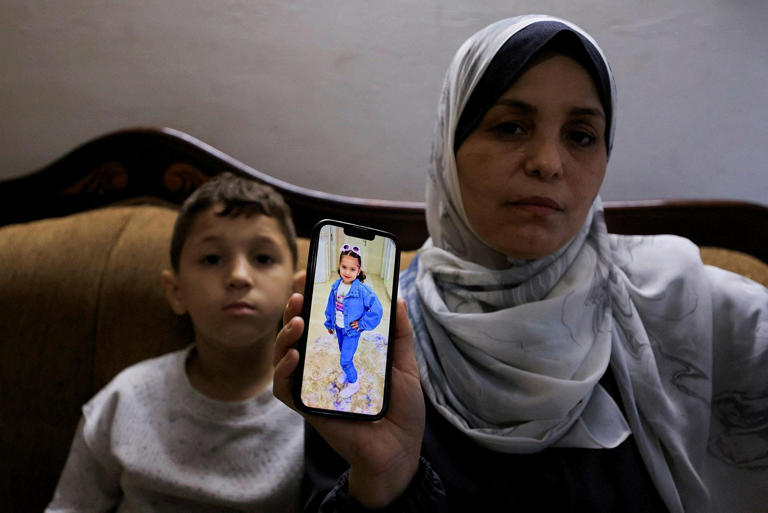
The Israeli military announced on Wednesday that it will open criminal probes into the killing of the young Palestinian girl Hind Rajab and the killing of paramedics in Rafah – but it is unlikely that the investigations will result in significant disciplinary action or harsh punishment for the soldiers involved.
Throughout the war, Israel’s military justice and prosecution systems have displayed what critics describe as a profound lack of effectiveness. They also emerged badly damaged from the Sde Teiman affair, in which allegations of severe abuse against Palestinian detainees at an Israeli detention center resulted in public outcry directed at military investigators and prosecutors, who ultimately did not press charges. The affair left the system with diminished authority and public trust.
Given the public mood in Israel today, there appears to be little political legitimacy for uncovering the truth and prosecuting people who committed crimes in IDF uniform.
Even if that were to happen, it would amount to little more than a drop in the ocean.
The IDF’s Wednesday statement on the probes concerns five incidents that took place during the war, made international headlines and caused Israel significant embarrassment in the media and in political and diplomatic arenas.
The question of why one incident becomes an international sensation while a similar one remains largely confined to Palestinian media is a subject for a separate study.
However, there are clear reasons why these particular incidents became so consequential: In three cases, the victims were foreign aid workers or local employees of international aid organizations, while the other two drew widespread attention because the circumstances surrounding them were documented in unusual detail.
In the incident in which Rajab was killed, a recording was released of a long and heartbreaking phone call in which the five-year-old spoke with her mother and rescuers before the call was cut short by a barrage of gunfire.
In the case of the paramedics’ killing, released video footage contradicted the IDF’s account of the circumstances of their deaths.
Yet hundreds of similar incidents took place throughout the war, during which tens of thousands of people were killed under circumstances that, at the very least, raise questions about commanders’ judgment and the IDF’s rules and policies governing the use of fire.
Although many of these incidents were documented, and there is little disagreement over the basic facts, they received little attention in international or Israeli media and did not prompt the IDF to issue special statements announcing criminal investigations. As far as is known, no soldier or officer has been tried or punished for the unjustified killing or injury of Palestinians during the war in Gaza.
On the sixth day of the October 7 war, an Israeli Air Force aircraft bombed a building in Jabalia in the northern Gaza Strip, killing 39 people, all members of the Shahab family. It was the first incident in which dozens of members of the same family were killed in a single attack. Many more followed.
According to figures from Gaza’s Health Ministry, which are accepted by nearly all international organizations and governments around the world, more than 2,000 Gazan families have been completely erased from the population registry as a result of IDF attacks.
In October 2024, an IDF strike killed 132 members of a single family in Beit Lahia. The youngest victim was a six-week-old infant; the oldest was 79. In March 2025, the IDF ended the cease-fire with a massive overnight offensive that left nearly 300 women and children dead. In the months that followed, more than 2,000 people were killed by gunfire while seeking aid near distribution centers established by Israel itself or near food trucks.
Throughout the war, dozens of investigations have been published into the killing and injury of civilians. They include documented cases of people being killed after waving white flags – three such victims were Israeli hostages Yotam Haim, Alon Shamriz and Samer al-Talalka – as well as incidents in which dozens of people were killed in strikes targeting a single Hamas operative, deliberate shootings of journalists and medical workers, attacks on hospitals, indiscriminate or seemingly purposeless gunfire, and more.
The death toll in Gaza can also be examined through basic arithmetic. On average, the IDF killed 28 children under the age of 18 every day of the war – more than 20,000 children in total. Even if some were killed in circumstances that were justified under the laws of war – during an exchange of fire or in a lawful strike on a military facility, for example – it is difficult to assume that this applies to all of them except Hind Rajab and her cousin, or even to most of them. Attempts to get answers from the IDF about these cases have failed.
In April 2025, following the investigation into the killing of the paramedics and the IDF’s claim that it was an exceptional incident that did not reflect broader conduct, I asked here: “Why assume that the killing of the paramedics was worse or occurred in more unusual circumstances than the killing of six people in an airstrike on Deir al-Balah two weeks later? Or the 10 members of a single family killed in Khan Yunis, the 15 members of one family killed in Gaza City’s Shujaiyeh neighborhood, the 29 members of another family also killed in Shujaiyeh, or the 37 displaced people killed in a fire following an airstrike on tents in the Al-Muwasi ‘humanitarian zone’ – all incidents from the past 11 days?”
Nearly a year and a half later, these questions remain unanswered. The Israeli public has yet to receive answers about the enormous scale of the killings and the reckless rules governing the IDF’s use of fire in the Gaza Strip throughout the war. No less serious is the fact that the Israeli public is not demanding those answers.
The IDF’s statement Wednesday concerned five cases out of hundreds, if not thousands, in which civilians were harmed. For critics, this reinforces the conclusion that the IDF is less interested in uncovering the truth, holding soldiers accountable and ensuring compliance with Israeli and international law than in clearing its name internationally and providing ammunition for Israeli hasbara advocates.
That effort – grotesquely too little and too late – is doomed to fail. The IDF’s conduct and policies governing the use of fire during the war in Gaza have permanently stained its reputation and that of the State of Israel.