‘Her conduct has been detrimental’: Sportscaster launches scathing attack on Sophie Cunningham
Sophie Cunningham has spent much of the past month at the center of one of the WNBA’s biggest controversies, and now an Emmy-nominated sportscaster argues the league should have taken action against the Indiana Fever guard.
Chris Williamson believes the WNBA missed an opportunity to shut down the controversy early by choosing not to discipline Cunningham after she publicly discussed transgender athletes competing in women’s sports.
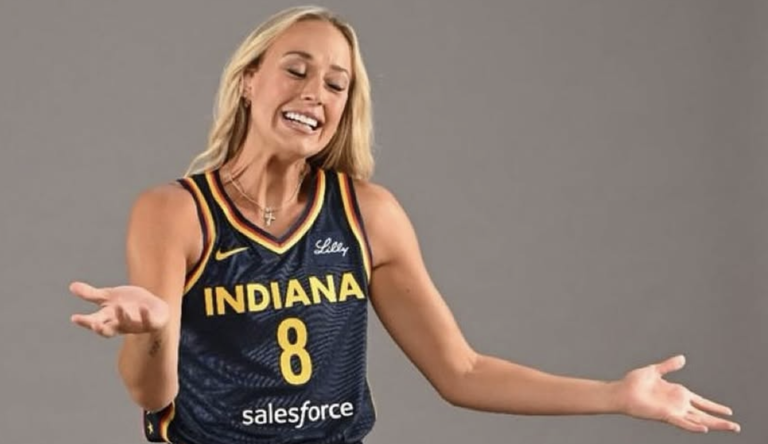
The issue has since grown far beyond Cunningham’s original comments. Demonstrations have appeared outside Fever games, coaches have been asked about the controversy during press conferences, and former NBA players Enes Kanter Freedom and Royce White have used the debate to stage their own publicity stunt involving the WNBA Draft.Cunningham initially addressed the issue during an ESPN interview published in July. Asked about the criticism she had received over her views, the Fever guard said she did not hate transgender people but believed biological differences should matter when it comes to women’s sports.
“I got a lot of negative feedback about me hating trans. And I’m like, ‘I never once said that,’” Cunningham said. “I think that I am here to extend love. But I also think with that love is truth, being honest.”
She went on to say that she wanted to protect young girls in sports and believed they should not have to compete against biological males.
Cunningham did not walk back those remarks when the backlash continued. Instead, she later described her position as “common sense” and said she stood by what she had said.
“I said what I said,” Cunningham said. “I think it’s kind of common sense.”
The WNBA did not issue an immediate response to Cunningham’s comments. The league eventually released a statement 17 days after the ESPN interview, saying it embraced “justice, equity, diversity, and inclusion” while also condemning what it described as hate, abuse and demonization of transgender people.
Cunningham was not fined or suspended.
Williamson believes that decision allowed the controversy to grow.
“The moment the league didn’t discipline Sophie Cunningham for her transphobic comments, they set the table for almost all of this political discourse and nastiness towards the trans community,” Williamson wrote on X. “Her conduct has objectively been detrimental to the league.”
Williamson’s argument is based in part on the WNBA’s existing ability to discipline players for conduct it considers detrimental to the league. The league has previously used disciplinary measures for off-court behavior, so a punishment for comments made during a media interview would not necessarily be unprecedented.
But Cunningham’s case is more complicated because she made the comments while discussing her personal views on a controversial political and social issue, rather than conduct directly related to a game.
The WNBA ultimately chose not to punish her, but that hasn’t stopped the debate from getting louder.
Cunningham has continued to attract both endorsement and criticism, while the controversy has increasingly become connected with the league’s larger discussion about transgender athletes and women’s sports.
Supporters of Cunningham argue she was simply expressing a view about fairness in competition and protecting women’s sports. Critics, including Williamson, believe her comments crossed a line and contributed to an antagonistic environment for transgender people.
The disagreement has also pulled Cunningham’s teammates into the discussion.
Caitlin Clark, who has generally avoided making the controversy the focus of her public comments, has received criticism from some people for not taking a stronger position. Fever coach Stephanie White has also been forced to answer questions about the issue, despite repeatedly making clear that she would rather see attention return to basketball.
White publicly pushed back against what she described as efforts to “hijack” the league with divisive issues.
Meanwhile, Cunningham herself has expressed frustration that the conversation has moved so far away from basketball. She recently criticized the amount of attention being given to issues surrounding the WNBA rather than what happens on the court.
The controversy has also taken an unusual turn with Kanter Freedom and White declaring for the 2027 WNBA Draft while claiming to be transgender women. The league has since determined that the former NBA players are not eligible to participate.
Kanter Freedom’s involvement has produced another confrontation, this time during a game involving the Chicago Sky and Fever. The former NBA center was ejected after an incident involving Sky guard Natasha Cloud and has subsequently been banned from Wintrust Arena.
All of that has made Cunningham’s original comments a much larger story than they might have been when she first made them.
Williamson believes the WNBA could have prevented much of that by disciplining Cunningham immediately.
The league clearly saw the situation differently.
For now, Cunningham remains on the court with the Fever, while the dispute surrounding her comments continues to follow the team. With the regular season approaching its conclusion, the controversy has become another major storyline for a league that has spent much of 2026 trying to hold the focus on its rapidly growing product.