Criminal gangs use migrants expelled from Ceuta to smuggle cocaine into Spain by speedboat
The phenomenon highlights the close connection between the different activities of criminal organizations operating on both sides of the Strait.
The migratory pressure resulting from the massive entry at the end of July in Ceuta has opened a new front of concern for the State Security Forces and Corps. The Civil Guard has detected that human trafficking mafias are recruiting immigrants in Morocco who have been expelled from Ceuta after their irregular entry to use them as drug couriers in clandestine movements towards the Peninsula. This is a new development of a crisis that, more than a month after the massive entry into the autonomous city, continues to generate security problems and is highlighting the ability of criminal networks to take advantage of the situation.
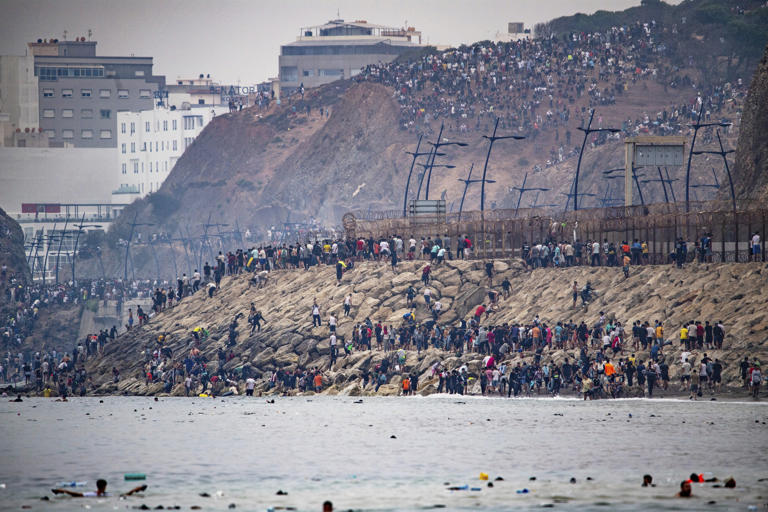
As EL MUNDO has learned, these organizations would be recruiting many returned immigrants once they return to Moroccan territory and offering them the possibility of moving to the Peninsula without having to bear the cost of the trip in exchange for transporting backpacks with cocaine. In this way, the immigrant making the journey does not pay an economic amount for the trip, but rather pays for the journey by transporting the drugs that the organization provides. The Civil Guard has identified this phenomenon as one of the new methods used by human trafficking and drug trafficking networks to take advantage of migratory flows.
Criminal organizations would not only benefit from the necessary clandestine logistics to introduce drugs into Spain, but would also reduce the risk of exposure of their own members, placing individuals outside the criminal structure at the forefront of drug transportation. The concern of the Armed Institute’s investigators now focuses especially on the ability of these organizations to locate people who have already been returned to Morocco and offer them an apparently simple way to reach Spanish territory again.
The phenomenon also highlights the close connection between the different activities of criminal organizations operating on both sides of the Strait. The same structures or networks linked to human trafficking are establishing, as the same sources specify, collaboration mechanisms with groups dedicated to drug trafficking. Both use clandestine maritime routes to combine both illicit businesses. In this case, the transportation of people and the movement of narcotics intertwine in the same operation: narco-speedboats are used to transport immigrants to the Peninsula and, at the same time, to introduce the drugs they carry on behalf of the organizations.
For investigators, one of the main risks lies precisely in the vulnerability of immigrants acting as couriers. The fact that they are not members of the criminal structure and that, in certain cases, they may act under pressure or in the absence of economic alternatives makes it difficult to establish to what extent there is voluntary participation in drug transportation. The Civil Guard is conducting ongoing investigations to determine the real extent of this procedure. The goal is to determine whether these are isolated cases or a method that mafias are beginning to systematically use to introduce cocaine into the Peninsula.
The use of immigrants as drug couriers adds a dimension of security and organized crime to a crisis that had already forced the State Security Forces and Corps to increase their efforts. Meanwhile, the autonomous city continues to face pressure on security services, social care, and child protection.
Three attacks on military patrols have already been recorded, one of them with Molotov cocktails, prompting the group to demand to be given the status of authority agents. The National Police, responsible for security, emphasizes the lack of personnel in the face of the magnitude of the problem.