Historic Ukrainian barrage triggers fierce backlash from Russian military bloggers — ISW
ISW analysts noted that while the pro-war blogging community erupted with demands for enhanced air defense networks and severe retaliatory strikes, official Kremlin representatives opted for a highly restrained response. Russian Foreign Ministry spokesperson Maria Zakharova criticized the Ukrainian strikes for their alleged impact on civilian populations, completely omitting any mention of several successful Ukrainian hits on Russian defense-industrial plants and critical oil infrastructure facilities.
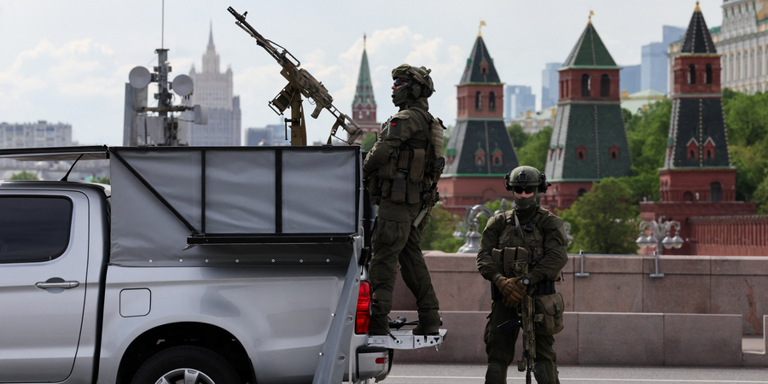
Similarly, Dmitry Peskov, the spokesperson for Russian dictator Vladimir Putin, attempted to pacify domestic commentators who were clamoring for a nuclear response to the capital’s breach. Answering a question from a Kremlin state propagandist regarding whether Russia might deploy “devastating bombs” against Ukraine, Peskov deflected, stating that “a nuclear state cannot be threatened, and its very existence cannot be put at risk.”
Meanwhile, the independent Russian investigative outlet Agentstvo reported that Russia’s heavily censored state television channels largely buried the story. Major networks — including Channel One, Russia-1, and NTV — allotted less than one minute of total airtime to the historic strikes on the capital.According to the ISW, Russian military bloggers are now calling on the Kremlin to scrap its current fragmented approach and establish a unified, multi-layered air defense network capable of countering drone swarms across the vast territories surrounding Moscow. They also demanded advanced early-warning systems, acknowledging that Ukrainian forces are rapidly expanding the scale, range, and intensity of their long-range strikes to overwhelm Russian air defense.
Several Z-bloggers openly slammed the responses of Peskov and Zakharova as wholly inadequate.
“Russian military bloggers have repeatedly highlighted systemic vulnerabilities in Russia’s air defenses and urged retaliatory measures, as the Kremlin continuously fails to defend or reinforce air defenses in rear areas,” the ISW concluded.
The historic assault on Moscow
Overnight on May 17, a massive wave of unmanned aerial vehicles (UAVs) struck several cities across Moscow Oblast. Local residents reported explosions and subsequent fires in suburban Khimki, Durykino, Lobnya, Zelenograd, and Naro-Fominsk, with thick plumes of smoke visible over multiple settlements.
Read also: Ukraine says Moscow region hit in largest attack of full-scale war
Ukrainian Defense Ministry confirmed that Moscow and its surrounding territory experienced the largest aerial assault since the beginning of the full-scale invasion.
Ukrainian President Volodymyr Zelenskyy confirmed the operation, framing it as a direct consequence of Russian actions.
“Our responses to Russia’s prolongation of the war and its strikes on our cities and communities are entirely justified. This time, Ukraine’s long-range sanctions have reached Moscow Oblast, and we are sending a clear message to the Russian people: their state must end its war,” Zelenskyy declared.
Russian Defense Ministry claimed its air defense systems intercepted and destroyed 556 Ukrainian drones across various oblasts overnight. Moscow Mayor Sergey Sobyanin stated that more than 120 of those UAVs were purportedly downed within the capital region alone. Russian authorities claimed that three people were killed in the surrounding Moscow Oblast, while another 12 were injured in the city.
Read also: Partisans claim sabotage of electronic warfare towers opened gaps near Moscow
Commenting on the successful operation, the Commander of Ukraine’s Unmanned Systems Forces, Robert Brovdi (known by his callsign “Madyar”), noted that Moscow is no longer an unreachable target for Ukrainian drones, adding that the Russian capital has officially lost its “one-way ticket” to a peaceful life.