Jason Arday and the new politics of plagiarism
After a meteoric rise to the top ranks of British academia, scholar Jason Arday was found dead at his London home on Aug. 14, 2026.
Arday had spent weeks fighting plagiarism accusations. The way they took on a life of their own in the media ecosystem is a stark reminder of the steep price people can pay in a culture that has made originality a kind of moral virtue.
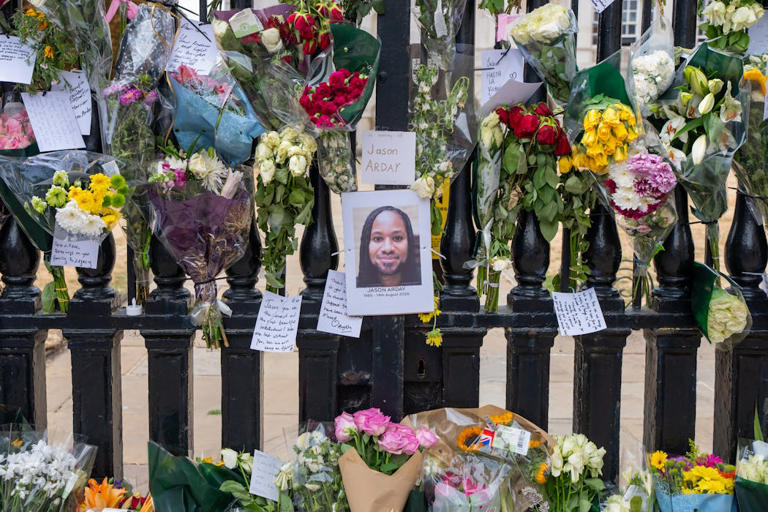
In 2023, at age 38, he had been appointed to a professorship in sociology of education at the University of Cambridge, becoming the youngest Black professor in the institution’s 800-year history.
Nine days before his death, Arday had resigned from his faculty position. He was facing growing criticism about improbable and inconsistent details appearing in his memoir, scheduled to be released in the coming weeks by Simon & Schuster. Arday’s publisher had stood by him, lauding the academic’s “professionalism and integrity.”
But the originality of Arday’s dissertation and his other academic work was also coming under scrutiny, leading to multiple allegations of plagiarism.
Arday vehemently denied the accusations, suggesting that any mistakes were the result of his autism. He also claimed that his accusers were motivated by racism.
The controversy over Arday’s work reflects an ongoing trend of ideological opponents levying plagiarism accusations to undermine one another. I think it’s also worth exploring why such attacks continue to be so enticing – and so effective.
Shifting standards for originality
Plagiarism can be defined as the appropriation of someone else’s words or ideas without acknowledgment or compensation.
In the ancient world, plagiarism was viewed quite negatively: The word “plagiarism” actually means “kidnapper” in Latin, and the Roman poet Horace described literary theft like a crow making itself beautiful with stolen feathers.
But in my 2026 book, “Strikingly Similar,” I explore how, throughout the medieval period, the Renaissance and into the early modern era, an ethos of “imitatio” prevailed. Chaucer, Shakespeare and Milton are examples of authors who hewed closely to writers who had come before them. These writers freely borrowed plots, characters and rhetorical devices in the service of their own work.
True originality came to be viewed in a positive light only gradually, and it eventually developed into the modern concept of intellectual property, in which the creative products of human ingenuity are viewed as tangible assets. Treating creative works as property, in turn, created the legal framework to protect them.
The German artist Albrecht Dürer initiated one of the first known intellectual property lawsuits. In 1506, he asked the Venetian government to stop the Italian engraver Marcantonio Raimondi from copying his woodcuts. Dürer was only partly successful: It was decided that Raimondi could continue copying Dürer’s work, but he was prohibited from also copying the artist’s distinctive monogram.
In the 19th century, as the result of lobbying by authors such as Charles Dickens, the British Parliament enacted the Copyright Act of 1842. This statute greatly expanded the protections granted to authors. It would take another 50 years, however, before foreign authors like Dickens enjoyed similar protections under U.S. copyright law.
Today, the situation that existed during the Renaissance has almost totally reversed itself.
In Europe, groups of scholars have banded together to investigate allegations of plagiarism. Using crowdsourcing techniques, VroniPlag Wiki in Germany and Dissernet in Russia have exposed numerous instances of plagiarism by public servants in their dissertations and academic publications.
The work of VroniPlag Wiki alone has led to several German universities revoking doctoral degrees they had awarded to elected and appointed government officials.
Plagiarism becomes political
Today, accusations of plagiarism have become a potent way to undermine someone’s credibility. If a claim is substantiated, the plagiarist is seen as sloppy or lazy at best, and fundamentally dishonest at worst.
As a result, partisans of the political left and right routinely use allegations of plagiarism to vilify their ideological adversaries. This serves their goals of undercutting both their target’s work and the institutions they represent.
In 1991, NPR’s Nina Totenberg broke the story of Anita Hill’s allegations of sexual harassment against Supreme Court nominee Clarence Thomas, drawing the ire of the right. As the controversy engulfed the confirmation process, the conservative-leaning Wall Street Journal revived a nearly two-decade-old plagiarism accusation against Totenberg, dating from her time as a reporter for the National Observer.
The most prominent recent example would be the 2023 claim by conservative activist Christopher Rufo that Claudine Gay, then serving as president of Harvard, had engaged in multiple acts of plagiarism.
In 2024, Gay resigned as the school’s president, although she remains on the faculty. (In an ironic twist, the spouse of one of Gay’s most prominent critics, hedge fund manager Bill Ackman, was accused of having plagiarized her own dissertation.)
Conservative voices have also routinely found themselves in the crosshairs.
In 2013, multiple media outlets accused Kentucky Republican Sen. Rand Paul of plagiarizing in his speeches, newspaper column and his 2012 book from a variety of sources, including Wikipedia. And during Supreme Court Justice Neil Gorsuch’s 2017 confirmation hearings, some media outlets claimed that President Donald Trump’s nominee had plagiarized parts of his 2006 book about assisted suicide. Gorsuch went on to be confirmed by the Senate.
The accusations against Arday did not emerge in a political vacuum. They were shaped by the culture wars over race, academia and diversity, equity and inclusion policies.
On July 21, 2026, Nathan Cofnas, an American philosopher working at Ghent University in Belgium, wrote a Substack post detailing how he submitted Arday’s 2015 dissertation to Copyleaks, a plagiarism detection platform. He found “substantial overlap” with a thesis written by another scholar in 2009.
Cofnas added that “Many passages are lifted with minimal editing, sometimes retaining copy-editing mistakes from the original source,” and found similar issues in other papers written by Arday.
In the past, Cofnas has expressed doubts about the intellectual abilities of Blacks in comparison to whites. By discrediting the work of a Black professor, he explained, he could also discredit the university that had hired Arday for promoting “the ideology of DEI.”
Ghent University suspended Cofnas on August 20, 2026, while it conducted an investigation into his actions.
AI complicates the notion of plagiarism
The rise of generative artificial intelligence has arguably made the public’s desire for original human works even more pronounced. Just a year after the 2022 release of ChatGPT 3.5, Merriam-Webster chose “authentic” as its word of the year.
Copyright laws also underscore the premium we place on originality by granting creators – and even their heirs – long periods of exclusive rights for books, music and other artistic works.
When a student submits a paper written by a chatbot instead of their own work, should this be considered plagiarism? I’ve argued that this is more akin to ghostwriting, since the student isn’t copying from an original source. Instead, generative AI is stringing words together in a probabilistic way that closely resembles human writing.
That isn’t the same as generating a text from a single source. That said, using a chatbot to write without disclosing its use can still be a form of cheating. And most people contend that plagiarism, cheating and ghostwriting are all cut from the same cloth because they all lack the spark that we ascribe to truly original thinking and writing.
The public ultimately expects journalists, scholars and elected officials to behave ethically. In academia, there is no greater sin than passing off another’s work as one’s own. And violations of public trust are typically judged quite harshly.