California set to ban ‘addictive’ social media features to protect teens
California lawmakers are poised to pass some of the country’s most significant restrictions on young people’s use of social media, advancing a growing movement to curb tech’s influence on adolescents.
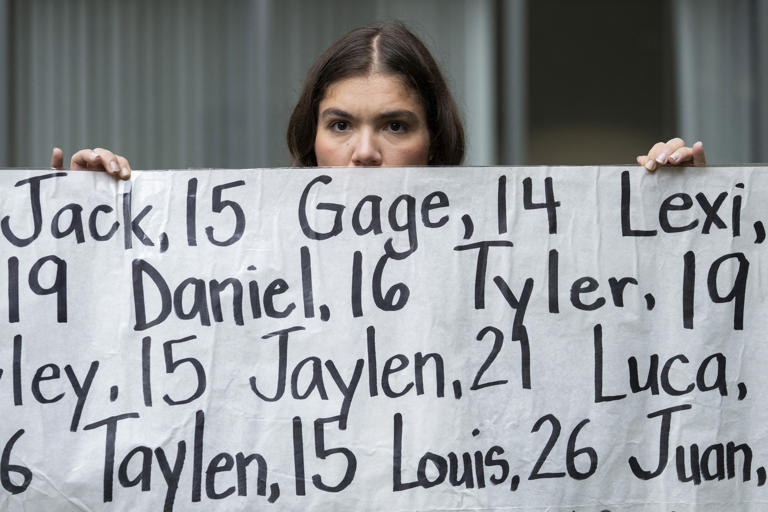
The legislation would ban social media platforms from providing “addictive” features to anyone under the age of 16, forcing companies to modify their products if they want to keep serving younger teens. California Gov. Gavin Newsom (D), a potential 2028 presidential candidate, has said he supports restrictions on social media access for teens under 16.
States across the political spectrum are looking to curb young people’s use of social media. Advocates hope the move by the nation’s most populous state — and the home of Silicon Valley — will carry particular weight as social media giants face increasing pressure in statehouses and in court.
It will be “a signal for the rest of the country,” said Zamaan Qureshi, 24, the co-founder of a youth tech policy group called Design It For Us that supports the proposal.
Many states, including California, already have passed laws requiring parental consent for young social media users. But a growing group of states are going further to make their access contingent on the removal of any features deemed “addictive.”
California’s bill, AB 1709, raises concerns about recommendation algorithms, “infinite scroll,” autoplay and more. South Carolina and Idaho passed similar legislation this spring.
The legislation almost certainly would face legal challenges. Many judges have blocked restrictions on youth social media use, finding that they probably violate the First Amendment, while others have allowed state laws to take effect.
California Assembly member Josh Lowenthal (D), the author of the bill and a longtime tech executive, points to his own experience as a self-described “girl dad” of three.
“I see my kids struggling,” he said in an interview. “I see the attention to their bodies, the issues around fitting in … the constant need to keep up with everybody else around-the-clock.”
Lowenthal’s interest in the issue brought him to Australia, which has banned youths under 16 from using social media entirely. He met with officials there, he said, and texted Newsom during the trip to say “we need to be taking a good look at this in California.”
Newsom was already interested in the topic, Lowenthal said. The governor has vetoed some regulations on tech but backed others, including ones focused on children.
Backers of the bill expect it to pass the state legislature this month, before lawmakers adjourn for the year.
Newsom spokesperson Tara Gallegos declined to comment on the youth social media bill this week, saying his office “doesn’t typically comment on pending legislation.” But the governor said early this year that he supports legislation to restrict access for minors under 16.
Tech companies’ seeming legal invulnerability was pierced in the spring when juries in New Mexico and Los Angeles delivered verdicts against Meta, which owns Facebook and Instagram. A New Mexico judge followed up this month with a ruling branding Meta a public nuisance. This week, a major trial began in Oakland, California, where a jury is hearing arguments brought by that state as well as Colorado, Kentucky and New Jersey that Meta designed its platforms to be addictive to children. The states are seeking a $1.4 trillion verdict.
As of July, at least 20 states have passed some form of online child safety legislation, according to the Age Verification Providers Association. Many of those laws have been blocked by courts, at least preliminarily while litigation is pending. Last year, the Supreme Court upheld a Texas law requiring age verification on porn sites, but it’s not clear if that ruling ultimately will apply to broader social media restrictions.
The U.S. House also passed a package of online child safety measures in June, and similar legislation won the backing of a key Senate committee this month.
Spokespeople for major social media companies declined to comment or did not respond to inquiries.
Critics of the bills say they run afoul of free speech rights and also question their effectiveness.
In Australia, for instance, a government review of the social media ban’s first three months raised concerns that many young people have found ways around the law.
When the chat app Discord announced in February that it would assume by default that users were teens and subject to restrictions on how they could use the service, the company faced a wave of protest. Within weeks, Discord said it would delay implementation of the policy.
“Young people do find a source of solace and community online that they may not receive in the real world,” said Amy Bos, vice president of government affairs at tech industry organization NetChoice, which has led many court challenges to restrictions. “For many young people it’s a place they can go to find those relationships they may not have in the physical world.”
Lowenthal, the author of the California bill, says the goal is not to cut kids off from the internet. The hope, he said, is that social media companies change their products.
“We’re … speaking to a multitrillion-dollar sector that has grabbed onto our kids like a vice grip, and it’s too much,” he said.