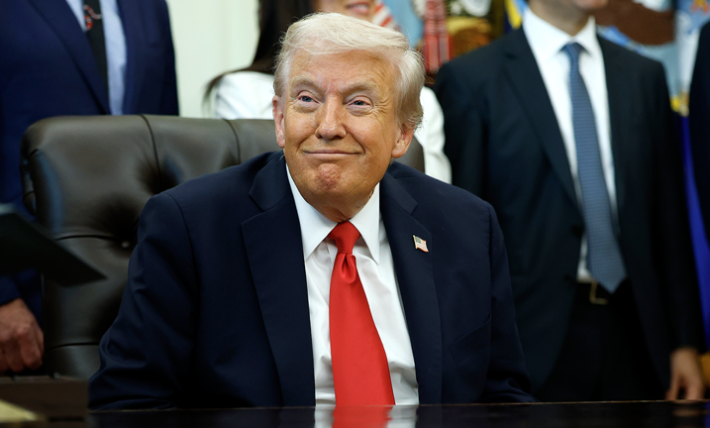
Miles Taylor says Trump is ‘genuinely terrified’ as targets fight back
Miles Taylor, the former Homeland Security chief of staff who revealed himself as the “Anonymous” Trump administration critic, argues that a string of legal, institutional and international pushback shows the president is losing leverage. The resistance is real; Trump’s private state of mind is Taylor’s interpretation, not an independently established fact.
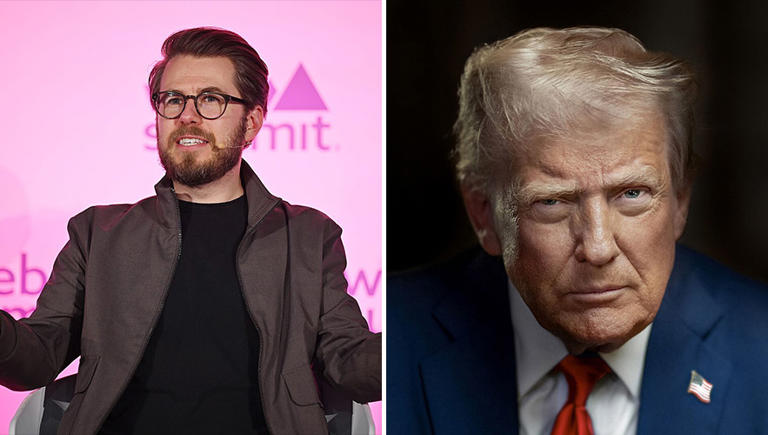
Former Trump administration official Miles Taylor is making a sweeping argument about President Donald Trump’s political position: people and institutions that once might have accommodated him are increasingly choosing confrontation, and Taylor believes that shift is rattling the president.
Taylor’s Aug. 28 essay points to four developments in one week Federal Reserve Governor Lisa Cook’s renewed legal fight, a lawsuit by fired Stars and Stripes employees, Canada’s retaliatory tariff plan and Jared Kushner’s private meeting with House Democratic leader Hakeem Jeffries. Each event is verifiable. What they prove about Trump’s emotions is much harder to establish.
Who Miles Taylor is
Taylor served in the Department of Homeland Security during Trump’s first term and became chief of staff to Homeland Security Secretary Kirstjen Nielsen in 2019. In 2020, he disclosed that he had written the 2018 New York Times op-ed published under the name “Anonymous,” which described internal resistance to Trump.
But Taylor goes a step beyond describing this week’s events. He says Trump is “genuinely terrified.” That is a judgment about motive and psychology. No court filing, government announcement, poll or public statement independently establishes that Trump is afraid. The evidence can show resistance and political vulnerability; it cannot verify a private emotional state.
Lisa Cook fights removal again
The strongest legal example involves Lisa Cook, the Federal Reserve governor Trump first tried to remove in 2025 over mortgage related allegations. Cook denied fraud, sued to keep her position and remained on the board after the Supreme Court blocked the earlier removal effort while defining procedural protections that had to be observed.
Trump renewed the effort this month. The White House again relied on allegations that Cook made inconsistent statements about which property was her primary residence. Cook’s lawyer, Abbe Lowell, said the allegations did not provide a lawful basis for removal and that any discrepancy was inadvertent. No criminal charge has been filed against Cook.
Lowell also turned the argument back on the administration. He cited reporting about mortgage documents signed by Trump and administration officials that, he argued, contained comparable residency inconsistencies. Cook’s response asked whether the president considered himself “unfit for office” because of contradictory primary residence paperwork.
That makes Cook a useful example of Taylor’s broader point about targets fighting back. It does not mean the legal dispute is over. The administration’s renewed effort remains contested, and Taylor’s description of Cook as having simply “won at the Supreme Court” compresses a more complicated procedural history.
Stars and Stripes goes to court
Taylor’s second example is institutional. Three Stars and Stripes employees publisher Max Lederer, editor in chief Erik Slavin and reporter Lara Korte filed a federal lawsuit on Aug. 27 challenging their firings by the Defense Department. They allege the Pentagon retaliated against protected speech and reporting and violated the First Amendment and federal administrative law.
The dispute followed Stars and Stripes reporting on conditions aboard the USS Abraham Lincoln during an unusually long deployment. Families and sailors had raised concerns about mental health, self harm risk and months at sea. Acting Navy Secretary Hung Cao later publicly disputed what he called dishonest coverage of conditions aboard the carrier.
According to the lawsuit and Stars and Stripes’ account, the Defense Department moved against Slavin and Korte after they spoke publicly about editorial independence and after the paper published its Lincoln coverage. Lederer says he was fired after refusing a directive to dismiss the two journalists. The plaintiffs are asking a judge to halt the terminations.
Those are allegations in pending litigation, not court findings. The Pentagon has not publicly accepted the plaintiffs’ account. Still, the employees chose a public legal challenge rather than quiet departure.
Canada’s response is more precise
Taylor also cites Canada as evidence that foreign governments are becoming less willing to absorb Trump’s trade pressure. The underlying development is real, but the details matter.
On Aug. 25, Canada announced new counter tariffs after the United States imposed 50% duties on a large category of Canadian goods. The Canadian government said its measures would cover C$27.6 billion worth of imports from the United States, with rates of 15%, 25% and 50% depending on the product. They are scheduled to take effect Sept. 8.
That differs from Taylor’s shorthand that Ottawa had already imposed counter tariffs on “twenty billion dollars’ worth” of American goods. The official Canadian figure is C$27.6 billion, and the measures had been announced but were not yet in force when Taylor published his essay.
Canada’s move followed the breakdown of negotiations with Washington. Ottawa described the measures as dollar for dollar retaliation focused on several sectors hit by U.S. tariffs.
The Lake Ontario order is symbolic
Trump’s response to the Canada dispute produced the most conspicuous episode in Taylor’s essay. On Aug. 27, the president signed an executive order directing the federal government to rename Lake Ontario “Lake America” for U.S. federal purposes.
The order instructs the Interior Department and the U.S. Board on Geographic Names to update the federal naming system within 30 days and directs agencies to adopt the new name in maps and documents. It does not compel Canada or private mapping companies to use the designation.
Canadian Prime Minister Mark Carney rejected the change and said Canada would continue using the historic name Lake Ontario. MapQuest also said it would not change its label and turned the episode into a social media joke and naming tool.
Taylor treats the order as evidence of Trump overreacting after encountering resistance from Canada. That causal interpretation is his. The public record establishes the chronology failed trade talks, Canadian countermeasures and then the executive order but chronology alone does not prove frustration or fear caused the renaming decision.
The Kushner meeting draws scrutiny
The most politically significant piece of Taylor’s argument may be Jared Kushner’s private meeting with Hakeem Jeffries. The New York Times first reported it, and multiple outlets subsequently confirmed it. Kushner requested the session, according to Jeffries, and the discussion included housing, immigration, affordability and possible areas of cooperation.
Kushner does not hold a formal White House post, but he remains an outside adviser to Trump. Associated Press reporting said Kushner also suggested that Jeffries meet with White House chief of staff Susie Wiles. That makes the encounter relevant to how the administration may be preparing for the possibility of a Democratic House after November’s midterms.
Taylor says he believes a meeting of that kind would not happen without Trump’s knowledge and interprets it as an attempt to reduce future Democratic scrutiny. That conclusion has not been independently confirmed.
Jeffries has offered a different public account. He said he accepted Kushner’s request to discuss affordability and areas where legislation might be possible. At the same time, Jeffries said Democrats would pursue accountability if they gain power, rejecting the idea that the meeting amounted to a promise of leniency for Trump or his allies.
Democratic oversight is no abstraction
The prospect of congressional investigations is not invented for Taylor’s essay. Democrats are already signaling aggressive oversight if they win the House, and some inquiries have begun while they remain in the minority.
This week, Democrats on the House Judiciary Committee opened an inquiry into the rapid growth of 1789 Capital, the investment firm where Donald Trump Jr. became a partner after the 2024 election. Democrats are seeking records about investments, foreign capital and potential conflicts involving federal policy. The firm and Trump Jr. have disputed suggestions of wrongdoing.
Jeffries has also publicly promised broader accountability. In an Aug. 25 interview released by his office, he said Democrats would address affordability while also holding Trump administration officials accountable if the party gains the power to do so.
A change in House control would give Democratic committee chairs subpoena power and control of hearing agendas. That possibility helps explain the attention around the Kushner Jeffries meeting without proving it was a bargain over investigations.
Political weakness is measurable
There is independent evidence that Trump is operating from a weaker public position than earlier in his second term. A Reuters/Ipsos poll released in August put his job approval at 33%, the lowest level Reuters/Ipsos had recorded for him, as dissatisfaction rose over the Iran war, gasoline prices and the cost of living.
That does not establish a coming “downfall,” and it does not tell voters how the November midterms will end. House control remains contested, district level races will decide the result, and presidential approval is only one factor in congressional elections.
What the polling does establish is political vulnerability. The combination of low approval, a closely divided House and public concern over costs gives both parties an incentive to prepare for a possible shift in power. Trump’s allies have reason to think about working relationships with Democrats even while campaigning against them.
What Taylor’s claim really shows
Taylor’s essay is strongest when it identifies a shared feature across several otherwise unrelated stories: targets of presidential pressure are using institutions available to them. Cook is relying on the courts. Stars and Stripes employees are invoking the First Amendment. Canada is using tariffs. MapQuest is refusing a federal naming convention. Democrats are preparing to use congressional authority if voters give them control of the House.
Those events are not identical, and they do not prove a coordinated backlash. Each has its own context. Cook’s case concerns Federal Reserve independence. The Stars and Stripes lawsuit concerns alleged retaliation and press freedom. Canada is conducting a trade dispute between sovereign governments. The Kushner meeting concerns the possibility of divided government after the midterms.
Taylor links them through his experience with Trump and reaches a psychological conclusion: resistance, in his view, is what scares the president most. That is commentary, not a verified revelation from inside the current White House.
The more defensible conclusion is narrower but still consequential. Several targets of Trump administration pressure have chosen to challenge the government rather than concede, and those challenges are producing court cases, economic retaliation, public disputes and political contingency planning. At the same time, Trump’s approval is low and the House majority is at risk.
Whether that amounts to fear inside the Oval Office is something the public evidence cannot establish. Whether Trump is facing more visible resistance, however, is no longer a matter of interpretation alone. The fights Taylor cites are already underway.