Penn State’s campuswide cocaine ring was fueled by fraternity hazing
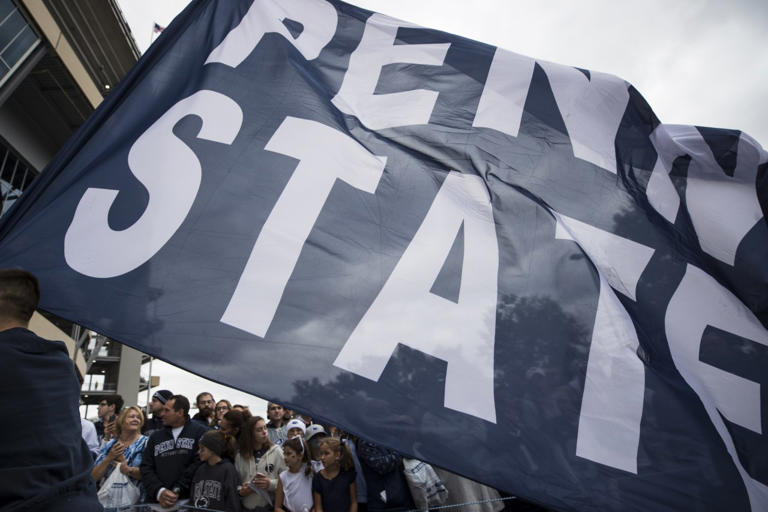
Spring at Pennsylvania State University is rush season, when hopeful students vie for a spot in one of the school’s many fraternities and sororities. At fraternity Delta Upsilon, for a short period, that meant prospects were instructed to cut and package cocaine inside the frat house and deliver the drugs across campus.
The instigator, according to former fraternity brothers’ testimony before a Pennsylvania grand jury and criminal complaints filed by Pennsylvania police, was Thomas Robinson, a senior brother who showed the pledges how to break down a brick of cocaine, mix it with creatine and bag it, creating an at-home assembly line with protective equipment and a plastic folding table the pledges purchased on shopping runs to places like Walmart.
This was only one part of a larger campuswide drug ring that Pennsylvania authorities say ensnared 13 current and former students, five fraternities and even one frat brother’s father before it all fell apart.
In December 2024, police raided Robinson’s room in the Delta Upsilon house after confidential informants revealed that the “new member educator,” 22 years old at the time, was selling large amounts of cocaine to his fraternity and others.The code of silence baked into the Greek life brotherhood was broken after his dramatic arrest. Police in State College, Pa., where Penn State is located, linked Robinson to an “upper-level trafficking organization” that sourced drugs from Philadelphia and New York, the Pennsylvania attorney general said at an Aug. 17 press conference. The group was led by a former student who witnesses called the largest drug dealer on campus, a member of the Sigma Chi chapter who dubbed himself “the Godfather.”
Now the case Pennsylvania authorities dubbed “Operation Drugs Unlimited” has captured national attention. Gossip has whipsawed through Penn State group chats and become the butt of comment-section jokes. Online onlookers nicknamed the main dealer “Pablo Pledgescobar.” Hazing was back in the headlines.
Supply and demand
Robinson, a Pittsburgh native, got into Delta Upsilon in 2022, a delicate time for Greek life at Penn State. In 2017, a 19-year-old pledge in another fraternity, Tim Piazza, died from severe injuries after becoming intoxicated during a hazing ritual.
The ensuing criminal case led Penn State to crack down on hazing in Greek life—but the increased oversight didn’t deter a broader culture of substance use within the Greek community, according to people who attended at the time. Recent Penn State graduates said some fraternity houses were long known as sources for cocaine, Adderall, marijuana and other drugs.
Six years after Piazza’s death, top officials at Penn State held a meeting to tell Greek life leaders they planned to relax some of the regulations enacted at that time, according to a memo obtained by the news website Spotlight PA.
The day after that meeting, Robinson completed eight weeks of intense pledging and was initiated into Delta Upsilon.
During his first spring in the fraternity, according to grand jury documents, Robinson began buying marijuana from a Native American reservation in Salamanca, N.Y., clued in to the supplier by a friend from the Phi Kappa Theta fraternity. There, Robinson testified, he would buy a pound for $300, then sell it for profits upwards of $1,500. He also started buying cocaine and Adderall.
According to grand jury testimony from Mohammed Huraibi, one of Robinson’s fraternity brothers and the house’s alleged former cocaine distributor, in the summer of 2023, Robinson and Huraibi teamed up to purchase 100 grams of cocaine for $4,000. In the fall, Huraibi introduced Robinson to his supplier: Agostino Abbatiello. All three men are now charged with felonies.
Abbatiello—who witnesses said gave himself the nickname “the Godfather”—was scaling up his own cocaine business outside of his fraternity, Sigma Chi. Penn State’s Sigma Chi chapter operates independently from the school, according to Penn State’s running list of suspended and unrecognized groups, and isn’t subject to university oversight or regulations.
To get his hands on larger amounts of cocaine, Abbatiello was enlisting his own frat brothers to travel to New York and pick up bags from an acquaintance from his Long Island hometown, according to grand jury documents. One witness referred to the supplier in a Sept. 2 preliminary hearing as “R.J.”
Unable to repay a $1,500 loan from Abbatiello to cover a spring break trip, fraternity brother Lars Zeepvat told the grand jury he worked off his debt by making cocaine deliveries. As the authorities circled closer, Zeepvat said Abbatiello pleaded with him not to cooperate.
R.J.’s identity couldn’t be learned, but the news has surprised those who grew up with Abbatiello. Raised in Westbury, N.Y., Abbatiello graduated in 2020 from Chaminade High School, a Roman Catholic all-boys school in Mineola where tuition is almost $20,000 a year.
Abbatiello was known to be highly confrontational in high school, using a homophobic slur and other insults towards his peers, two of whom subsequently transferred out of Chaminade, according to former classmates in Abbatiello’s homeroom. Abbatiello was sometimes seen smoking weed on school premises, according to one former classmate, but did not have a reputation for dealing drugs, they said.
Chaminade did not respond to a request for comment.
By 2024, Huraibi, the DU brother, wanted out of the drug ring and tapped Robinson to take over.
Within a year, Robinson became known as DU’s main dealer, according to grand jury testimony. He also began to sell outside the fraternity, which worried Robinson’s friends and brothers. They warned him he was getting in over his head and that the operation was growing too large. He could land everyone in trouble, they said.
Robinson ignored them.
The world of Delta Upsilon
Extreme fraternity and sorority pledging often hinges on a harsh power dynamic: Aspiring members must complete whatever tasks the recruitment leaders assign them—and are punished if they refuse.
A former DU pledge told investigators that on March 15, 2024, when Robinson was the pledge educator, he began sending him out to make several cocaine deliveries, including to other fraternities.
Four days later, Robinson told this pledge he needed another favor. Robinson sent him and another pledge on a shopping trip, ordering them to buy a white folding table, two glass trays, two face masks, two pairs of lab goggles and 15 packs of little plastic baggies.
When they returned to Robinson’s room, Robinson produced a brick of white powder, which the pledges believed was cocaine, and showed them how to break it down, one of the pledges testified. He instructed them to mix it with creatine, a dietary supplement used by bodybuilders and athletes.
The pledges carefully weighed a half-gram of the cocaine-creatine concoction into each of the baggies, over 200 of them, a process that took them about two days.
A new semester meant fresh workers for Robinson. Three former pledges testified that in the fall of 2024, as Robinson embarked on his second-to-last semester, he pulled them aside and told them to hold out their hands. He wanted to see who could keep them steady, they recalled, to help him with a mysterious task.
Two pledges passed; one failed. He was immediately replaced by another pledge, who passed.
Robinson told the three men to sign nondisclosure agreements, which he proceeded to tear up and throw away. Then he revealed his task. Cue the brick of cocaine, the creatine, the folding table and the measuring supplies.
In the basement of the DU house, once again, Robinson put the pledges to work.
The sting operation
In September 2024, Detective Donald Paul, an officer with the State College Police Department, recruited a confidential informant to make multiple controlled purchases from Robinson. According to the grand jury documents, the informant asked a friend in DU how to get some cocaine. The friend connected the informant to Robinson, who sold the informant 2.5 grams for $140 in cash.
Over the next few weeks, the informant made several more controlled purchases from Robinson, including one purchase of a full ounce for $1,200. They messaged over Snapchat, and he took payment on Venmo, under the handle “Tom-robinson-53.”
After the fifth controlled purchase, Paul approached the informant’s friend, the DU member who had connected the informant to Robinson. That DU member made the final controlled purchase from Robinson: a half gram of cocaine for $20 on Dec. 12, 2024.
The next day, police swarmed Robinson’s room. At first, Robinson thought the officers in his room were his brothers playing a prank on him. “I’m gonna f— you up,” he told them repeatedly, according to court documents. He resisted arrest, the documents said, until officers tased him.
Police found Adderall, cocaine, marijuana, almost $2,000 in cash and a loaded Kimber .45 caliber handgun in a safe in Robinson’s room.
‘I tried only to do what was right and lawful’
One of the first calls Robinson made after his release on bail was to Ryan Matson, his friend and DU brother, using a phone belonging to his father, Paul Robinson. During grand jury testimony, Matson said that Robinson had kept another safe under the desk in his bedroom where Robinson stashed drugs and money, and for which only Robinson had the combination.
Matson, spooked by Robinson’s arrest, said he had buried the safe in a wooded area around 30 minutes outside of State College, in a hiding place he marked on Apple Maps.
Robinson’s father, Paul, desperately wanted to get the safe back, Matson later testified. Days after Robinson’s release, Paul allegedly picked up Matson at the DU house and drove him to the site, where Matson dug up the safe and hid it under a blanket in the back row of Paul’s car. Father and son were grateful, said Matson, swearing him to secrecy.
On Aug. 18, the day after prosecutors officially filed their case in court, Paul Robinson, who faces charges of felony tampering and concealing evidence, made a plea on Facebook.
“I promise I tried only to do what was right and lawful at all times,” he wrote in the now-deleted post, first reported by TribLIVE. In a statement from his lawyer, Paul denied the charges against him and said of his son: “His honesty was used against him, and it put him into a now deeper hole, but he still continues to do everything he can to show that his terrible mistake in college is not who he is.”
The Robinsons, Abbatiello, Zeepvat, Huraibi, and Robert Zanolla are all due back in court on Sept. 30. Abbatiello has requested that a “speedy trial” begin by the end of the year, according to a Sept. 22 filing.
The eight men charged with misdemeanors have hearings scheduled for Oct. 14.
School is back in session, and come spring, rush season will look different: Penn State has put Delta Upsilon on an interim suspension and said it is improving hazing education. The Sigma Chi national organization also placed its PSU chapter under interim suspension.