Perez Hilton’s mental health crisis tests the limits of empathy
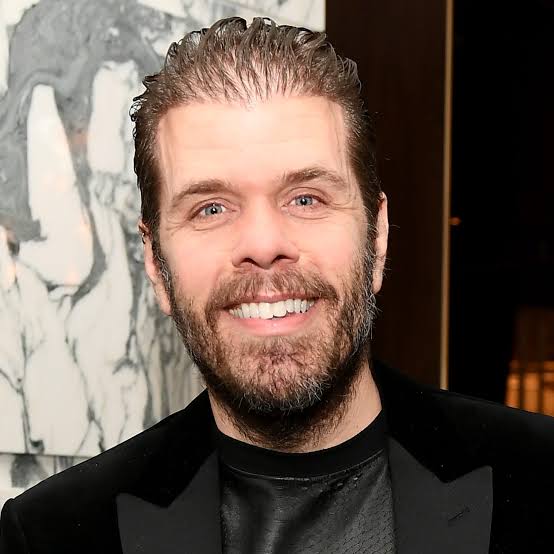
On Tuesday night, Perez Hilton went on TikTok Live from his Miami home and broadcast instances of self-harm in the midst of an apparent mental health crisis to his audience of followers, some of whom have been following his online presence for more than two decades.
Meecham Meriweather, a writer who covers entertainment and pop culture, was scrolling on X when a reposted clip from Hilton’s TikTok began playing automatically in his feed. Meriweather, who had not gone looking for the footage, found himself watching a clip of Hilton covered in what looked like blood, describing it as “deeply, deeply disturbing and very gruesome.”
Start the day smarter. Get all the news you need in your inbox each morning.
Hilton, whose real name is Mario Armando Lavandeira Jr., was hospitalized on Tuesday night after the Miami-Dade Sheriff’s Office responded to calls about the incident. According to the sheriff’s office, Hilton was “safely recovered” and taken by Miami-Dade Fire Rescue to a local hospital for medical attention.
The images were shocking, as was the fact that the livestream went on for as long as it did. But the public response has proven to be complicated. Many have called for empathy and compassion for the situation, while others struggle to reconcile calls for grace with Hilton’s history of profiting from celebrities’ most painful moments. In an online era fueled by shock and outrage, is it possible to do both?
A tangled legacy
Hilton’s complicated relationships with celebrities has been well documented for decades. Back in the 2000s, the celebrity blogger built his brand by publishing invasive gossip that often targeted young women in vulnerable moments. He came up with cruel nicknames for the stars he wrote about and drew crude illustrations across paparazzi photos of them.
In recent years, Hilton has apologized for his behavior and acknowledged the harm he caused, though his apologies weren’t always well received. Mischa Barton, for example, rejected his 2019 on-camera apology during “The Hills: New Beginnings,” telling Hilton that his vicious coverage had compounded the pain she was already experiencing at the height of her fame.
On Wednesday, after news broke about Hilton, Ireland Baldwin, 30, took to her Instagram story and wrote about how he had publicly “humiliated my family for years,” saying he “sexualized me from a young age, commented on my weight and body (as a child), made unforgivable comments about people in my family… [he] has always been a despicable human being. But his children deserve better and a healthy father and I am so sad for all of them. I hope he gets the help he needs and heals.”
Some argue that Hilton was a man of his era: In the early 2000s, publications like InTouch and Star and others touted headlines about celebs’ drinking problems and relationship scandals. More reputable outlets followed the trend: Britney Spears was grilled about her breakup with Justin Timberlake by Diane Sawyer and on the cover of the New York Daily News during her mental health breakdown.
Hilton, however, was a leader of the pack. He mocked people’s bodies, threatened to out people’s sexuality, and initially questioned whether Michael Jackson’s 2009 death was a publicity stunt.
“I hope his kids are safe and I hope they are shut off from this, but I simply do not have empathy for him,” Meriweather told USA TODAY. “I think some of the things that he did were so vile and so awful that there just is no coming back from it.”
While many course corrected, Hilton made fewer changes and even today maintains a gossip-y approach to his site. It wasn’t until 2021 when the Framing Britney Spears documentary started streaming and prompted many to look back on the problematic coverage of celebrities in the 2000s that he tried to make amends for his earlier coverage.
So how can people give him grace—when he frequently denied that to the celebrities he covered?
“Both things can be true,” Gillian Sheldon, a founding producer of TMZ who has known Hilton for more than 20 years and now serves as Napster’s global head of communications, told USA TODAY. “You can be conflicted about him and his place in culture, having drawn on people’s faces and called people names, and also have empathy for a human being who’s a father of three kids, who’s a son, who’s a brother, who’s an uncle, and who’s a friend.”
Compassion for Hilton in this moment does not have to absolve his past, and accountability for that past should not be used to justify cruelty in the present. And if that duality exists for Hilton, it should also be given for his past targets. “So many people, like Ireland Baldwin, grew up with this abuse, and it really changed them forever,” Meriweather says. Expecting them to publicly extend forgiveness is an unfair burden, he says.
A collective failure
Tuesday night’s livestream, which has resulted in Hilton’s TikTok account being permanently banned, has also raised urgent questions about why social media users have been able to watch and redistribute such disturbing footage.
TikTok’s automated content moderation system quickly flagged Hilton’s livestream and alerted a U.S.-based moderation team, a company spokesperson told USA TODAY, but a “moderator error” delayed the stream’s removal.
Attorney Bryan Freedman, who has known and represented Hilton for decades, said the social media company’s explanation was insufficient. “While it is certainly a time for kindness and compassion, I am personally having trouble understanding how TikTok could have allowed a person suffering from an obvious violent mental health crisis to continue to stream live,” Freedman said in a statement to USA TODAY.
Calling the delay a moderator error “without further explanation is unacceptable,” Freedman added. “Anyone who saw this footage would have been traumatized. Transparency requires a real explanation of why this was allowed to remain live for as long as it was. I am devastated for Mario, his family and anyone else who saw this footage.”
An early member of PerezHilton.com’s editorial team, who worked closely with Hilton in 2008 and asked not to be named for fear of professional repercussions, also learned of the livestream as it was happening. The former writer deliberately did not search for the video because of their own experience with suicidal ideation. They recalled Hilton’s callous coverage of other people’s deaths and crises, but said they still felt empathy for Hilton.
“He’s a jerk and he’s an asshole and a lot of what he’s done is unforgivable,” they told USA TODAY. “We can hold space for that, and also hold space for the fact that this is also deserving of empathy, and also see it as an opportunity to really consider: How did we get to this point?”
They said they’re “triggered by the very sight” of Hilton online due to those years of bullying coverage and experience working in what they called a toxic environment.
“That job with Perez was pretty foundational [for me],” they said. “I remember being there and witnessing shit and thinking, ‘I am never going to be like that.’” And that’s exactly the creed they are trying to live by in this moment. “To reduce people to be either good or bad is to deny them their humanity,” they say.
Breaking the cycle
Hilton has acknowledged that his attempts at redemption would not repair his reputation with everyone. In a 2024 interview with The Blast, he said he was “fully resigned” to being confronted by his past for the rest of his life.
“I know that even after I’m dead, things that I said or did, my reputation and name will continue to permeate pop culture in a negative light,” Hilton said. “I know that most probably when I’m dead people will celebrate that. People will say the world is a better place without him.”
Those words have taken on a chilling resonance as commenters debate whether Hilton deserves sympathy. “The things that Perez has done or said a decade-plus ago, I can’t fight those battles,” Chris Booker, Hilton’s longtime friend and co-host of “The Perez Hilton Podcast,” said on the podcast’s Patreon account. “And the hypocrisy of people saying to Perez, ‘Oh, you had this coming,’ come on. Anybody that says something like that today, you’re equally as bad or as vicious as he was with those words over a decade ago. It’s a different world.”
Through tears, Booker condemned what he called the “evil cesspool” of the internet. “I feel badly for the people that reported it to me because they were watching it live,” he said. “I can’t stop thinking about it. It’s awful.”
Booker said he was encouraged by Hilton’s family to share an updates on his friend, explaining that he was told by Hilton’s brother-in-law that “Perez’s three children all need to be fed, and this is part of the revenue and it’s part of yours as well, so yes please do what you can do.”
“That’s how [Perez] has always been,” Meriweather remarked. “Any and all press is good press.”
In a statement on Hilton’s website, his family said his three children, niece and sister had been inside the home minutes before the livestream incident. When it became clear Hilton was in crisis and harming himself, they left to protect the children from further trauma. The family asked the media, content creators and public to stay away from the home for the benefit of the kids.
“Our highest priority right now is helping the children begin to heal from what they experienced,” the family said. “An important part of that process is allowing them to safely return home and begin rebuilding a sense of security and normalcy.” The family thanked the public for an “overwhelming outpouring of love, support, and prayers” and described the preceding days as nearly unbearable.
Sheldon echoed many commenters who said the safety of his children should not be treated as an extension of a debate about their father’s career.
“He just happens to be another person who is struggling with his mental health, and challenges with mental health are really real,” Sheldon said. “In an age where everything can be streamed, before that, you wouldn’t have seen someone be in crisis. Now everybody has a front-row seat.”
A social media reckoning
On his Patreon, Booker told listeners that he had a sense that “something was wrong for some time” when it came to Hilton’s well-being. After Hilton moved across the country from Las Vegas to Miami “seemingly overnight without any conversation about it,” Booker noticed his co-host was contributing less during their podcast episodes. But he didn’t see this level of pain and harm coming.
“I knew things were somewhat different but I would not have, at any point, pressed an alarm for panic,” he said.
The former staffer at PerezHilton.com believes the recent news about Hilton’s mental health should be a warning sign about an influencer economy built on rage bait and provocative content. While Hilton was an architect of that culture, now he is also one of its casualties.
“There’s going to be more of this, right? You’ve got all these Instagram influencers and their whole thing is rage bait. So what happens when there’s no more rage?” they said. “It’s like an addiction.”
The former staffer continued, “We’ll take people and we’ll extract and exploit them, and then just leave them so that all they have left are these final desperate acts and calls for help. I feel like we all contributed to this in a way.”
A few weeks before his shocking livestream, Hilton told Sean Hannity in a podcast interview that he regretted becoming so consumed by the pursuit of attention and dependent on the adrenaline rush it provided.
“Attention is like a drug. I was definitely an attention addict back then. I mean, I still am, but I think now I do a better job of keeping it in check,” Hilton said. “When you’re an addict, you don’t care if you’re hurting people. You’ll steal from your roommate or do something bad to a family member just so you can get money to buy your drugs or alcohol, or whatever your addiction is.”
With Hilton’s own admissions in mind and as new information still trickles in about his condition and the circumstances that led to Tuesday night’s crisis, the public continues to grapple with their feelings about Hilton and his place on the internet. Sheldon wonders if this moment will change anything for people who consume, create, and profit from this culture built around public spectacle.
“There is so much pressure on people who are in the public eye and commentary like [Hilton]’s can be really dangerous. But then at the same time, it seems like the nature of who we are as a society. We’re really quick to build you up, we’re really quick to break you down, but then we’ll be really quick to build you up again,” she said. “Does this change anything? We would hope that maybe some people would sort of take a look at themselves. But I don’t think things will change at the end of the day, just because this is the nature of who we are in this always-on culture.”