Putin loses another nuclear bomber in humiliating fireball crash
Modern warfare usually focuses entirely on the active front lines.
But sometimes the most devastating military failures happen thousands of miles away from any real combat zone.
A routine takeoff can suddenly turn into an unexplained disaster in a matter of seconds.
A sudden fireball
A massive Russian military plane crashed in the country’s remote Far East on Tuesday. The heavy jet plunged to the ground and instantly became a huge fireball.
At least six crew members lost their lives in the blazing wreckage. Early information did offer a tiny bit of hope. Initial news reports indicated there were “two survivors” who received emergency medical care at a local hospital.
Also read
2,000 civilians remain trapped without food in occupied Ukrainian town
Russia accused of using civilians as human shields near Kupiansk
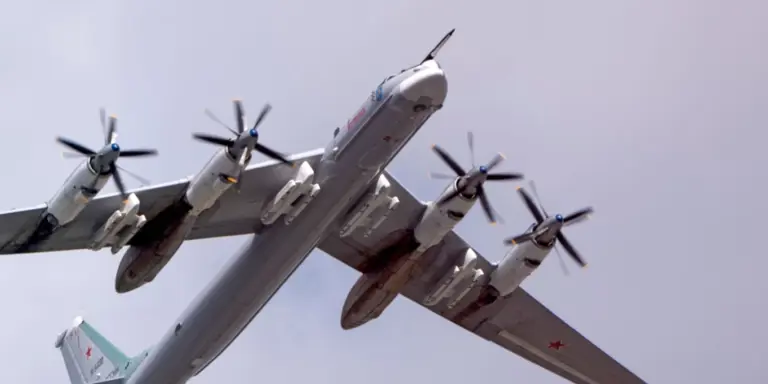
Officials from the Russian Defence Ministry later confirmed the exact type of plane according to Daily Express. They identified the destroyed aircraft as a Tu-95MS strategic bomber. This specific model is fully capable of carrying nuclear weapons.
Forces rely on these exact planes regularly to launch devastating missile strikes against Ukraine.
Far from the border
The disaster unfolded deep inside the Amur Region. That location puts the smouldering crash site more than 3,000 miles away from the ongoing war.
The doomed flight originated from the Ukrainka Air Group base. This isolated military installation is home to a major strategic missile command.
Ukrainian forces have successfully targeted several of these bombers before. Still, the extreme distance of this specific airfield makes a direct cross-border strike highly unlikely.
Also read
‘I have no doubt’: Lavrov accusses Europe of waging war on Russia
6 dead as strategic bomber crashes in Russia
Local observers quickly pointed to severe mechanical failure. The AMK Mapping Telegram channel reported that three separate engines gave out “simultaneously, right after take-off”.
Suspicions of sabotage
Losing that much thrust at low altitude leaves zero options. The crew simply has no physical space to correct the steep dive, sealing their fate instantly.
The monitoring channel highlighted the suspicious nature of the timeline. They explained: “That happening practically guarantees the crew is killed, as there is no time for parachuting to the ground, which is another potential sign of sabotage.”
These giant machines are incredibly loud and surprisingly old. The underlying design first flew roughly 70 years ago during the Soviet era.
Despite their age, the planes remain a vital pillar of the modern Russian nuclear fleet. They hold the unique title of being the only propeller-powered strategic bombers still operating anywhere in the world today.