Swing-district Republican touts Trump blow against ‘rain tax’
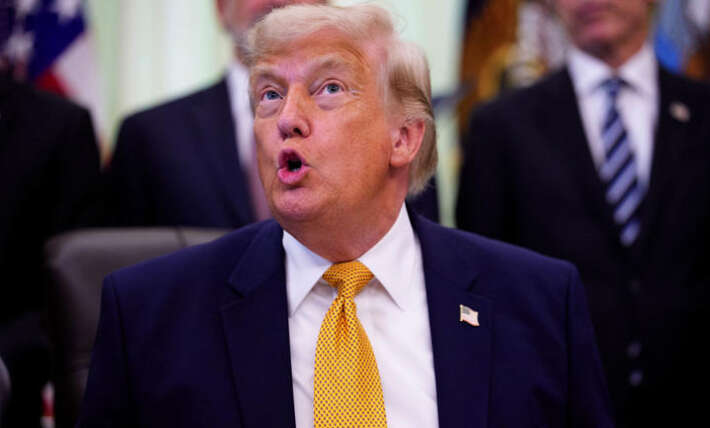
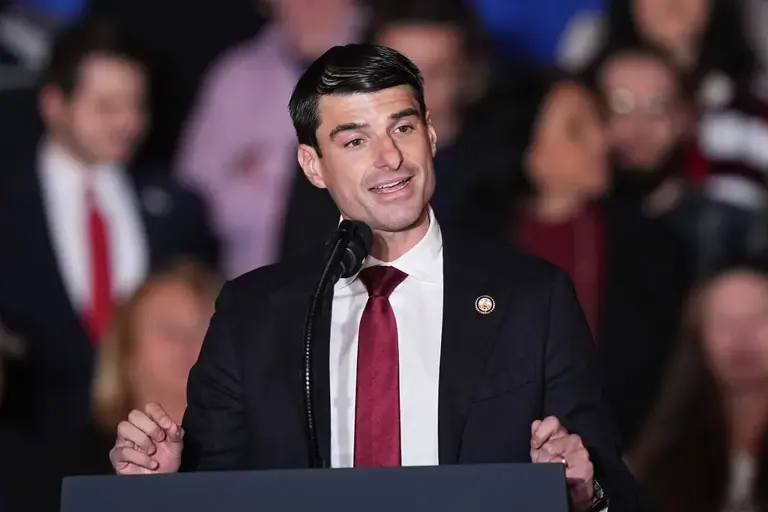
Freshman Rep. Bob Bresnahan (R-PA) touted President Donald Trump’s executive order aimed at ending a controversial “rain tax” on his constituents as a major win in his key swing district.
He said in an interview with the Washington Examiner that his 8th District will see tax relief thanks to the order, signed this week, which reversed an Obama-era executive order that pressured states and local governments to fund restoration and protection projects for the Chesapeake Bay — funding requirements that ultimately trickled down to homeowners.
‘STAY IN OUR LANE’: WARSH VOWS FED INDEPENDENCE AFTER HIKING RATES
Since 2019, residents in Luzerne and Lackawanna counties have been paying an additional tax each quarter on rainwater that collects on their sidewalks, driveways, rooftops, stone pathways, and other surfaces on their property deemed impervious.
The larger those surfaces are, the higher that quarterly fee floats for each taxpayer.
Trump issued an executive order rescinding the rules on Wednesday, paving the way for such “rain taxes” to be lifted.
Bresnahan has been working throughout his first term in Congress to reverse the tax, which he says has been unfairly imposed on his constituents for nearly 10 years, as the funds were dedicated to restoring the Chesapeake Bay, over 200 miles from his district.
He told the Washington Examiner that most of his constituents don’t understand why they have been taxed for a project that is far removed from life in Northeastern Pennsylvania.
“Instead of those dollars going to fix our roads or support local police or fire departments, all that money goes to meet pollution requirements aimed at cleaning up the Chesapeake Bay, which is more than 200 miles away from Pennsylvania’s Eighth Congressional District,” the congressman said.
All of this goes back to 2009, when then-President Barack Obama signed an executive order setting the so-called “rain tax” in motion. Bresnahan said that the order essentially told federal agencies to ramp up enforcement “dramatically,” putting pressure on states located within the Chesapeake Bay watershed, which stretches from Virginia to New York.
“With the enforcement came pressure down to our local municipalities, small towns, boroughs, and we’re suddenly on the hook for the strict new requirements,” he said.
Bresnahan, who is up for reelection in a tightly contested congressional district, said that, because the federal mandate was unfunded, watershed localities were forced to increase taxes on homeowners to meet new pollution standards.
“Those towns had no good options — most were left with only one, and that was passing the bill on to the property owners,” he said.
Bresnahan said that one local official he spoke with said that the fines for noncompliance would have been as high as $10,000 per day. And property owners in his district have been facing a rain tax bill ranging from $65 to $2,000 per year.
Bresnahan described the effort to get the executive order signed as a “crawl, walk, run” approach.
“I mean, in order to get such a niche executive order that only relates to a very small portion of a congressional district, it was something that when we started working with the Office of Legislative Affairs on day one, this was one of our top priorities,” he said.
The repeal at the federal level gives control back to the commonwealth and localities, he said.
“Instead of having an unfunded mandate coming out of Washington, they can now decide the best way to go about approaching it,” Bresnahan said.
The congressman said that he has fought to secure millions of dollars in federal funding for water, stormwater, and sewer projects across the commonwealth, as well as legislation to modernize those systems.
“What I am against is unfunded mandates from Washington and Harrisburg for a program that keeps year after year missing its target,” Bresnahan said.
Trump’s order has gotten pushback from lawmakers in Virginia and Maryland, which immediately border the Chesapeake Bay. The full Maryland congressional delegation — which includes conservative House Freedom Caucus Chairman Andy Harris (R-MD) — released a statement on Thursday opposing the move.
The lawmakers said the Chesapeake Bay is “vital to lives and livelihoods” in Maryland. They said that Obama’s 2009 executive order provided “vital federal resources” to support the bay and surrounding areas.
“Removing the coordinated federal backing that advances the watershed protection and restoration goals of the Chesapeake Bay Watershed Agreement risks undermining the future health of the Bay along with the businesses and communities that depend on it,” the delegation said. “This decision is shortsighted and harmful to our communities. Make no mistake: the Chesapeake Bay is a national treasure. And we will continue to fight for it.”
Both Democratic senators from Virginia, Tim Kaine and Mark Warner, also pushed back on the move. They said the new executive order “dismantles a longstanding framework for coordinating” the effort to restore the Chesapeake Bay.
“Restoring the Chesapeake Bay is critical to the Commonwealth’s seafood and tourism industries, thousands of good-paying jobs, educational opportunities, and Virginians’ recreation,” the two said. “Rolling back efforts to clean up the Bay is dangerous not just for our environment but for our economy. We should be building on the progress we’ve made instead of walking away from a framework that has guided restoration efforts for more than 15 years.”
Bresnahan said that reversing the 2009 executive order will not eliminate states’ and localities’ abilities to impose similar fees in their regions. It also does not immediately end the “rain tax” in Northeastern Pennsylvania. Instead, Trump’s new order removes the federal pressure on his constituents who live so far upstream from the Chesapeake Bay.
“If those fees were going directly to improve the aging infrastructure systems, it would be a different conversation,” the congressman said. “But the reality is, those dollars are being used to clean something up that is 200 miles away.”
And while most people around the country have never heard of a “rain tax,” Bresnahan said that he hears about it every day on the campaign trail. He said it all ties back to the “kitchen table issues” that voters care about, especially given concerns about affordability and the cost of living.
Bresnahan told the Washington Examiner that reversing the Obama order has been on Trump’s radar for years and pointed to a 2020 town hall held in Scranton, Pennsylvania, where voters raised concerns about the “rain tax” directly to Trump.
After entering office in 2025, Bresnahan made sure the issue resurfaced within the administration and other members of Pennsylvania’s congressional delegation, including Sen. Dave McCormick (R-PA).
DAILY ON ENERGY: DEMOCRATIC GOVERNORS ESCALATE CRACKDOWN ON DATA CENTERS
Bresnahan said the matter is one of fairness, given how far his district is from the Chesapeake Bay.
“This is about our communities that are hundreds of miles away from this exact cleanup effort, and where these dollars are going for something hundreds of miles away,” he said.