Trump turns on Exxon and Chevron, telling oil giants to hand profits back as gas stays near $4.10
The president is demanding his longtime industry allies hand profits back to the public — but the real story behind $4 gasoline is messier than either side admits.
President Donald Trump ripped Exxon and Chevron for “making too much money” on Monday, telling reporters in the Oval Office the two oil giants “ought to give some of that back to the public” and “better cut the retail price.” His attack came as average US gas prices hovered near $4.10 a gallon, up from under $3 before the United States and Israel launched attacks against Iran in February — and after both companies reported blockbuster quarterly earnings.
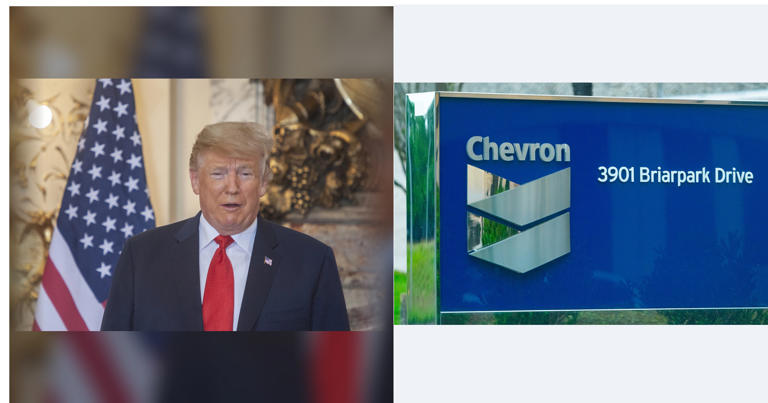
The confrontation is striking because Reuters describes it as a notable break from the president’s usual alliance with the oil industry. With pump prices pinching drivers, Trump has also said he ordered the Justice Department to look into whether major energy companies are gouging consumers. Whether Big Oil is actually the villain here is more complicated than either side suggests — and there are practical moves drivers can make while the fight plays out.
What Trump actually said
Speaking to reporters on Monday, Trump called out the two biggest US oil producers by name. “Chevron, too much money. Exxon Mobil, too much, too much money,” he said, adding that the companies should return some profits to the public. He also cited one company earning “12 times what they made the year before.”
He followed up with a social media post criticizing Chevron CEO Mike Wirth for failing to credit the administration’s policies for the company’s record quarter. Chevron declined to comment on the remarks, and Exxon did not immediately respond to requests for comment.
Earlier, in late June, Trump said he had ordered the DOJ to “immediately start looking into” whether drivers were being “gouged,” arguing pump prices should be closer to $2.25 a gallon given where crude costs have settled. A DOJ spokesperson told the BBC that fuel prices “impact the wallet of every American,” without confirming whether an investigation had formally launched.
The profit numbers behind the anger
The earnings that triggered Trump’s comments were genuinely extraordinary. Exxon reported $14.5 billion in quarterly profits, Chevron $12.1 billion, and Shell $9.8 billion, according to NPR. Chevron’s quarter was its highest ever, and Exxon doubled its earnings compared with the same period last year.
Combined, the three companies averaged roughly $404 million in profits every day for three months, according to NPR. Those figures help explain why some European lawmakers and Democrats in Congress have called for windfall taxes on the industry — and why Trump, facing voters paying above $4 a gallon, felt pressure to go public with his frustration.
Is Big Oil really to blame?
Here’s where the story gets messy. Pump prices are generally set by retailers — often sole proprietors who own individual gas stations — not by the major oil producers Trump is attacking. That means even if Exxon and Chevron slashed their margins tomorrow, drivers might not see much relief at their local station.
The industry points to global forces instead. Andrea Woods, a spokesperson for the American Petroleum Institute, said higher prices are “driven by global supply, demand and continued uncertainty around the Strait of Hormuz and other critical shipping lanes — not by any one company.”
There’s substance to that argument. The war with Iran effectively shuttered the Strait of Hormuz, a crucial artery for crude exports, and blocked shipments of refined fuels like gasoline and diesel. Ukraine’s attacks on Russian refining infrastructure have worsened a worldwide fuel shortage. Tight refining capacity, which both Exxon’s and Chevron’s CEOs warned could keep gasoline prices high through the fall, adds another layer beyond any single company’s control.
At the same time, crude prices have fallen back close to pre-conflict levels, and pump prices haven’t followed. That gap between wholesale and retail is exactly what Trump’s DOJ review is meant to probe — and exactly what the industry says doesn’t move in lockstep with oil.
Why the break with his allies matters
Trump’s rhetoric marks a notable break from his usual alliance with the industry, as Reuters put it. Now he is demanding the oil giants hand profits back to the public and warning them to cut retail prices — while pointing federal investigators in their direction.
The political math is easy to see: gas prices are among the most visible costs for American households, and Trump has said pump prices should be at $2.25 a gallon right now — not the $4.10 drivers are actually paying. Whether the pressure produces real price relief, or simply shifts blame, remains an open question.
How to protect your wallet now
Whatever happens in Washington, drivers can take practical steps to blunt the pain at the pump:
- Use gas-price apps to compare nearby stations before you fill up.
- Check whether warehouse clubs or grocery loyalty programs near you offer per-gallon discounts.
- Keep tires properly inflated and ease off aggressive acceleration.
- Consolidate errands into fewer trips where you can.
- If you’re financing a vehicle, remember that fuel costs are only part of the equation — but at above $4 a gallon, they add up quickly.
What happens next
The DOJ’s posture remains the key unknown. A spokesperson stopped short of confirming an active investigation, and pump prices are generally set by independent station owners rather than the oil producers Trump is criticizing — a gap between the president’s targets and who actually sets the numbers on the sign.
Congressional pressure for windfall taxes could grow if profits stay at these levels. Meanwhile, both Exxon’s and Chevron’s CEOs have warned that refining bottlenecks could keep prices elevated into the fall — meaning the political fight over who’s to blame is likely to outlast the spike itself.
For now, drivers are caught between a president demanding $2.25 gasoline and an industry pointing to a war halfway around the world. The gap between those two explanations is where the price on every pump sign currently sits.