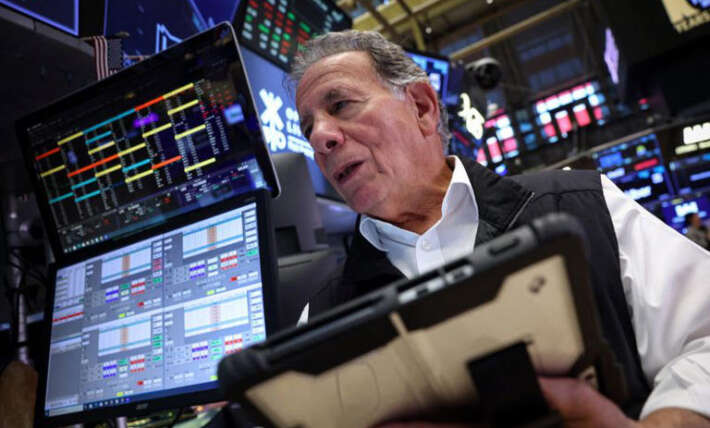
Trump mileage rollback could cost drivers up to $7,000 more in gas
Like the $5,000 checks Pres. Donald Trump is promising voters if they keep Republicans in power during the upcoming midterm elections, you might be a bit skeptical about the promised savings from the rollback of federal mileage standards the White House announced this week.
According to U.S. Transportation Sec. Sean Duffy, automakers could save more than $60 billion by cutting the cost of the technology needed to reach an industry average 50.4 miles per gallon by 2031. In turn, some of those savings will be passed onto consumers, the administration claims – to the tune of an average $1,289 per vehicle come the 2031 model year.
Even if that proves accurate, the equation actually doesn’t favor buyers. By its count, the Department of Transportation acknowledged the typical driver will wind up paying about $1,600 more for fuel under the new mandate – which reduces the 2031 model year target to just 34.9 mpg. And that appears to be a significant under-estimate. Depending upon what the average price of fuel works out to come the beginning of the next decade, Autoblog’s math puts the potential out-of-pocket increase as high as $7,000.
Reversing the Biden-era Mandate
Pres. Donald Trump has moved to roll back or eliminate a variety of Biden-era automotive regulations since returning to office 20 months ago. Many are related to EVs, including the phase-out of $7,500 federal tax credits in September 2025. This week’s move formalizes a proposal he announced from the Oval Office last December, surrounded by auto industry leaders like Ford CEO Jim Farley. Taking effect at the end of this year it abandons Corporate Average Fuel Economy guidelines calling for 8% annual increases, targeting 50.4 mpg during the 2031 model year.
“Thanks to president Trump’s leadership, we have finally ended the illegal mandate that forced automakers to produce more expensive electric vehicles that American families didn’t want,” transportation secretary Duffy said in a statement Monday.
Automakers and oil industry representatives had called for a rollback in the mileage standards and the industry will now have to hit a target of 34.9 mpg. For automakers like General Motors that should ease the burdensome task of meeting the higher mandate: developing more efficient powertrains, including EVs and hybrids; new, lightweight materials; and other advanced technologies.
Promises, Promises
Those savings could be substantial, at least according to the White House which sees an industry-wide benefit totaling more than $60 billion. Reuters reports that would yield savings of $31.7 billion for GM, $6.6 billion for Stellantis, $5.8 billion for Ford, $4.5 billion for Toyota and $4.1 billion for Honda, among other manufacturers.
In turn, the administration projects motorists would save $1,289 through the automotive equivalent of trickle-down economics, something that might seem quite appealing at a time when the typical new 2026 model is now going for more than $50,000, based on industry data. “The idea is this will make vehicles less expensive.” said Sam Fiorani, lead analyst with AutoForecast Solutions, “but that is not how it works.” He notes that automakers typically don’t pass back to consumers savings they get when federal mandates are rolled back. There are numerous examples, all the way back to when the Reagan administration lowered bumper standards from 5 to 2.5 mph. If anything, the move resulted in higher insurance bills.
What the Rollback Actually Will Cost You
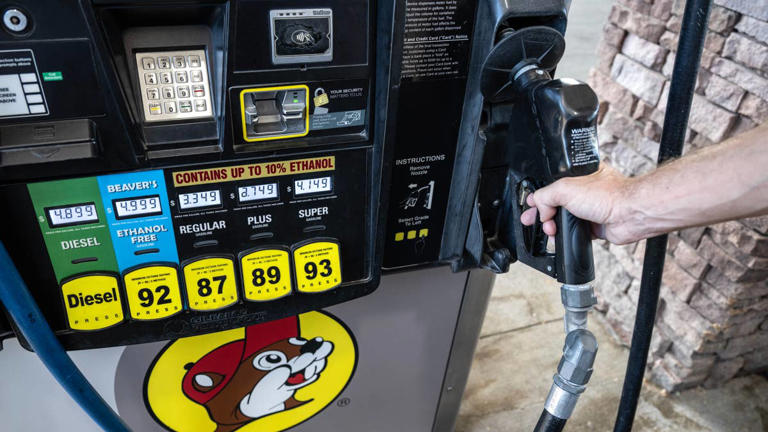
While we’ll have to wait to see what automakers do with their savings the administration did acknowledge there’s a flip side to the rollback: an estimated $1,600 in higher fuel bills. And there’s a good reason why it wants to downplay that figure considering regular self-service gasoline was running at a national average $4.48 a gallon at the time the CAFE rollback was announced on Monday. The surge since the start of the Iran War has been straining personal budgets to the point where a study by the Independent Grocers Association found a sizable share of Americans trimming back spending at the supermarket.
Here’s the thing: that $1,600 figure is a best-case scenario. Let’s do the math. First, consider that the typical American motorist clocks 37 miles per day, or 13,700 miles annually, according to the Federal Highway Administration. At 50 mpg a typical driver would burn 274 gallons of gas. At 34.9 mpg that jumps to 393 gallons. At $4.48 a gallon you’d spend $1,761 to keep the typical vehicle fueled up if you got 34.9 mpg. At 50 mpg that drops to $1,228. But you can’t just look at higher costs for one year. As AAA notes, motorists now are hanging on to their vehicles an average 12.5 years. So, at the lower mileage you’d have a lifecycle increase of $6,662 for fuel. And were gas to reach the prior record $5.02 per gallon set in June 2022, the figure would surge beyond $7,000.
The president has promised oil prices will come tumbling down sometime after the midterms – which would require an end to the Iran War. Were you to pay just $2.89 a gallon, the national average last December, according to the Bureau of Transportation Statistics, you’d still be deep in the hole. The average motorist would still spend $1,136 annually for fuel driving a vehicle getting 34.9 mpg. Under the Biden rules that would be $792. Over the average ownership cycle, then, a motorist would still spend an extra $4,300 thanks to the Trump changes.
“So who benefits when Americans pay more at the pump, use more oil, and automakers face no penalty for falling short? Certainly not drivers,” Margo Oge, the former head of the EPA Transportation and Air Quality department wrote on LinkedIn.
What Now?
As you might expect, there was an immediate pushback from environmentalists, consumer groups and environmental organizations. “Fuel economy standards are a proven way to drive down the cost of driving for consumers,” said Chris Harto, advocacy manager for consumer impact at Consumer Reports. “The standards announced this week move us backwards…and potentially leading to stagnation in the U.S. auto market at a time when gas prices are squeezing Americans’ budgets more than ever.”
Fuel economy is now high on the list of what consumers consider when buying new vehicles. A Consumer Reports survey of 2,191 American motorists found “majorities of both Democrats and Republicans saying automakers should continue to improve fuel economy.” And that study was released in 2025, before the current run-up in fuel costs triggered by the president’s war with Iran that has sharply reduced the flow of global oil supplies.
As happened during the first Trump administration, the latest mileage rollback is expected to face court challenges. How it will play out in the court of public opinion is another concern for an increasingly embattled White House.